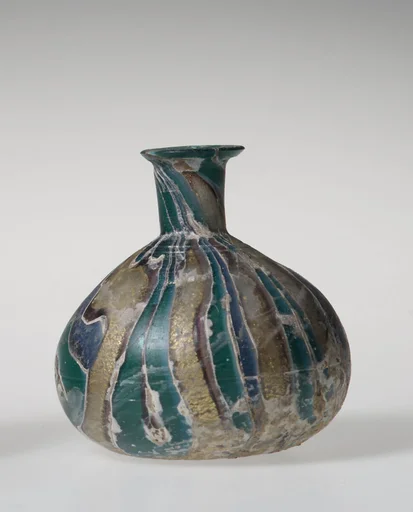
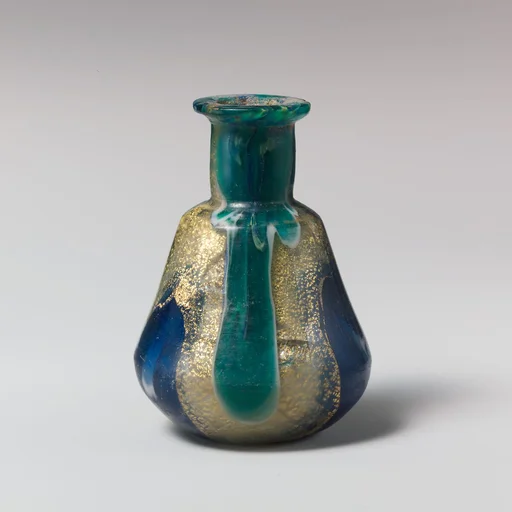
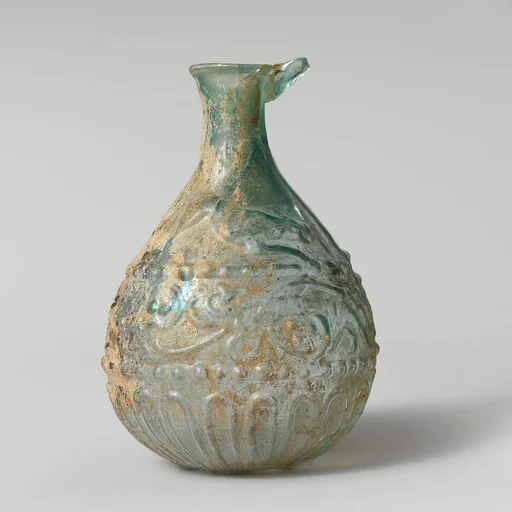
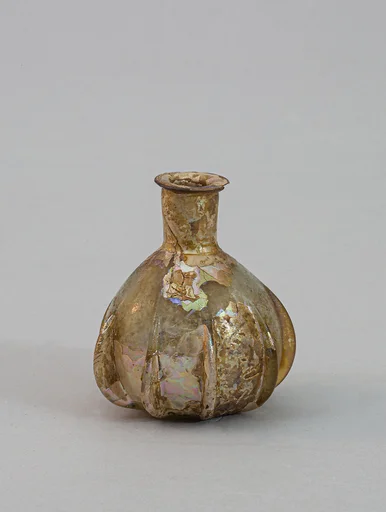
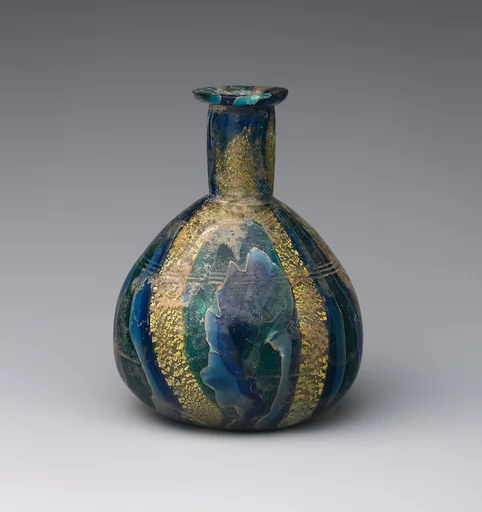
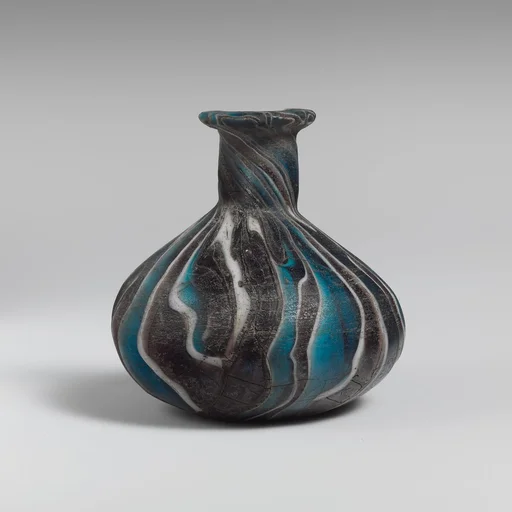
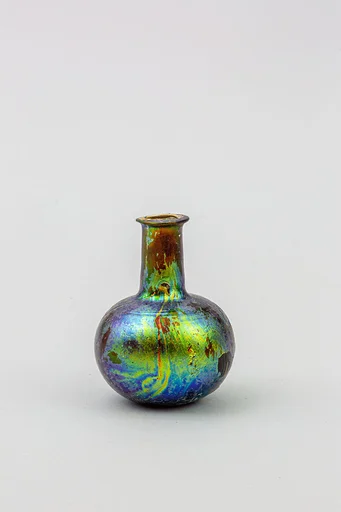
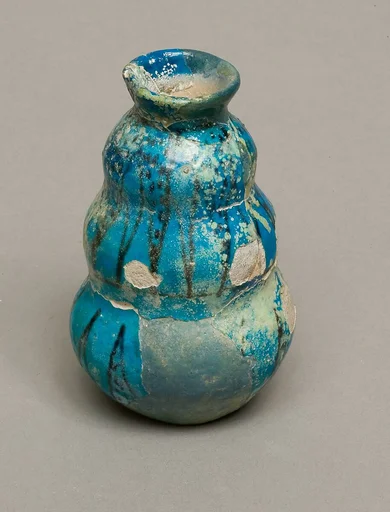
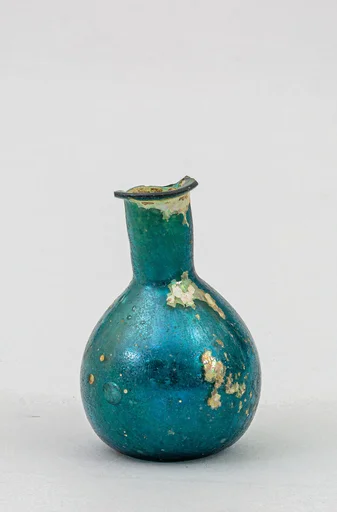
Glass gold-band mosaic bottle
Unknown
1st half of 1st century CE · Glass · Greek and Roman Art
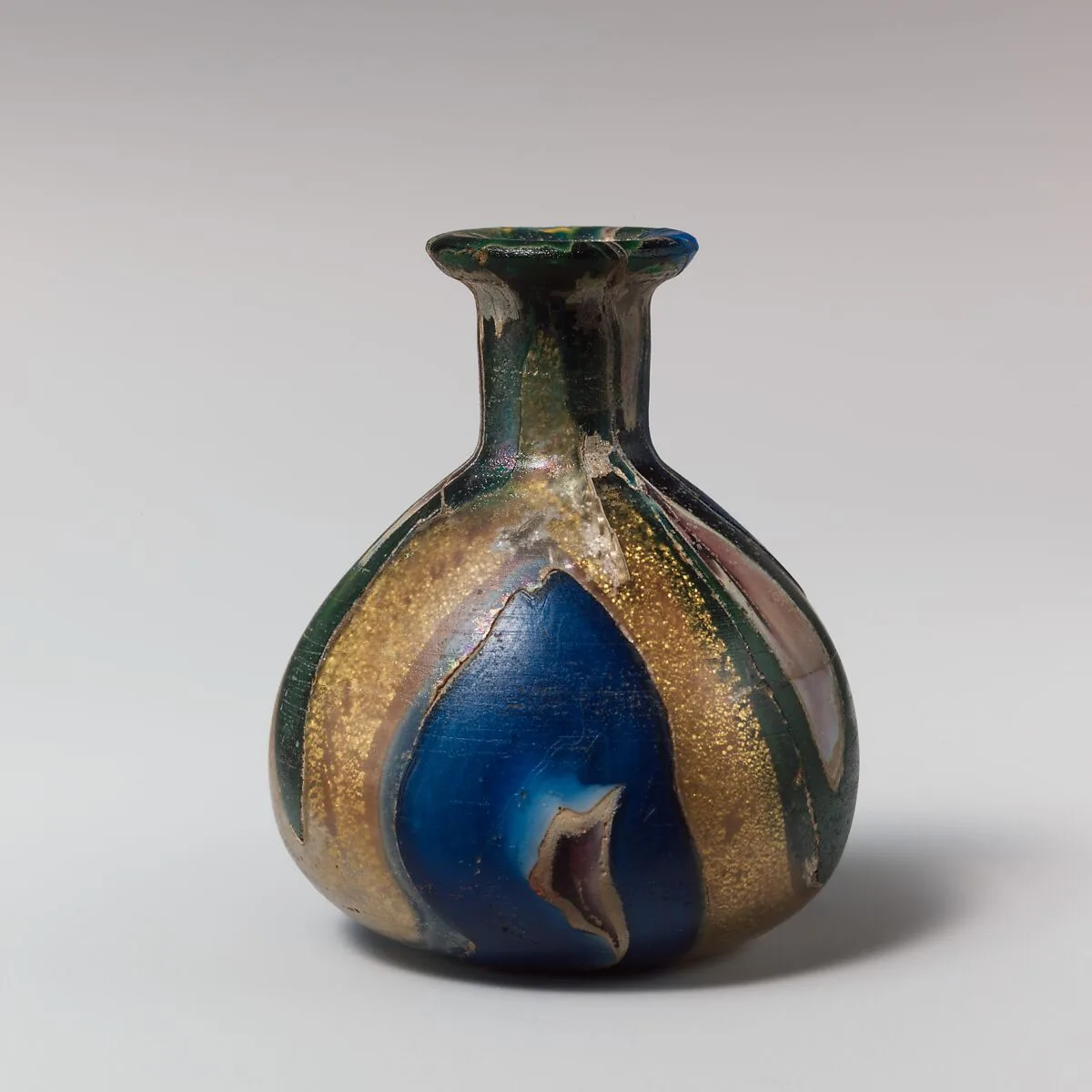
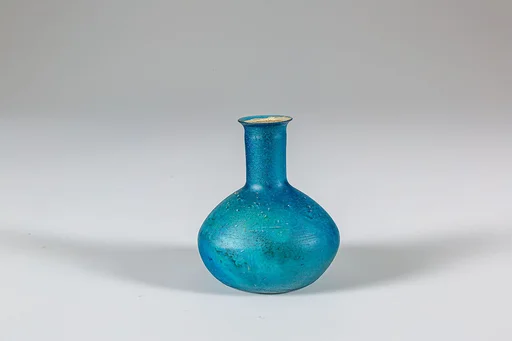
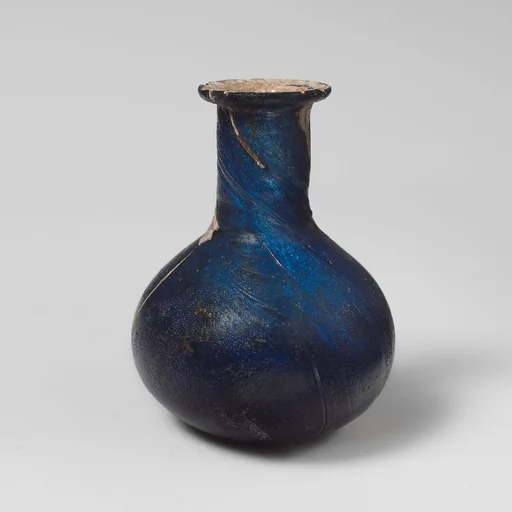
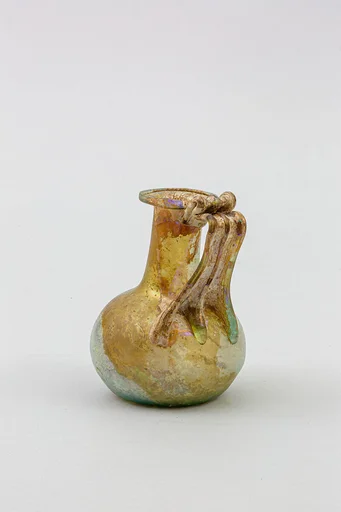
Translucent cobalt blue, purple, and emerald green, opaque white, and colorless encasing gold leaf. Everted, horizontal rim with rounded outer lip; cylindrical neck; squat globular body; flat bottom. Gold-band mosaic pattern formed from a single serpentine length of layered canes formed in the following order: purple outlined in white, blue, colorless with gold leaf, green, white, and purple; the length is wound three times round body, being fused together across bottom. Intact, except for one weathered chip in top layer on side of body; slight dulling and pitting, small patches of whitish iridescent weathering; encrustation on inside of neck. Rotary grinding marks on exterior. Gold-band cast glass was a particularly opulent type of early Roman glassware. It combines canes of brightly colored translucent and opaque glass with strips of gold leaf encased between layers of colorless glass. Only a limited number of vessel shapes were made in this way, and some of the most common are small globular or carinated bottles such as these. They were presumably used to store expensive cosmetics and perfumes. Rogers Fund, 1906 (06.1035.2) H.O. Havemeyer Collection, Bequest of Mrs. H. O. Havemeyer, 1929 (29.100.88)
- Artist
- Unknown
- Date
- 1st half of 1st century CE
- Medium
- Glass
- Culture
- Roman
- Department
- Greek and Roman Art
- Credit line
- Gift of Henry G. Marquand, 1881