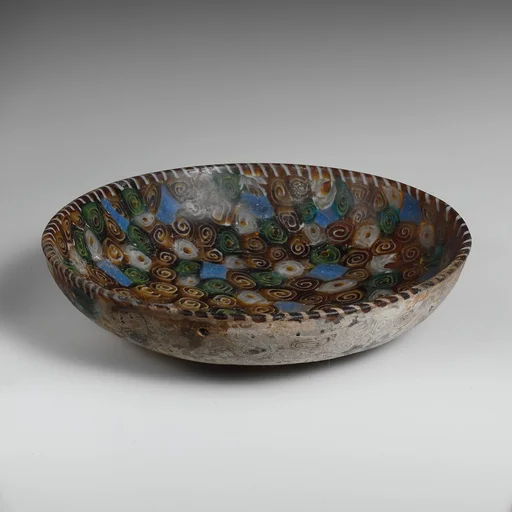
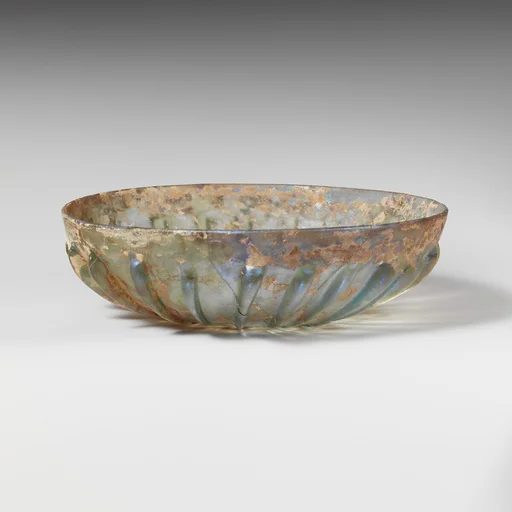
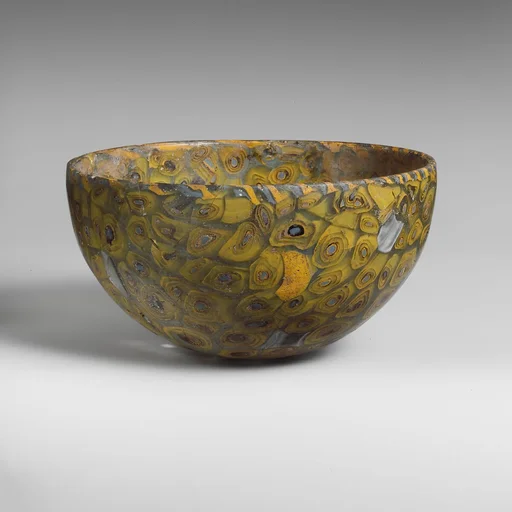
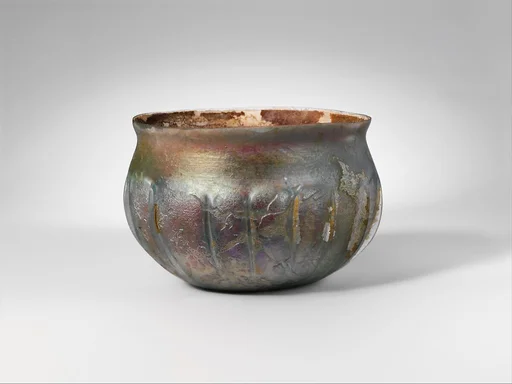
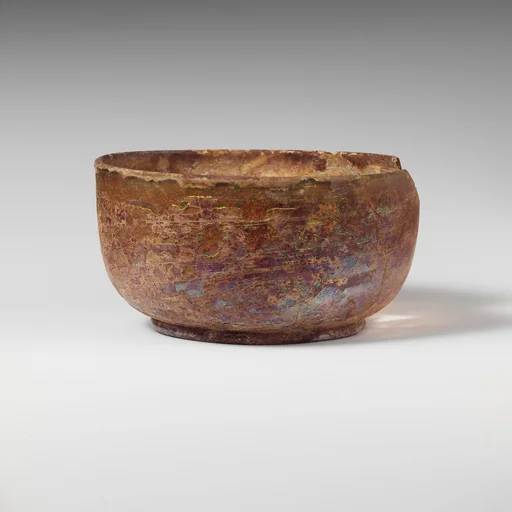
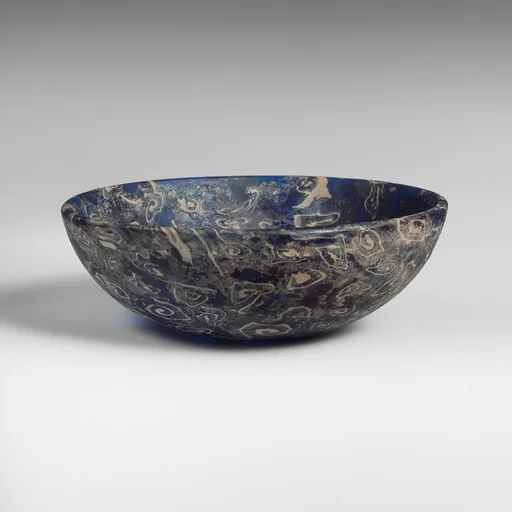
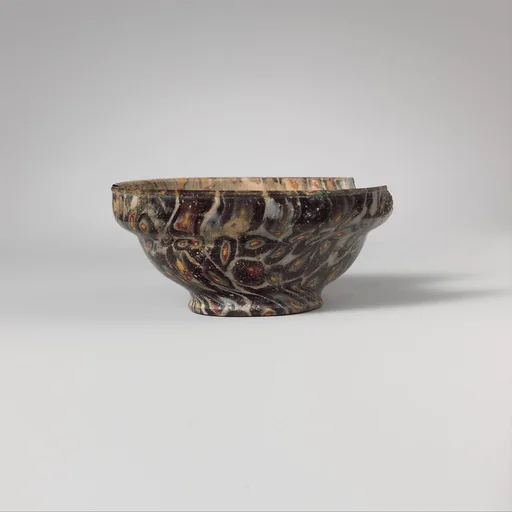
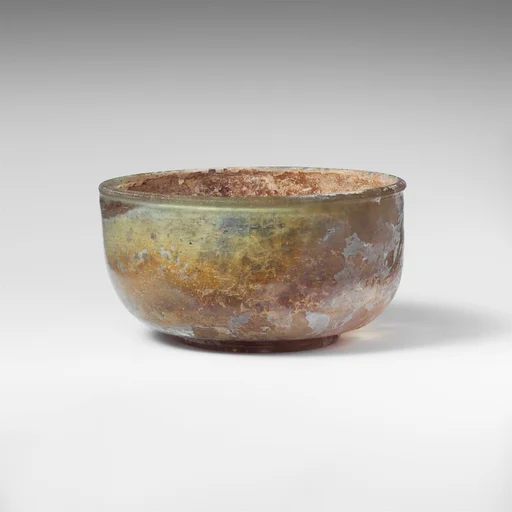
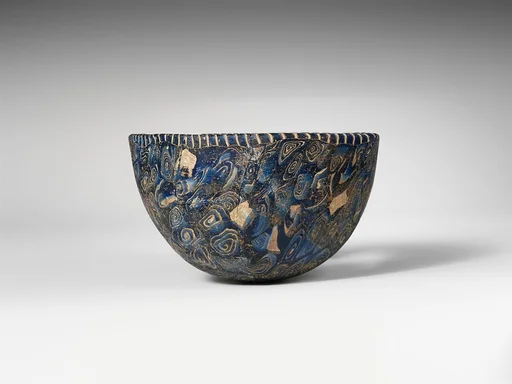
Glass hemispherical mosaic bowl
Unknown
2nd–mid-1st century BCE · Glass · Greek and Roman Art
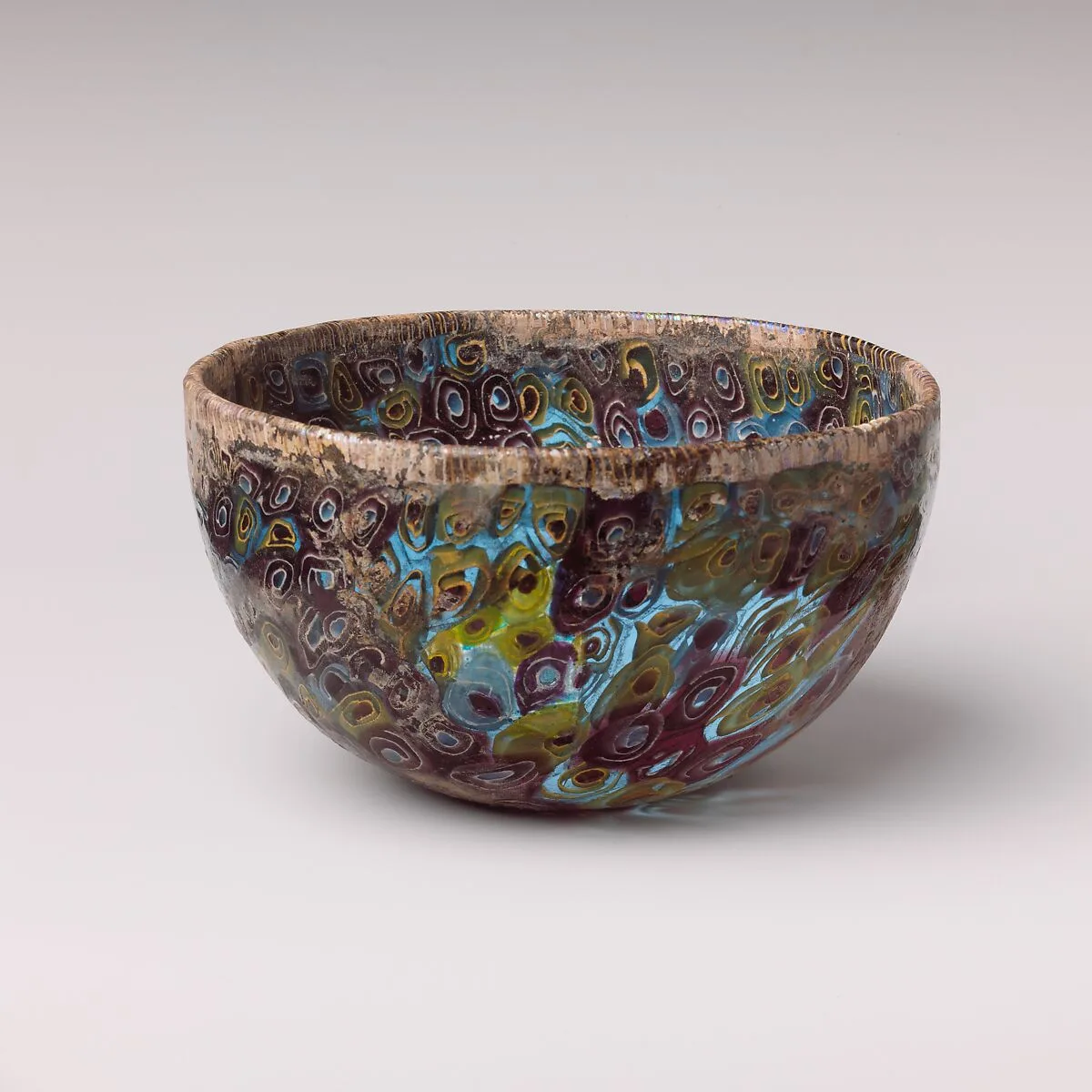
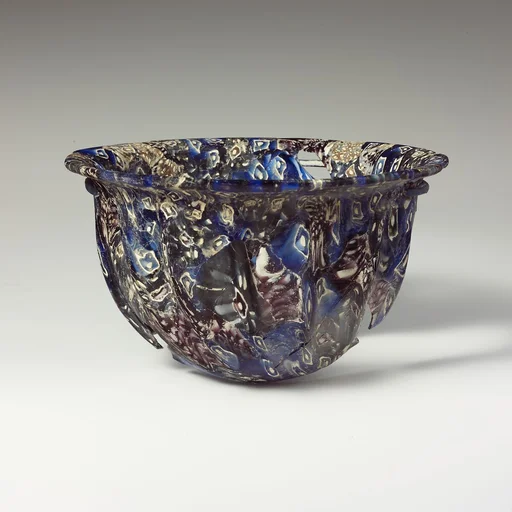
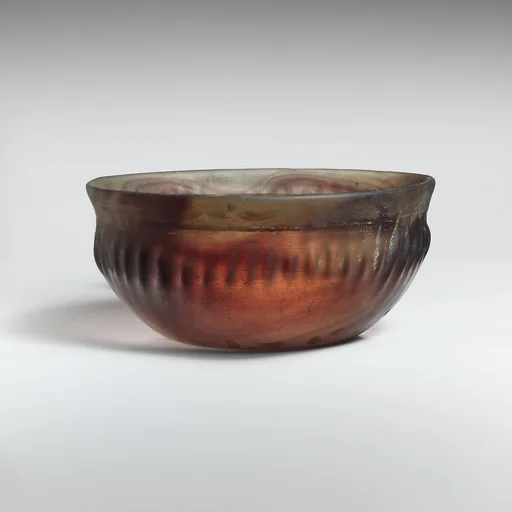
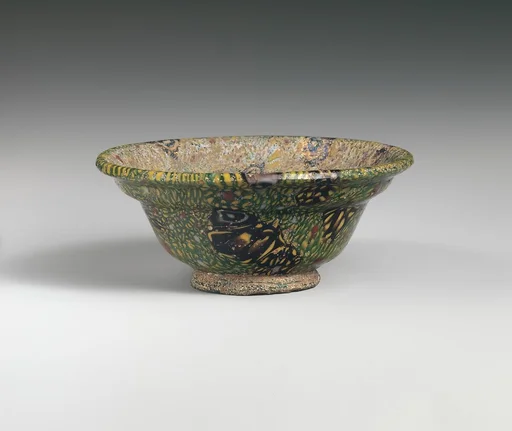
Translucent purple, translucent light blue, opaque white, and opaque yellow. Slightly uneven vertical rim; convex side, tapering downward; slightly concave bottom. Composite mosaic pattern formed from polygonal sections of three canes: the first in a purple ground with a white spiral and central blue circle; the second in a blue ground with a white spiral and central purple circle, and the third in a blue ground with a yellow spiral, appearing green and central purple circle; a purple cane wound spirally with two fine threads in white and yellow is attached as a rim. Broken and repaired, with one patch of fill; some pitting and dulling, iridescence, and weathering, especially on rim. Rotary grinding marks on interior. The red, blue, and green mosaic glass of this exquisite bowl was fused, placed over a mold, ground, and then polished. Hemispherical bowls were an especially popular form of mosaic glassware, perhaps because they show off the polychrome decoration to good effect.
- Artist
- Unknown
- Date
- 2nd–mid-1st century BCE
- Medium
- Glass
- Culture
- Greek, probably Eastern Mediterranean
- Department
- Greek and Roman Art
- Credit line
- Gift of Henry G. Marquand, 1881