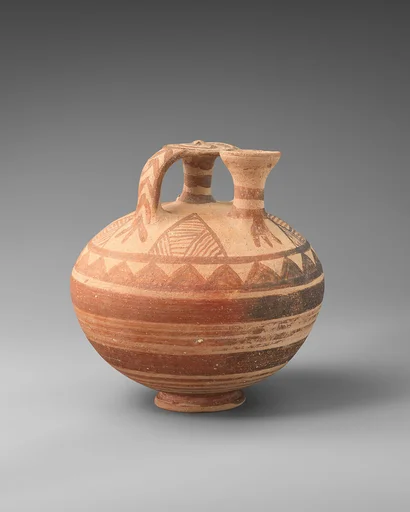
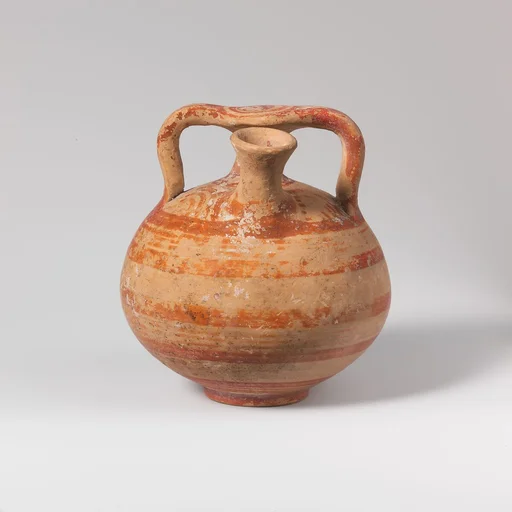
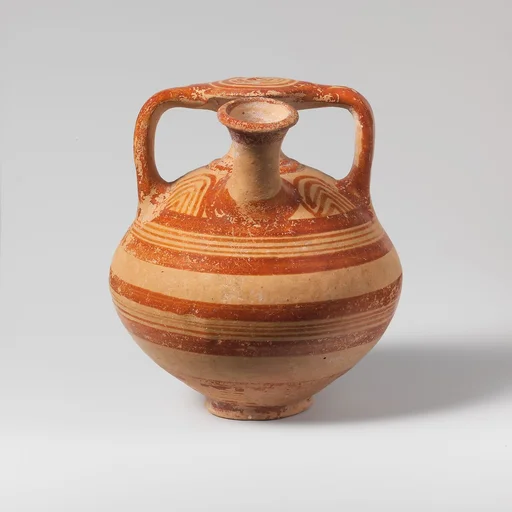
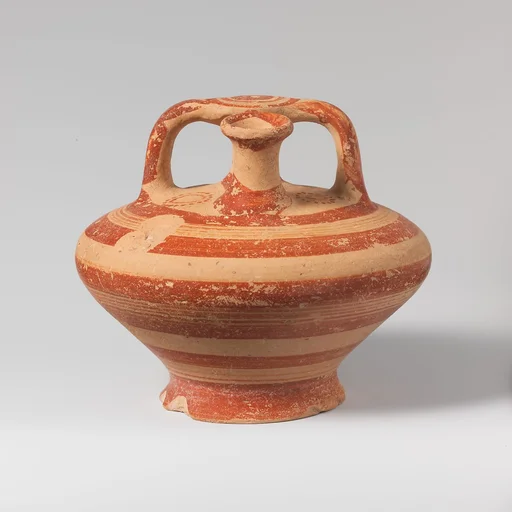
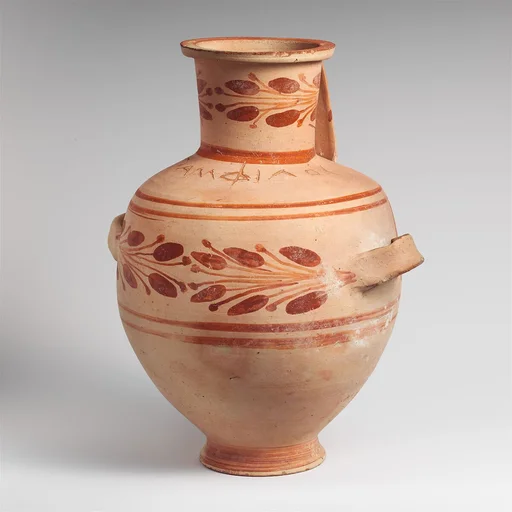
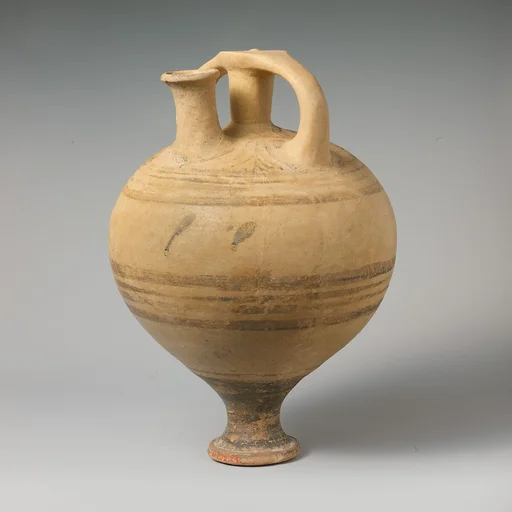
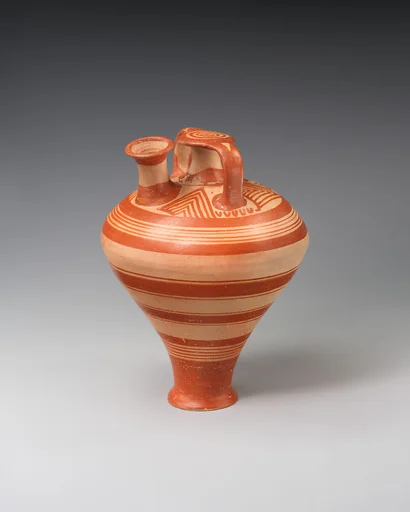
Terracotta stirrup jar
Unknown
ca. 1300–1230 BCE · Terracotta · Greek and Roman Art
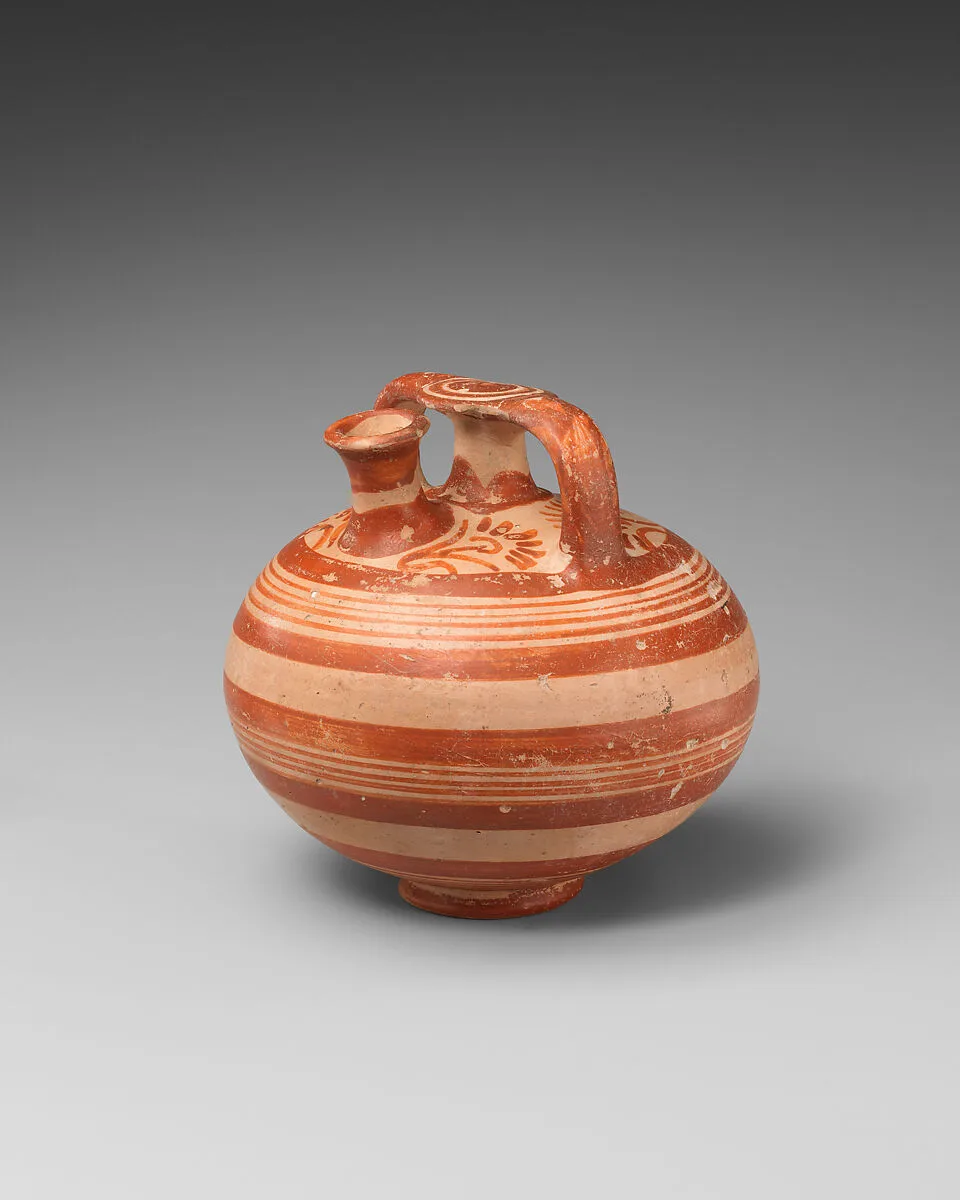
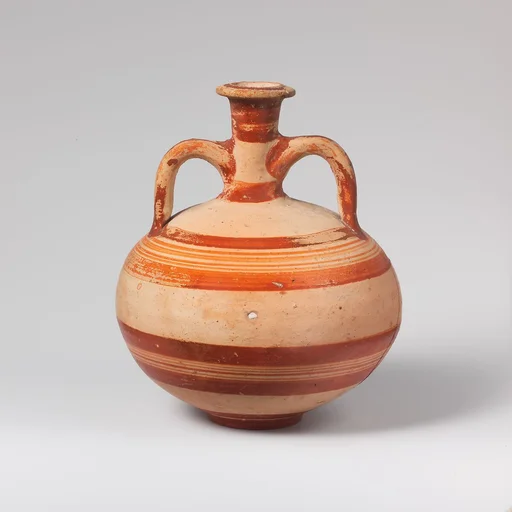
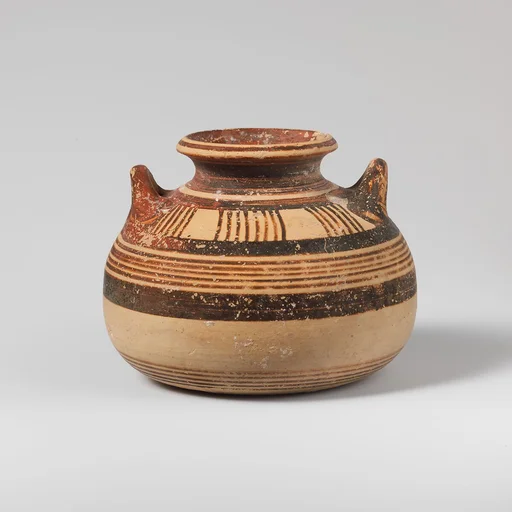
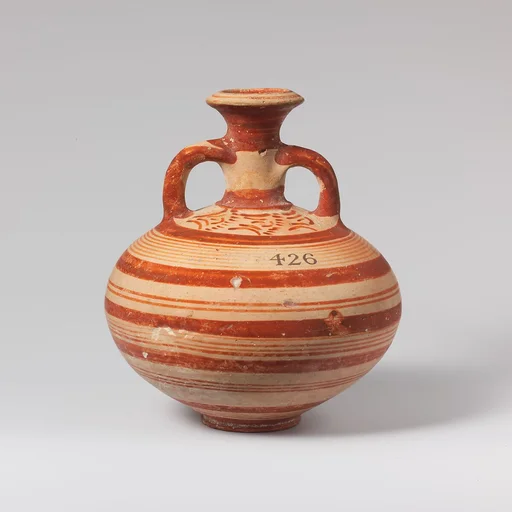
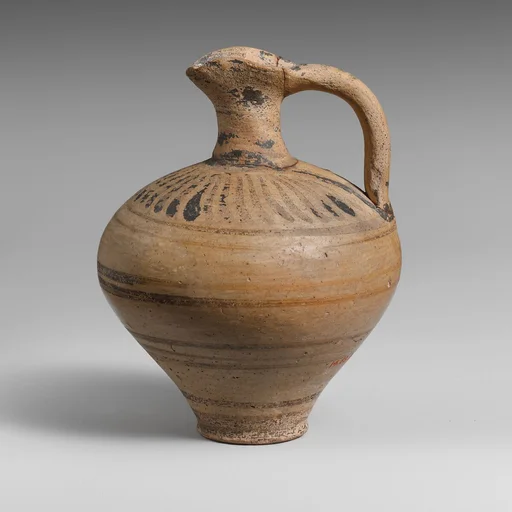
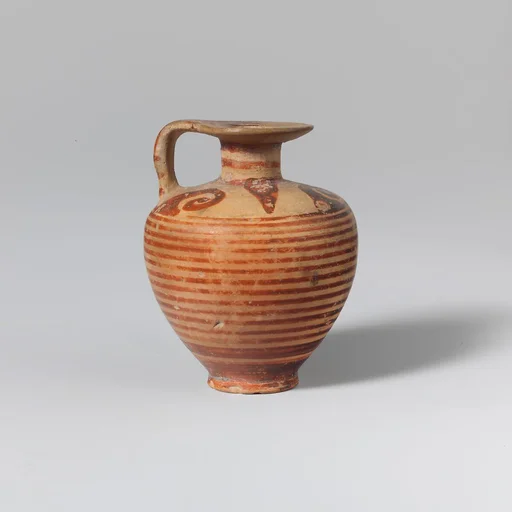
Large numbers of Mycenaean vases inundated the Cypriot market starting at the beginning of the fourteenth century B.C., perhaps as a result of intensive trade relations between the Aegean and the eastern Mediterranean regions. The stirrup jar is one of the most common Mycenaean shapes used to contain liquids such as oil or wine. It is possible, however, that some of the vases, especially those made in the thirteenth century B.C., may have been made by Mycenaean potters working on Cyprus. It is now also well documented that clay was traded in antiquity.
- Artist
- Unknown
- Date
- ca. 1300–1230 BCE
- Medium
- Terracotta
- Culture
- Mycenaean
- Department
- Greek and Roman Art
- Credit line
- The Cesnola Collection, Purchased by subscription, 1874–76