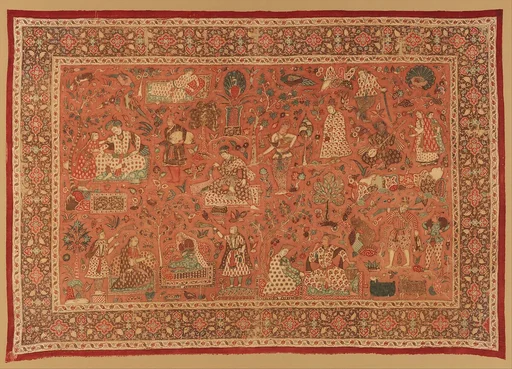
Petticoat panel
Unknown
third quarter 18th century · Cotton, painted resist and mordant, dyed · European Sculpture and Decorative Arts
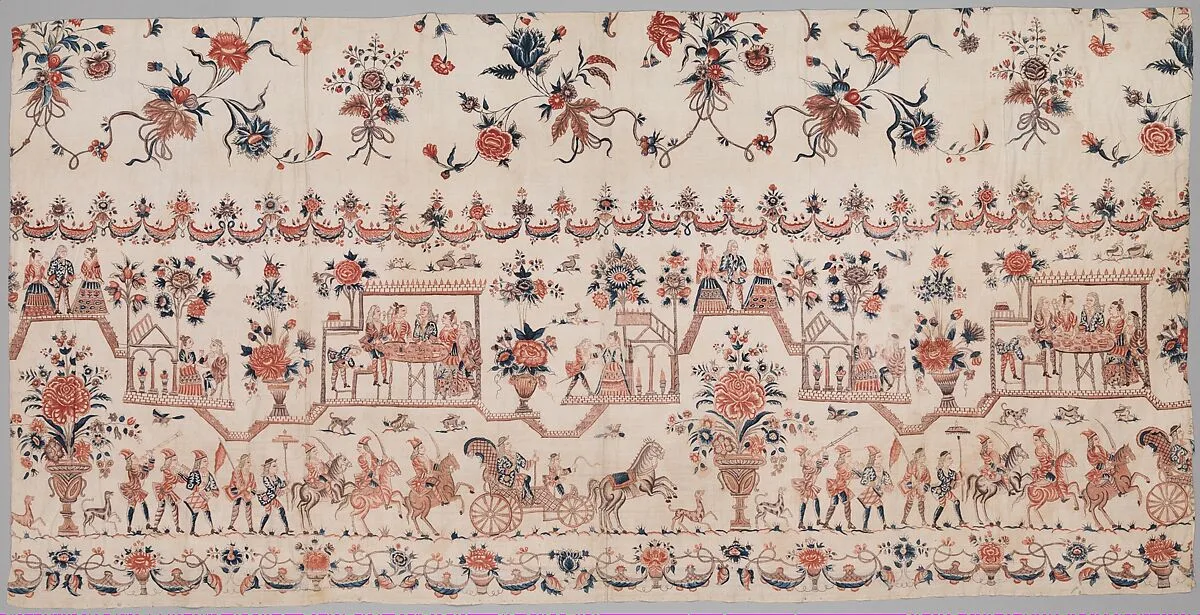
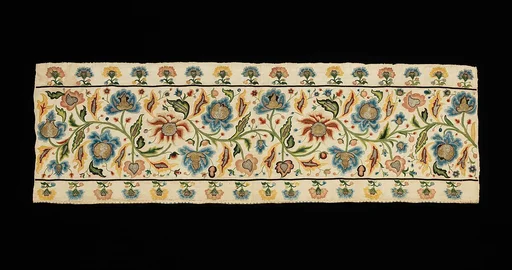
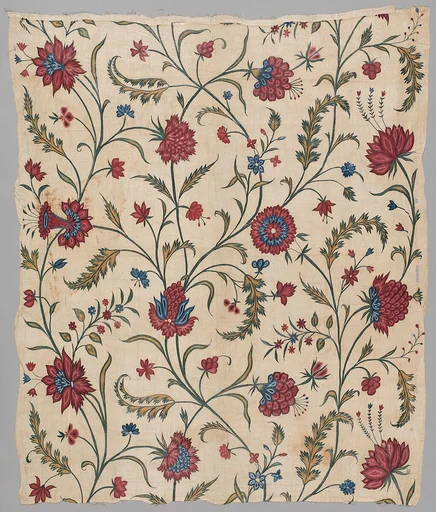
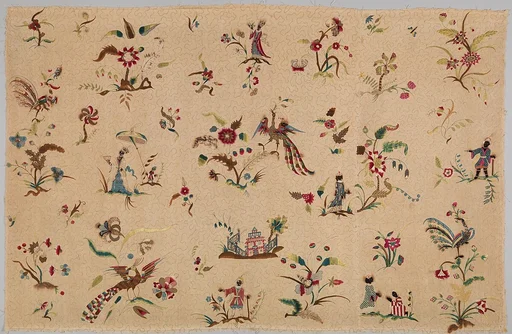
The primary goal of the Dutch East India Trade Company and its English equivalent (established in 1597 and 1600, respectively) was the acquisition of pepper and spices in Malaysia, but the Indian painted and dyed cottons used for subsequent foreign barter also generated excitement at home. Introduced perhaps by accident during the seventeenth century, the fabrics fascinated European consumer's, who had no local equivalent that could compete for brightness, variety, and fastness of color at relatively low cost. The designs were achieved by repeatedly painting with mordants and resist dyeing the cloth for each color and shade. Experts at customizing exports, Indian chintz makers had manufactured specific designs for their earlier trading partners in the Near East, Africa, and Asia. Similarly, designs were developed to meet the needs of individual European markets and to appeal to regional tastes. This type of pattern, with lively and anecdotal figural compositions—from a semimilitary parade to couples visiting and dining—was intended for the Dutch market. It found particular favor in the northern Netherlands province of Friesland and especially in the town of Hindelopen, where it would most likely have been everyday wear for a wealthy farmer's wife.
- Artist
- Unknown
- Date
- third quarter 18th century
- Medium
- Cotton, painted resist and mordant, dyed
- Culture
- Indian, Coromandel Coast, for Dutch market
- Department
- European Sculpture and Decorative Arts
- Credit line
- Purchase, Friends of European Sculpture and Decorative Arts Gifts, 1992