Cope
Unknown
18th century · Silk, metal thread · European Sculpture and Decorative Arts
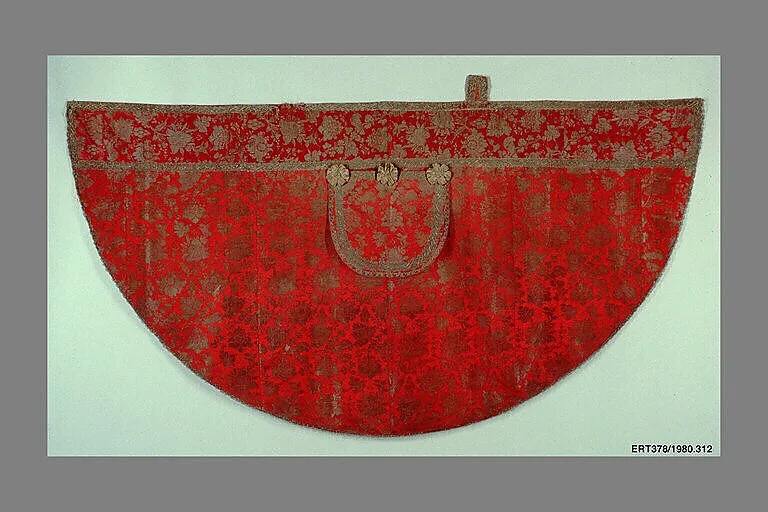
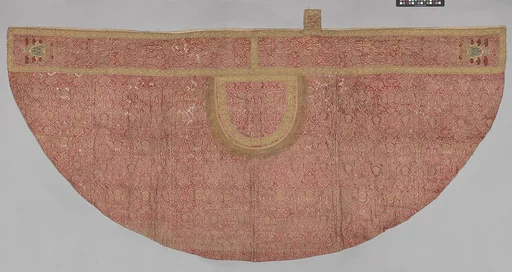
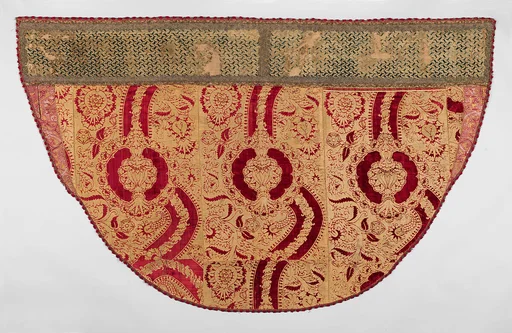
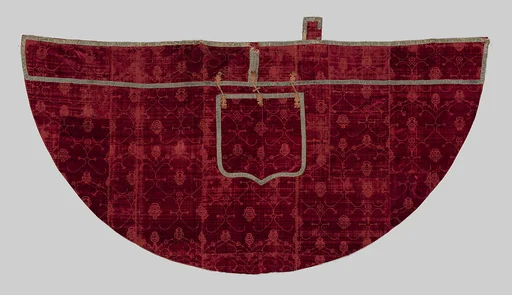
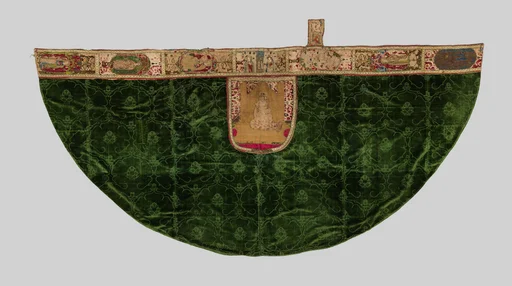
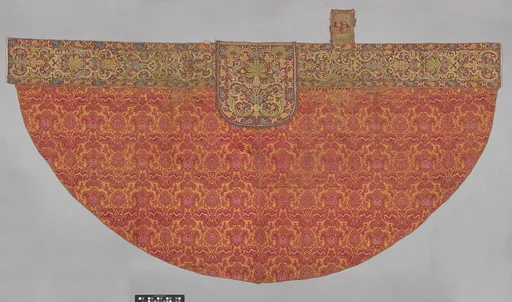
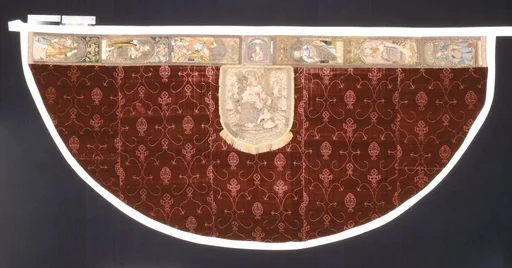
Sumptuous fabrics without any particular religious imagery were often used to make ecclesiastical vestments. This cope, in its original state, is composed of four full and two partial widths of a handsome red silk satin with an asymmetrical floral pattern, shown here in detail. The same fabric is used for the orphrey band, the morse, and the hood, which are, in addition to the cope as a whole, bordered in metallic lace. The hood is trimmed with an additional band of metallic lace and three bows of brocaded ribbon. The various floral and design elements of the main fabric, as well as the pattern organization in general, can be related to Italian textiles, particularly Venetian silks of the fifteenth century. The asymmetrical undulating composition and motifs of stylized blossoms, pomegranate buds with superimposed rosettes, and multilobed leaves with rounded edges are all inspired by the earlier fabrics. Also similar is the combination of solid-color ground with pattern in glowing metallic thread. The familiar motif of the opened pomegranate is borrowed from yet another group of Italian Renaissance silks and velvets. More specific to the eighteenth century is the device of "threading" together flowers and leaves of diverse types on one thin stem. This motif appears in the so-called bizarre silks, which are often thought to be of Italian manufacture and are contemporary with the cope. Elegant and enigmatic, this unusual example of early eighteenth-century textile arts adds another dimension to the study of fabrics of the period.
- Artist
- Unknown
- Date
- 18th century
- Medium
- Silk, metal thread
- Culture
- Italian
- Department
- European Sculpture and Decorative Arts
- Credit line
- Rogers Fund and Joan Kaminiski and Everfast Fabrics Inc. Gifts, 1980