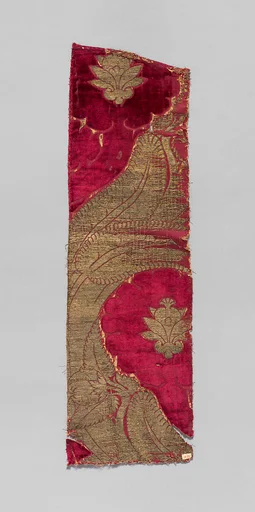
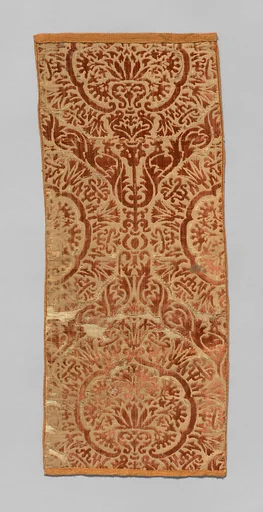
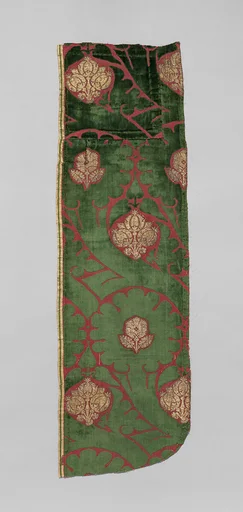
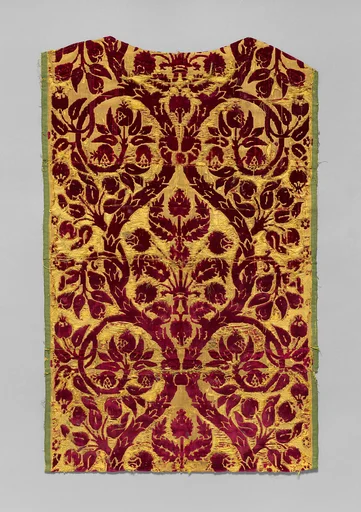
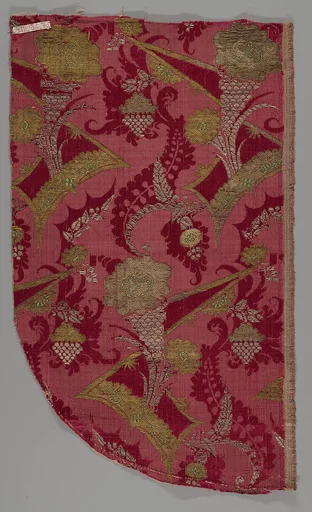
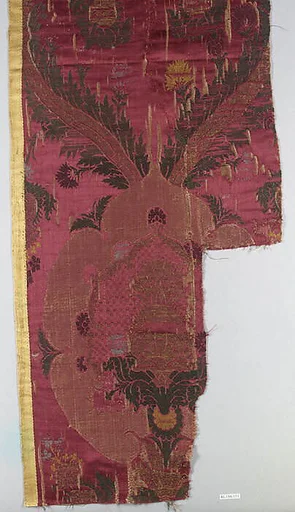
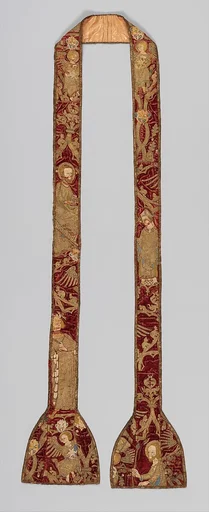
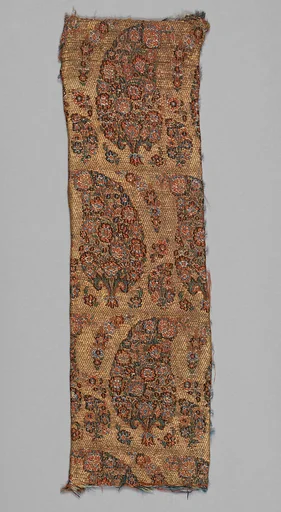
Velvet panels from a chasuble
Unknown
mid-15th century · Silk and metal thread · European Sculpture and Decorative Arts
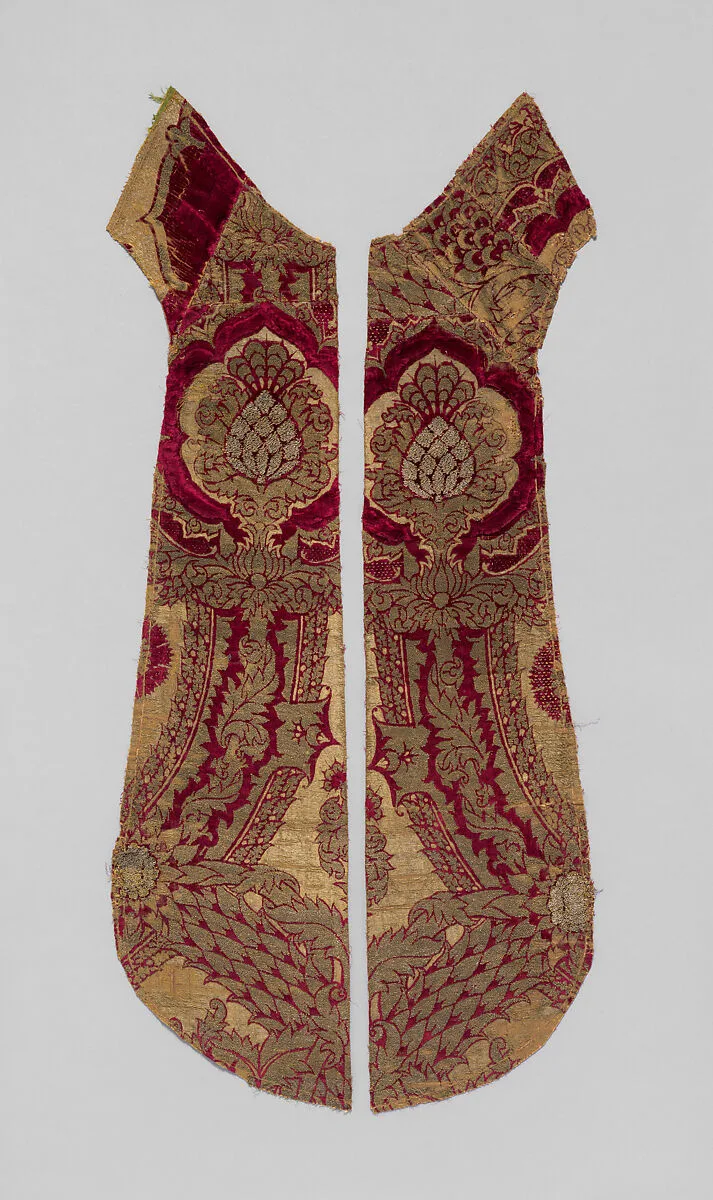
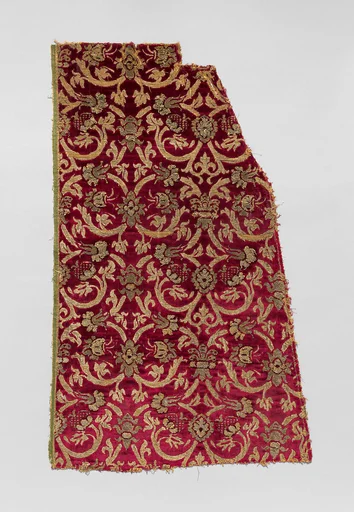
These two panels are a tour-de-force of Renaissance velvet. They combine a bold, unusual design with the most expensive raw materials that money could buy, executed in the most virtuoso, technically-superlative weaving. The precious gilded metal threads, in varying thicknesses and profiles, have been used in three different techniques– random dashes of gold (called alluciolato, after the Italian for "firefly") in the crimson flower petals; rows of raised loops (bouclé) in the pine cones, leaves and tendrils; flat golden expanse of taut golden threads (lancé) across the surrounding ground. The deep, lush crimson pile is two heights, achieving an additional effect of three dimensionality. This velvet was clearly greatly prized as the current two panels, cut for use as the front half of a Catholic priest's tabard-like chasuble garment, were likely expertly tailored second-hand (probably in the sixteenth century): the shoulders are skillfully patched from a different original context.
- Artist
- Unknown
- Date
- mid-15th century
- Medium
- Silk and metal thread
- Culture
- Italian
- Department
- European Sculpture and Decorative Arts
- Credit line
- Rogers Fund, 1956