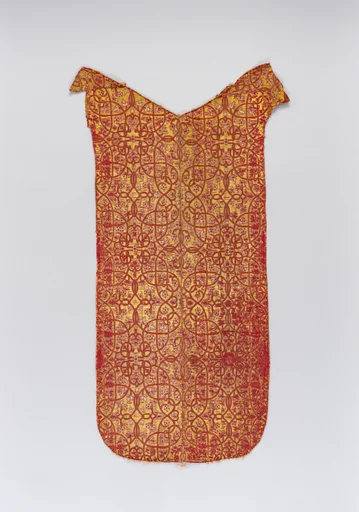
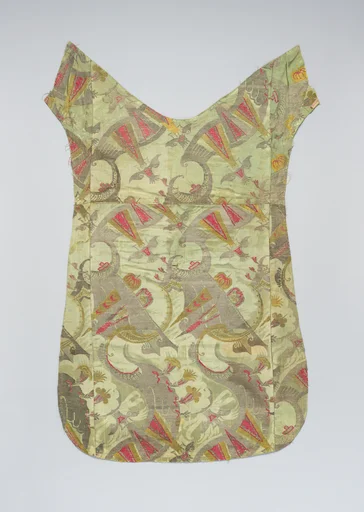
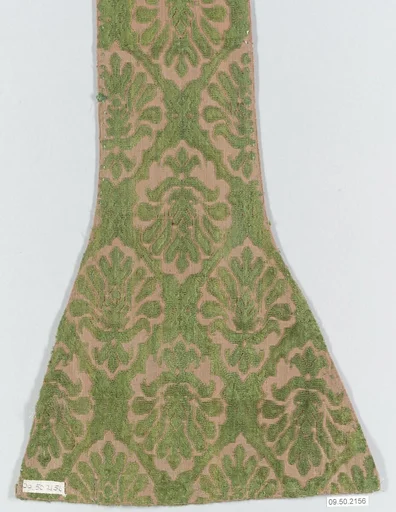
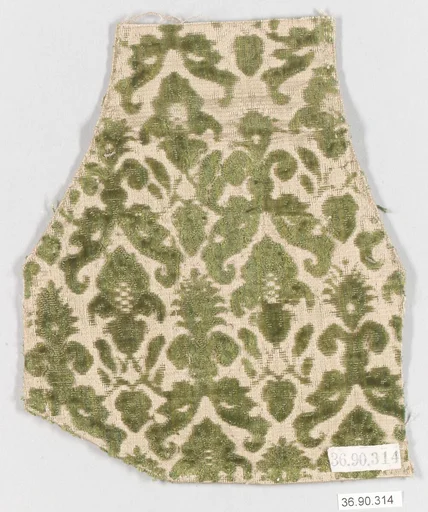
Back of a chasuble
Unknown
16th century · Silk and metal thread · European Sculpture and Decorative Arts
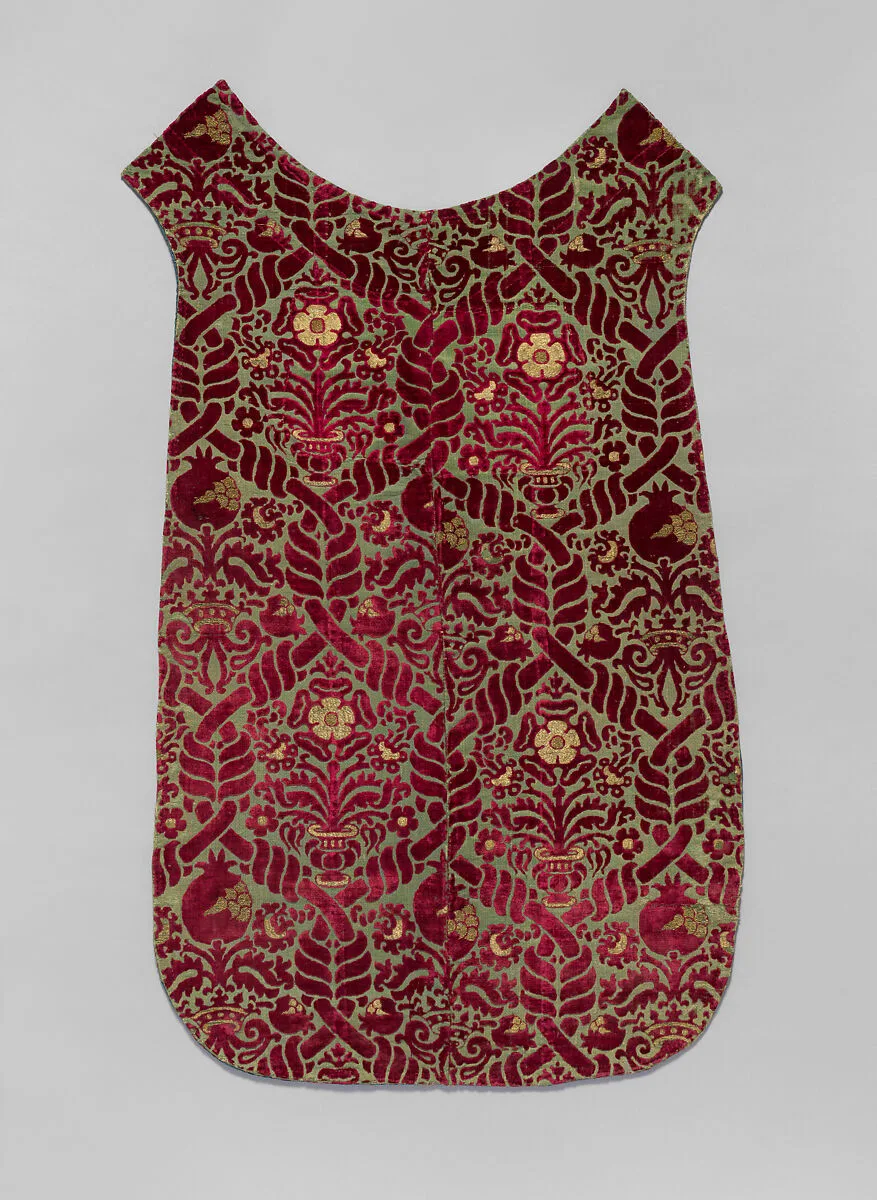
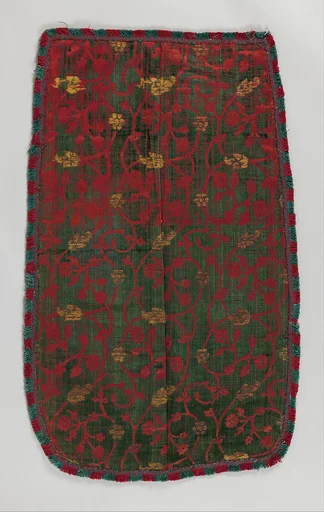
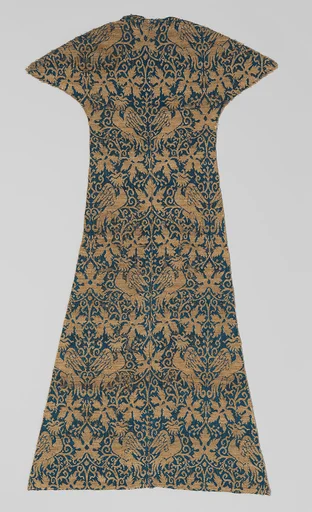
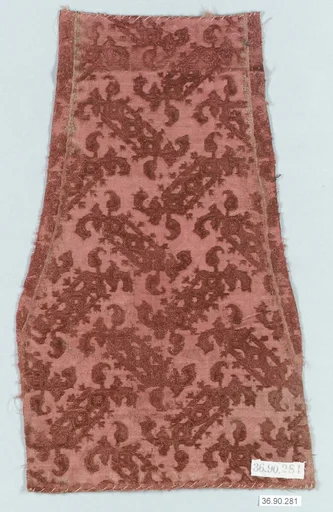
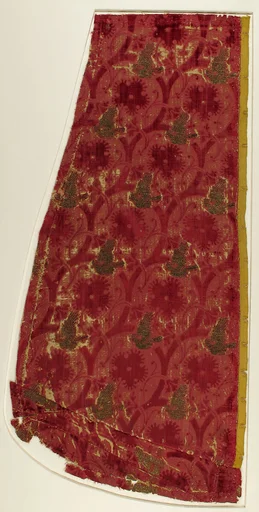
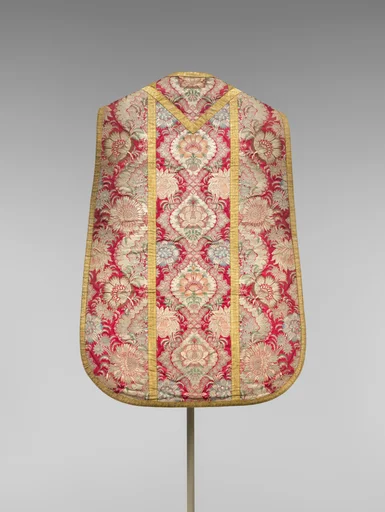
In a sumptuous palette of green, red and gold, this figured velvet embodies the very best of Early Modern weaving. In a repeat pattern of cordelier knotted cords framing roses blooming from vases and pomegranates from crowns, the weavers used their gilded metal threads with incredible skill, introducing texture and relief by alternating a looped bouclé effect in the pomegranate seeds and flowers' pistils, with the smoother, lancé technique in the flower petals and detailing of the vases and crowns. This panel was once one half of a chasuble, the tabard-like garment worn by Catholic priests. Originally, its central area was hidden under cross-shaped orphrey panels; close looking at the velvet reveals the trace of outlines of these since-removed elements. In place for centuries, the orphrey will have helped preserve the palette and pile of the velvet protected underneath it.
- Artist
- Unknown
- Date
- 16th century
- Medium
- Silk and metal thread
- Culture
- Italian
- Department
- European Sculpture and Decorative Arts
- Credit line
- Fletcher Fund, 1946