Chasuble
Unknown
late 15th–early 16th century · Silk · European Sculpture and Decorative Arts
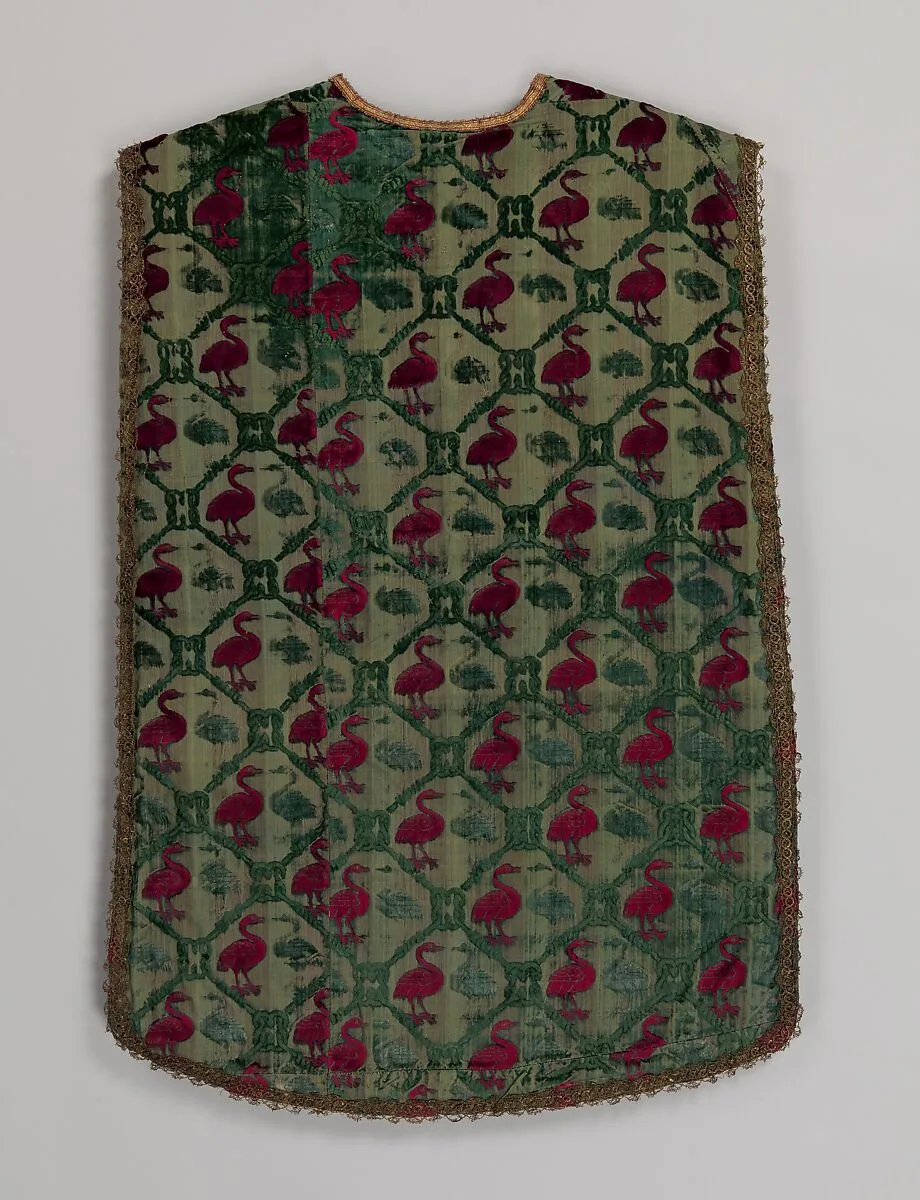
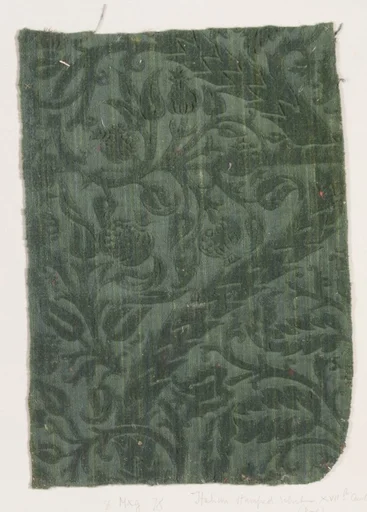
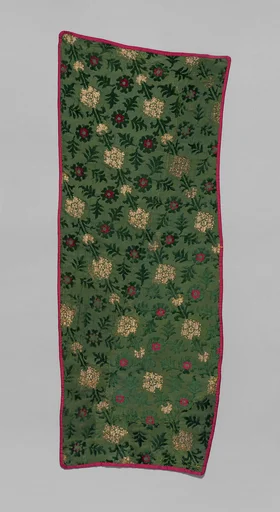
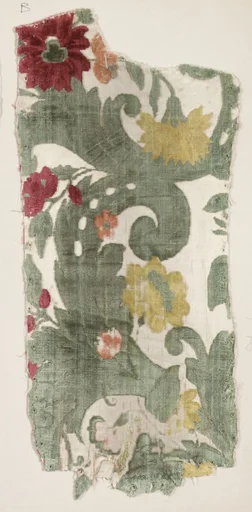
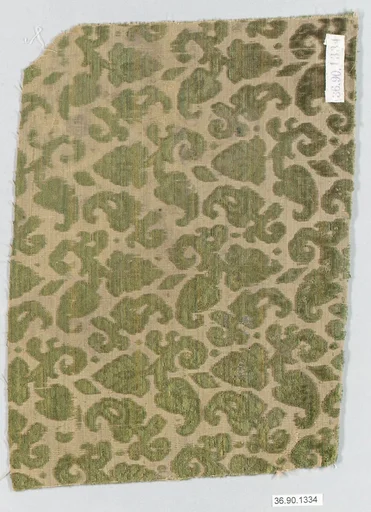
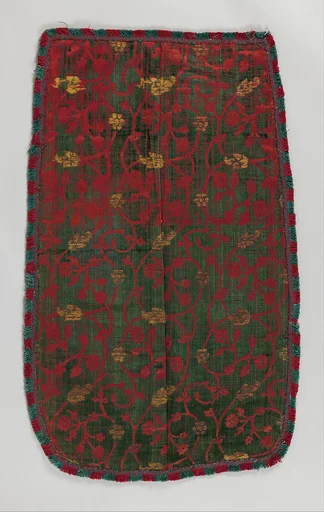
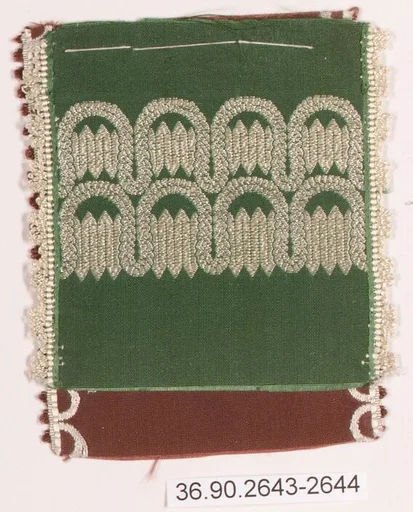
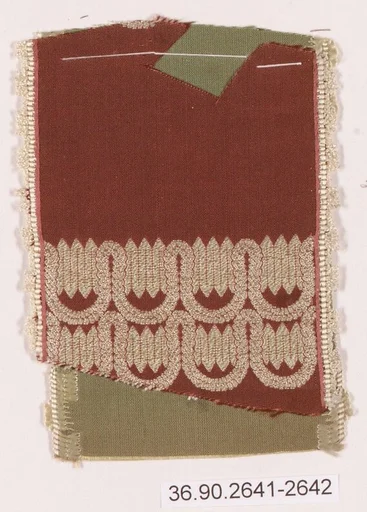
Animal patterns in European velvets were rare during this period, which suggests that the unusual design of this polychrome silk velvet was a special commission and may depict the device of a particular family or individual. The unidentified birds facing each other (perhaps swans or herons) are skillfully detailed by fine lines of contrasting color. The silk pile of this velvet is composed of fours colors: two shades of green, punctuated with a deep vivid pink and off-white. The white is almost completely gone—probably due to the corrosive effects of the bleaching process necessary to achieve this color. Although this appealing object resembles a chasuble– the tabard-like garment worn by Roman Catholic priests– it is actually composed of multiple fragments of the velvet, carefully retained and repurposed, hemmed into patches and stitched together to create the current assemblage. Three different passementerie braids are used on the front to disguise the seams. There are no patterns of wear associated with a used chasuble, and it is more likely that this appealing velvet was thus rearranged by a canny dealer to appeal to the tastes of the gilded age art market.
- Artist
- Unknown
- Date
- late 15th–early 16th century
- Medium
- Silk
- Culture
- Italian
- Department
- European Sculpture and Decorative Arts
- Credit line
- Gift of Ann Payne Blumenthal, 1941