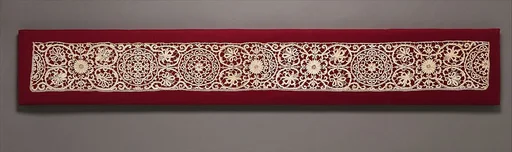
Cravat
Unknown
late 19th century · Needle lace, gros point lace, linen · European Sculpture and Decorative Arts
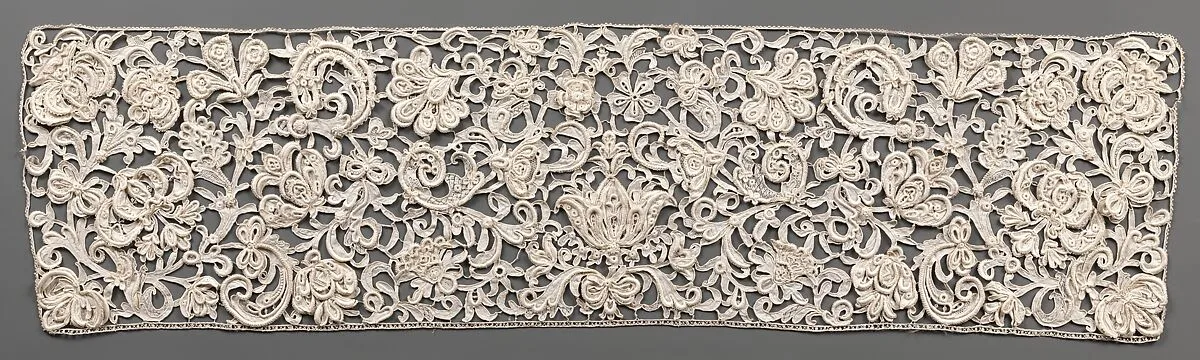
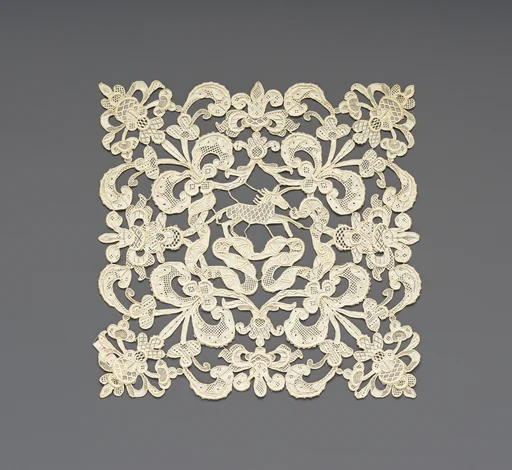
Venetian gros point needle lace, characterized by bold patterns that combined heavily padded outlines and delicate filling stitches, first became popular in the mid-seventeenth century. In late nineteenthcentury Austria, a number of lace schools were established under the patronage of Empress Elizabeth. One of these, the K. K. Zentral- Spitzenkurs, or Central Lace Exchange of Vienna, became known for its copies of Venetian gros point that incorporated partially detached elements, an innovation that augmented the threedimensional effect. This border contains elements in the style of Josef Storck, head designer at the Zentral-Spitzenkurs.
- Artist
- Unknown
- Date
- late 19th century
- Medium
- Needle lace, gros point lace, linen
- Culture
- probably Austrian
- Department
- European Sculpture and Decorative Arts
- Credit line
- Gift of Mrs. George Nichols, from the collection of her mother, Mrs. J.P. Morgan (1868-1925), 1938