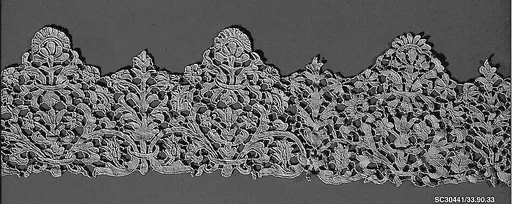
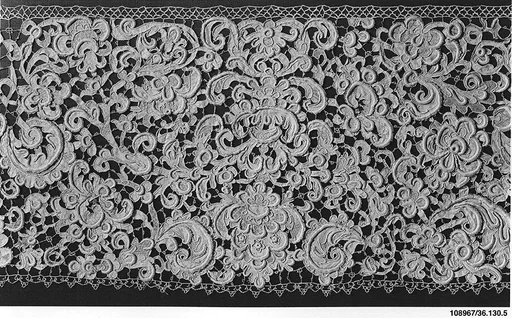
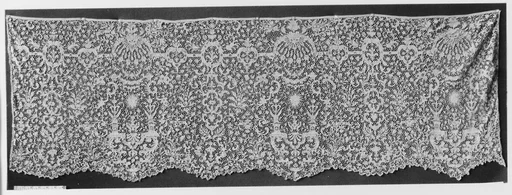
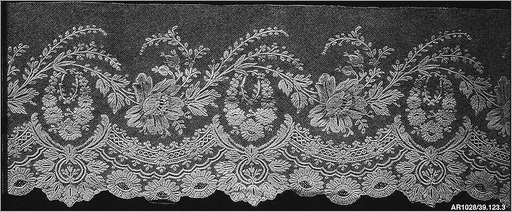
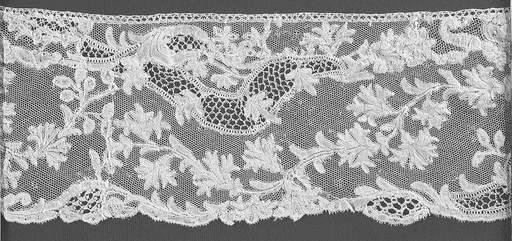
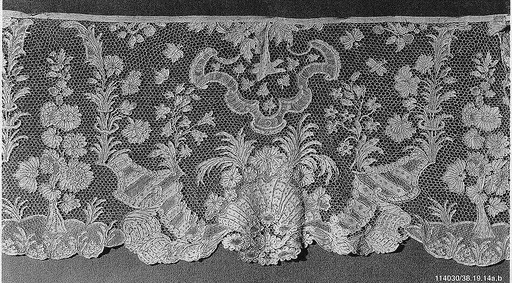
Gros point needle lace border
Unknown
third quarter 17th century · Needle lace, gros point lace · European Sculpture and Decorative Arts
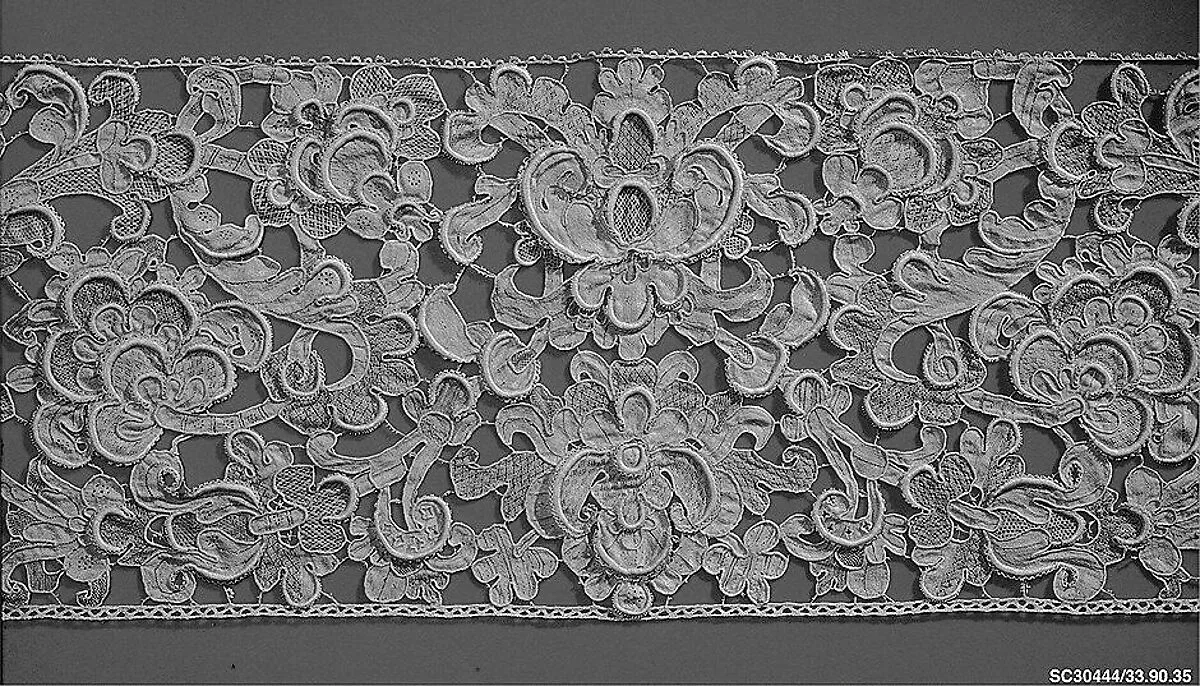
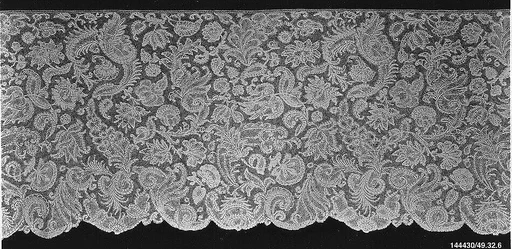
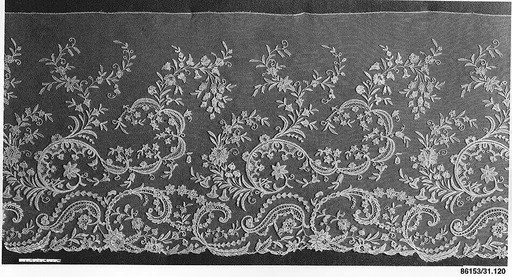
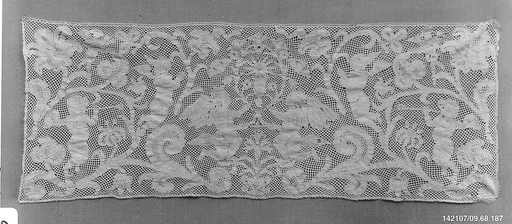
Seventeenth-century lace has a voluminous character—rather than the light and airy form of later periods—reflecting an era when luxury was equated with grandeur. Here, a careful balance is achieved between the solid forms of the formalized leaves and flowers and the voids in between. The sculptural relief of this type of lace appealed to artists working in other media: Baroque lace appears in the work of the English sculptor of wood, Grinling Gibbons, as well as in the marble sculpture of Bernini. Lace of this type was made in several sizes—the boldest designs on the largest scale being known as gros point. Smaller-scale designs were called rose point and point de neige.
- Artist
- Unknown
- Date
- third quarter 17th century
- Medium
- Needle lace, gros point lace
- Culture
- Italian
- Department
- European Sculpture and Decorative Arts
- Credit line
- The Mabel Metcalf Fahnestock Collection, the gift of Ruth Fahnestock Schermerhorn and Faith Fahnestock, 1933