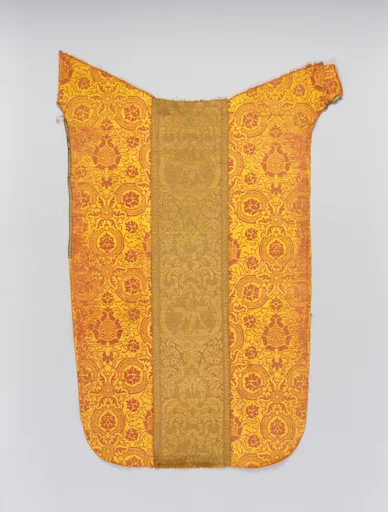
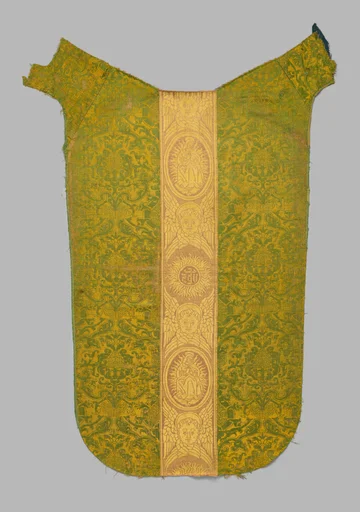
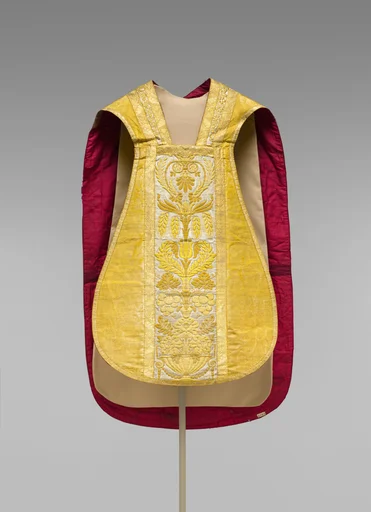
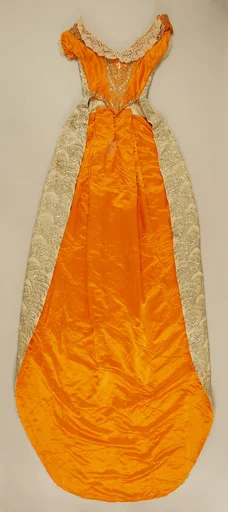
Back of a chasuble
Unknown
15th–16th century · Silk and linen · European Sculpture and Decorative Arts
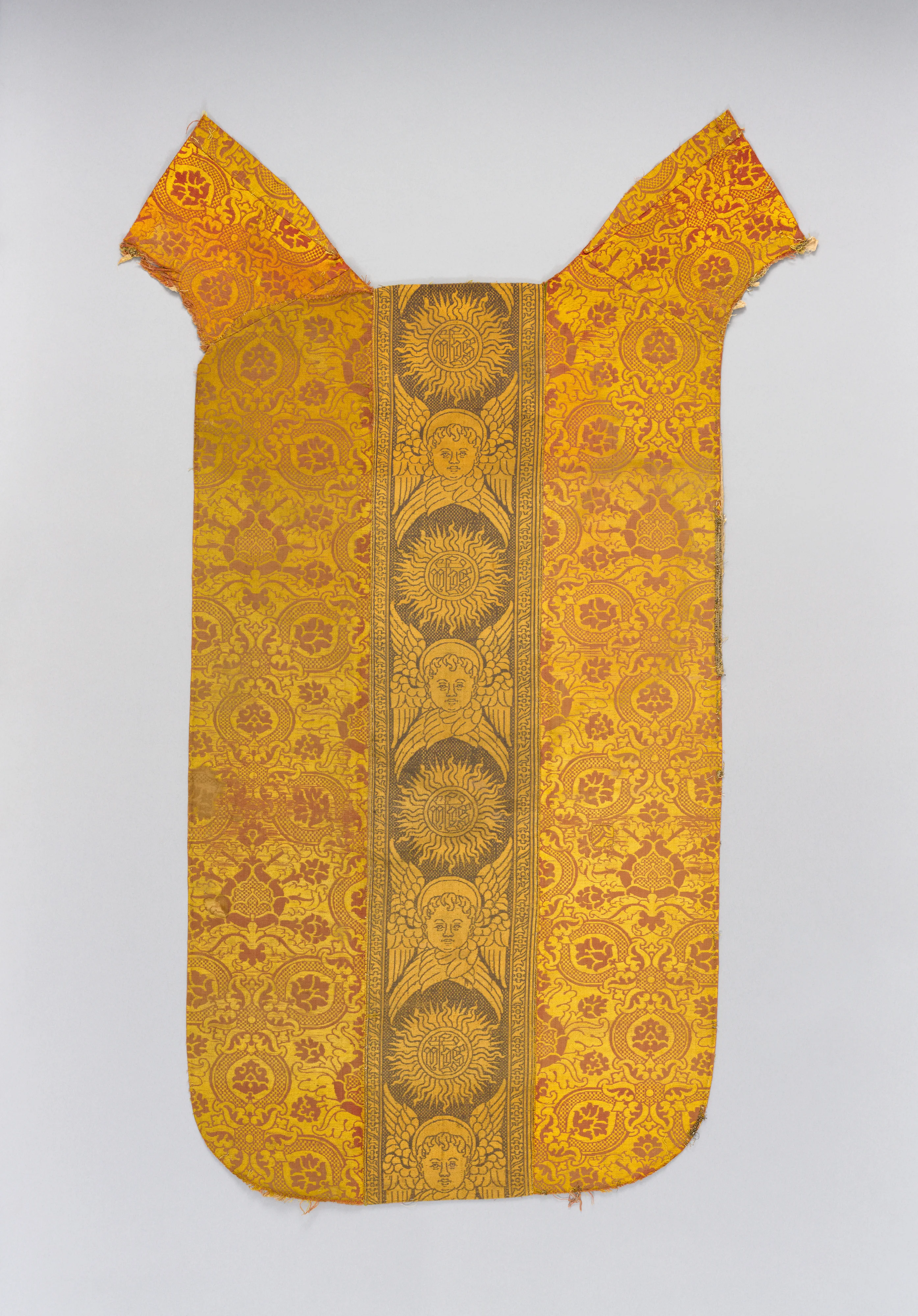
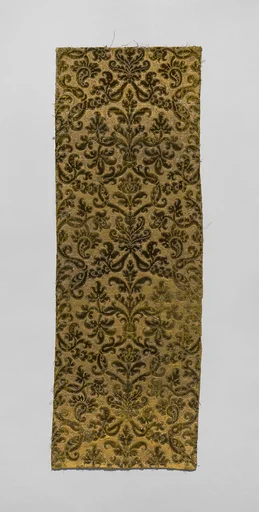
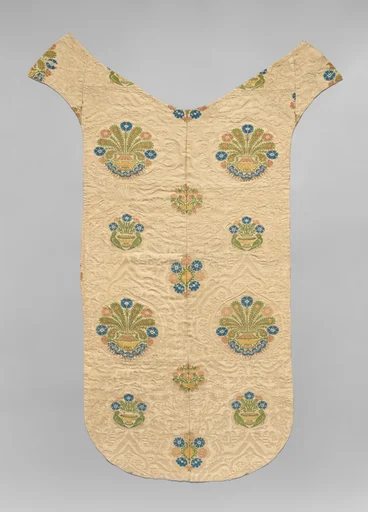
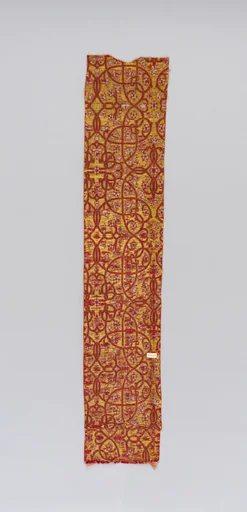
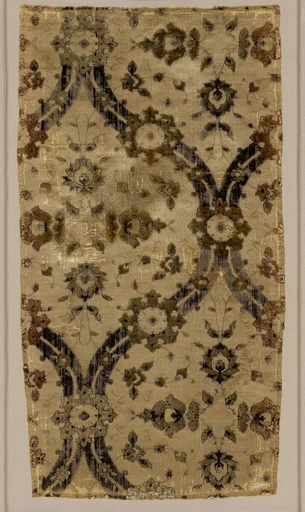
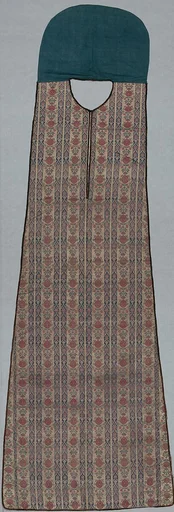
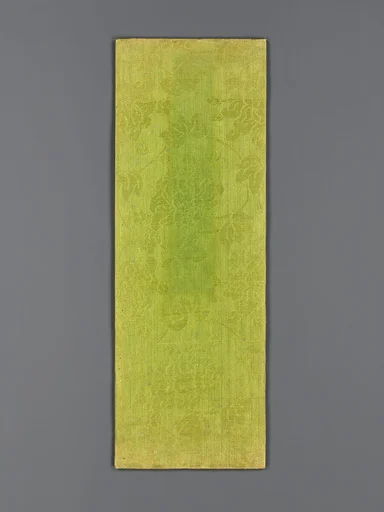
Although this object resembles the reverse of a chasuble– the tabard-like garment worn by a Catholic priest during church services– this is a modern composite of two lengths of lampas silk (33.39.8a, .8b) with a central orphrey strip (33.39.7), assembled soon after the three elements. entered The Met's collection in 1933. The side panels were almost certainly created for and used as part of a historic chasuble, since dismembered long ago. Although, at first glance, the orphrey (33.39.7) resembles the orphreys embellished with repeat figurative elements woven in Lucca in the sixteenth century (like, for example, 33.39.13 also in The Met's collection), the stiffness of the material, strong purple-black color, rigid contours of the motifs, and the use of "faux" metal-thread effects all suggest that this is a much later iteration– still woven in Lucca, but probably made during the nineteenth century in emulation of the city's earlier production and representative of a long-standing and embedded weaving tradition.
- Artist
- Unknown
- Date
- 15th–16th century
- Medium
- Silk and linen
- Culture
- Italian, possibly Florence
- Department
- European Sculpture and Decorative Arts
- Credit line
- Gift of Mrs. Van Santvoord Merle-Smith, 1933