Chair back and seat cover
Séguin et Cie
1811 · Brocaded silk · European Sculpture and Decorative Arts
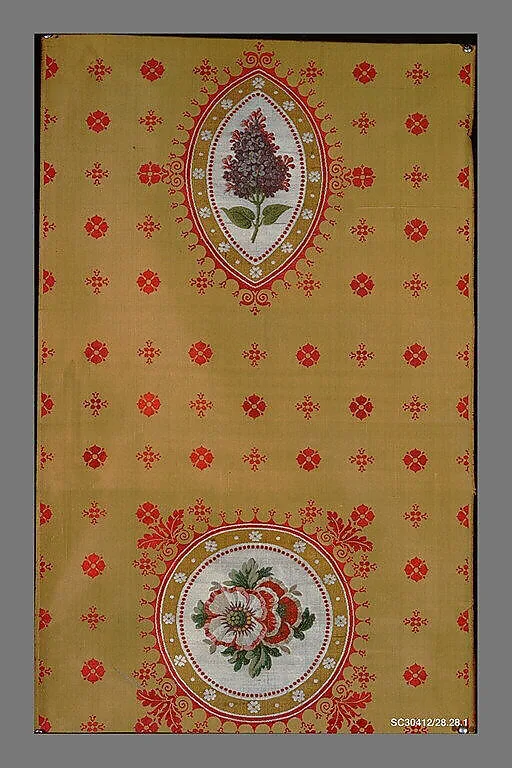
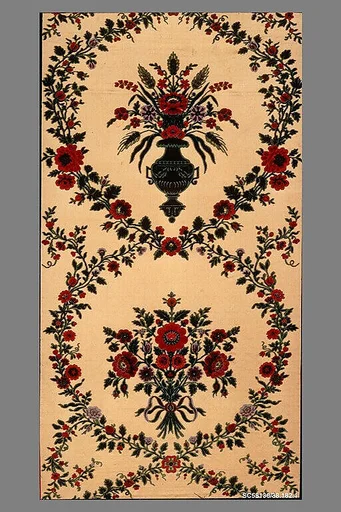
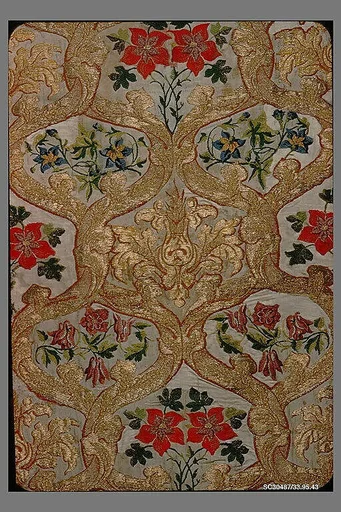
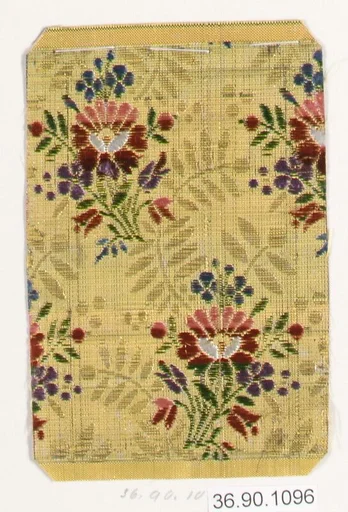
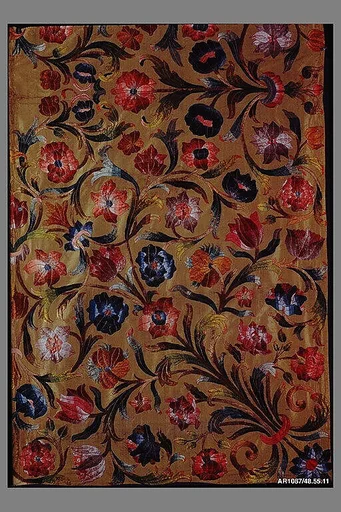
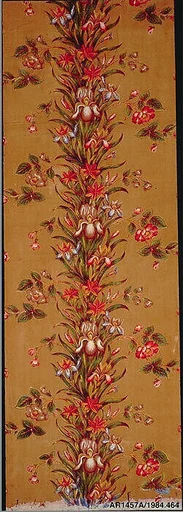
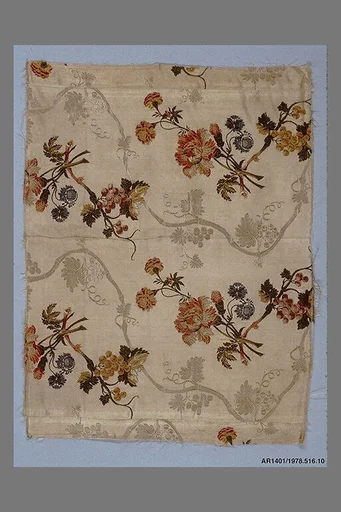
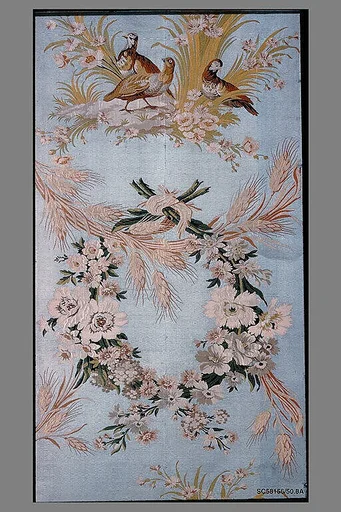
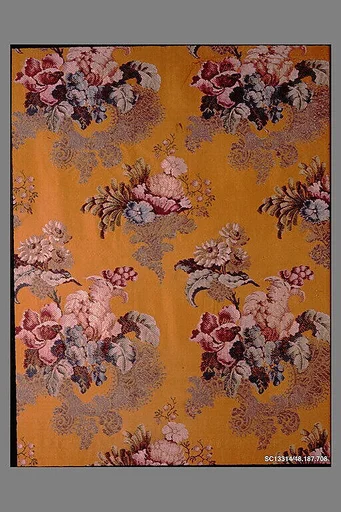
The Mobilier National, successor to Colbert's royal Garde-Meuble de la Couronne, has been responsible for the decoration of state residences in France to the present day. During the seventeenth and eighteenth centuries, the Garde-Meuble oversaw the ordering of textiles from Lyon as part of a general plan to support French industry and decrease competitive textile imports from Italy and elsewhere. Lyon silk manufacturers, known collectively as the Grande Fabrique, were sustained by these commissions and, in response to strict regulatory edicts, brought an unsurpassed degree of beauty and quality to the fabrics they produced. After 1792, all work for the Garde-Meuble ceased in Lyon until January 1802, when Napoleon and Josephine toured the factories on the Quai Saint-Clair. Commissions were soon underway to decorate the palaces being refurbished by the Garde-Meuble, which Napoleon reorganized and designated the Mobilier Impérial. Designed by Jean-Pierre Séguin for the fourth petit salon of the apartment of Napoleon I at Versailles, this fabric was not used until the period of the Restoration by the duchesse d'Angoulême at Saint-Cloud. A gros de Tours (heavy silk), its design is based upon a wall fabric at Malmaison. Its bright yellow ground is punctuated by cerise rosettes and bunches of brocaded lilacs and anemones within central medallions. The lilac and anemone patterns covered chair backs and seats respectively.
- Artist
- Séguin et Cie
- Date
- 1811
- Medium
- Brocaded silk
- Culture
- French, Lyons
- Department
- European Sculpture and Decorative Arts
- Credit line
- Rogers Fund, 1928