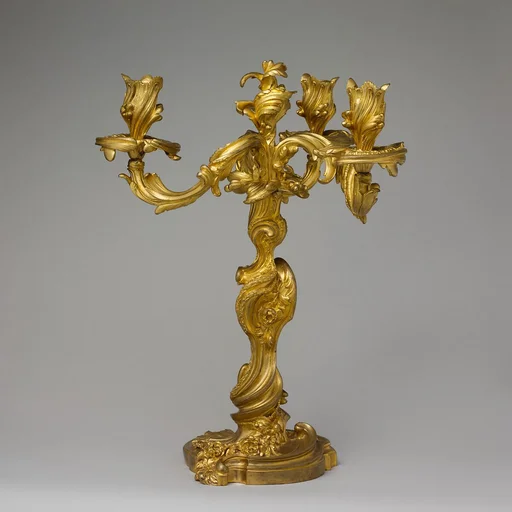
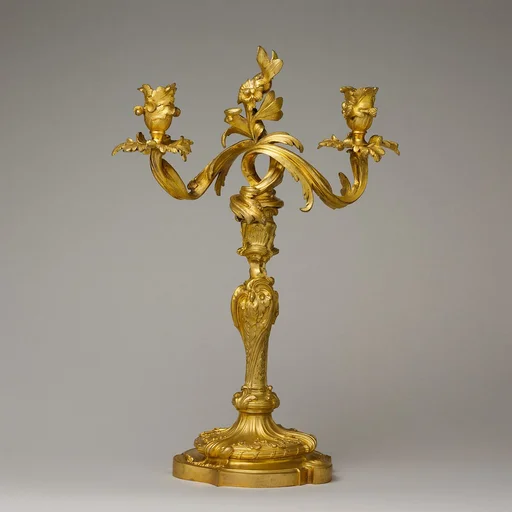
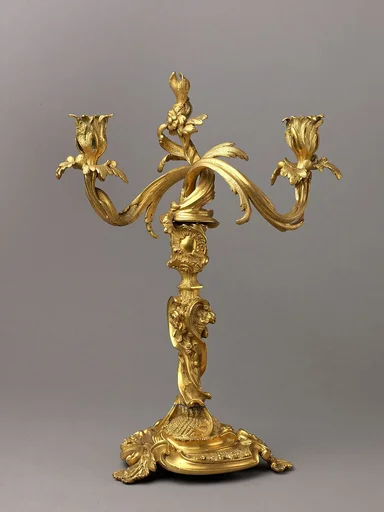
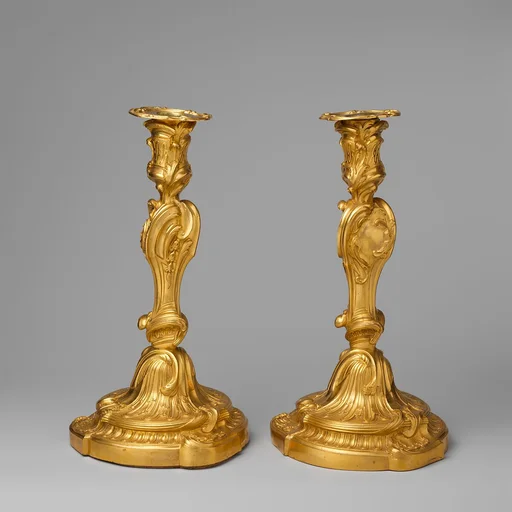
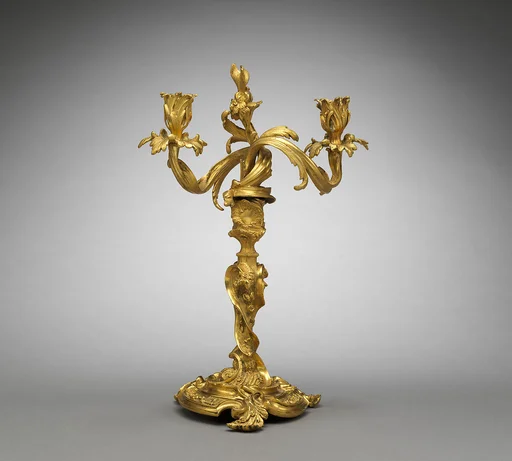
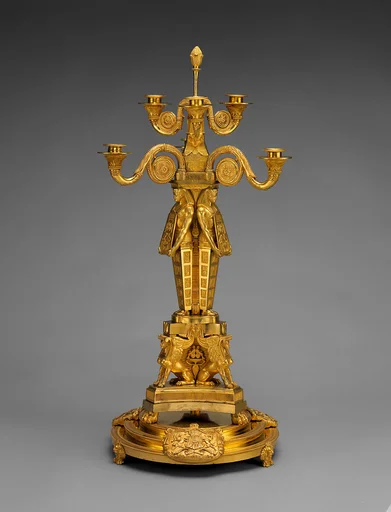
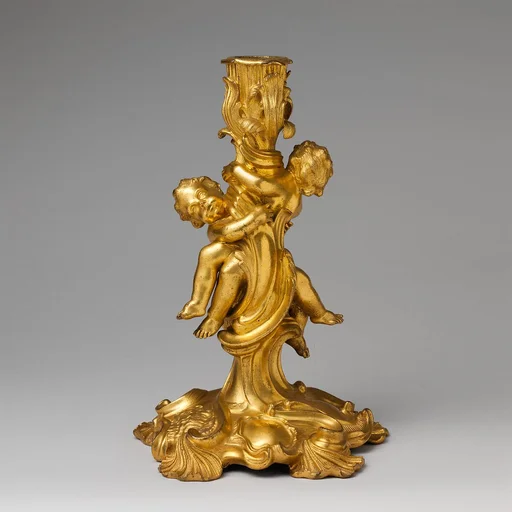
Pair of candlesticks (flambeaux or chandeliers)
Juste Aurèle Meissonnier
1735–50 · Gilt bronze · European Sculpture and Decorative Arts
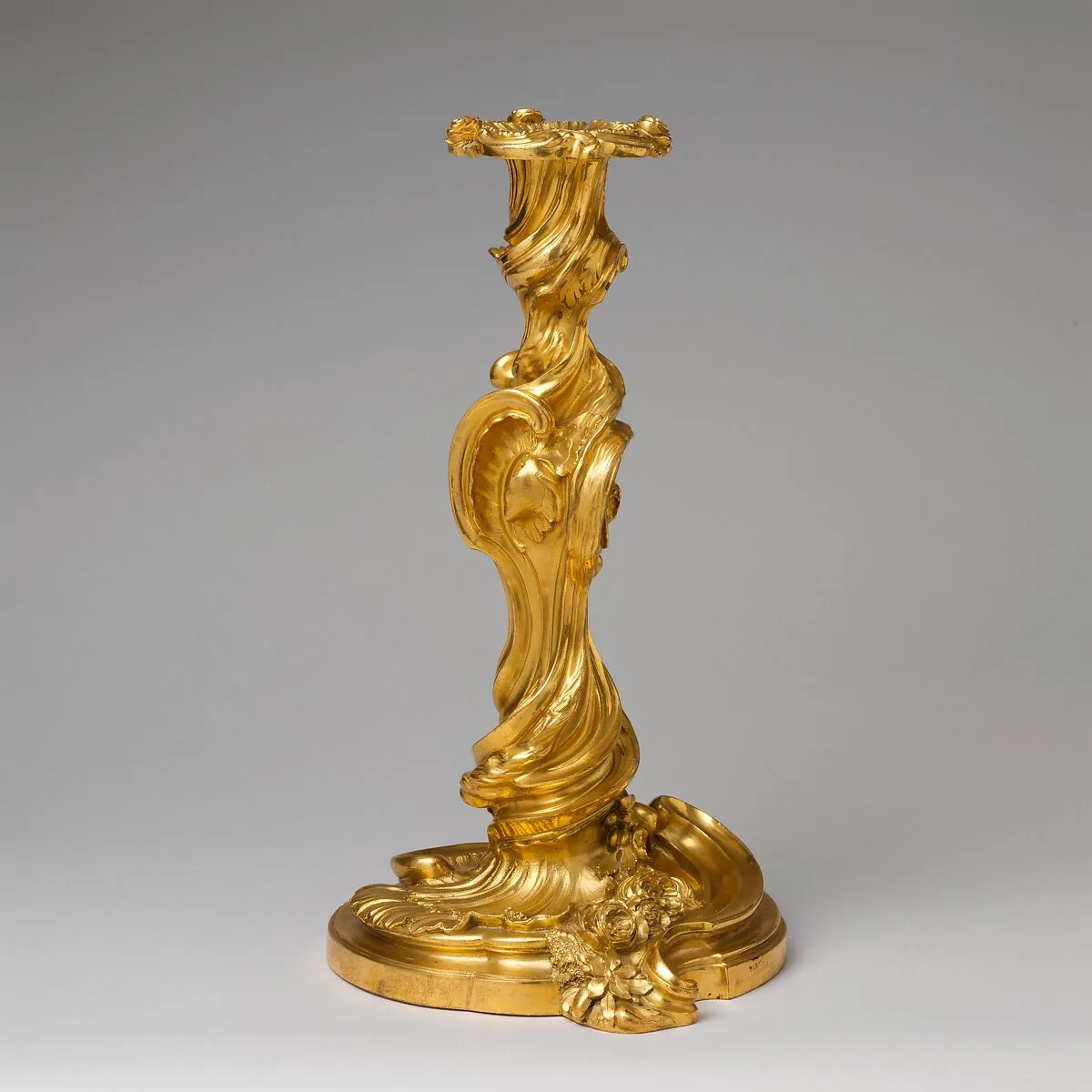
In the era before gas lighting and electricity, candles played a principal role in illuminating the interior of a house. The number of candles lit was an indication of the status of the owner; beeswax candles, preferred over tallow because they burned cleaner and had a more pleasant smell, were enormously expensive. No wonder, then, that visitors commented on the quantity of light at certain events—as Philip Thicknesse did in his Useful Hints to Those Who Make the Tour of France (1768). The table at a dinner he attended in 1767 "was illuminated with upwards of sixty wax lights." The exuberantly asymmetrical model for this candlestick was the work of Juste-Aurèle Meissonnier, one of the leading Rococo designers. Active also as architect, painter, and silversmith to Louis XV, Meissonnier rendered three drawings in order to show from all sides this candlestick with its loosely spiraling stem. The drawings were engraved by Gabriel Huquier (1695–1772) and published in Dousième Livre des oeuvres de J. A. Messonnier: Livre de chandeliers de sculpture en argent (1734–35). The design, incorporating shells, floral sprays, and even a butterfly in a whirlwind of motion, became very popular and was executed in both silver and gilt bronze. The quality of the chasing and gilding of this pair with its burnished and matte areas is outstanding.
- Artist
- Juste Aurèle Meissonnier
- Date
- 1735–50
- Medium
- Gilt bronze
- Culture
- French, Paris
- Department
- European Sculpture and Decorative Arts
- Credit line
- Gift of Mrs. Charles Wrightsman, 1999