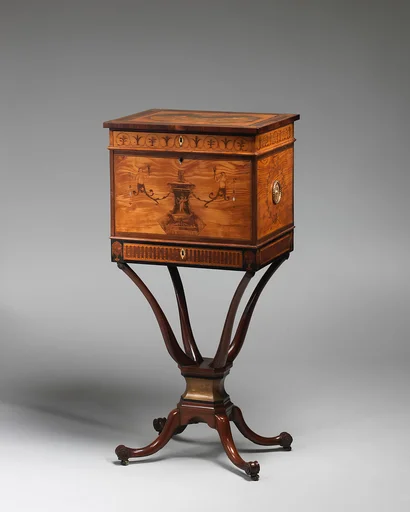
Teapoy with four oval tea caddies
Unknown
ca. 1790 · Satinwood veneer, inlaid with rosewood, holly and ebony · European Sculpture and Decorative Arts
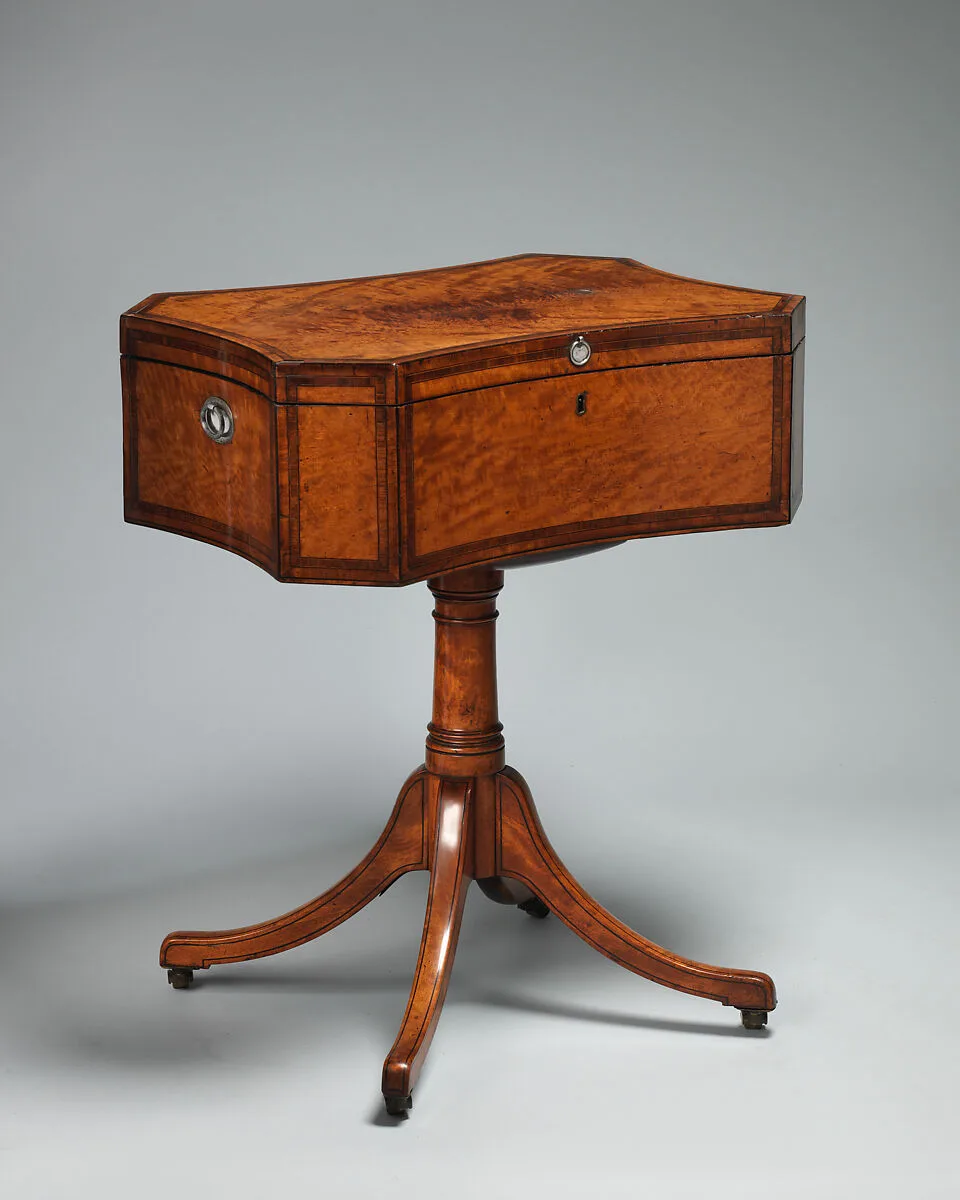
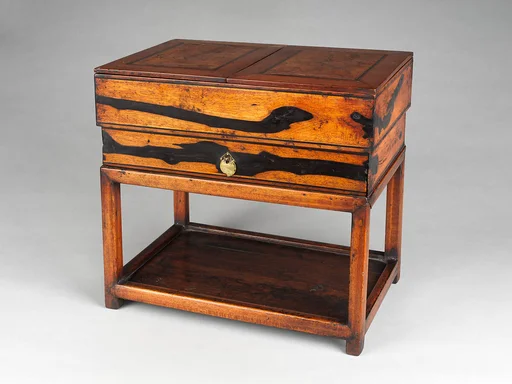
The word teapoy derives from the Hindu tepai, meaning "three-legged" or "three-footed" and refers to a small table or stand on a tripod support. These were used "in drawing rooms to prevent the company rising from their seats whilst taking refreshment," according to the Regency furniture designer George Smith (act. 1804–28) in A Collection of Designs for Household Furniture and Interior Decoration (1808). However, from about 1810 on, it came to signify a chest on a stand fitted with various compartments holding removable caddies for storing tea. Here, the names of the teas are engraved in silver medallions.
- Artist
- Unknown
- Date
- ca. 1790
- Medium
- Satinwood veneer, inlaid with rosewood, holly and ebony
- Culture
- British
- Department
- European Sculpture and Decorative Arts
- Credit line
- Gift of Irwin Untermyer, 1964