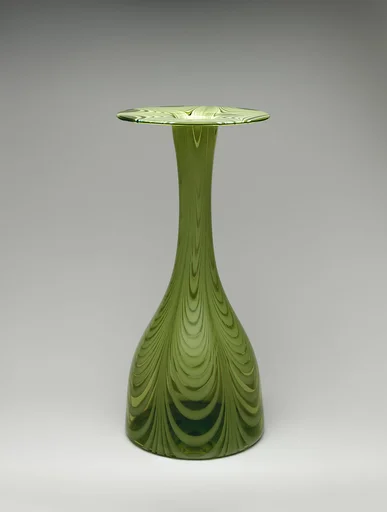
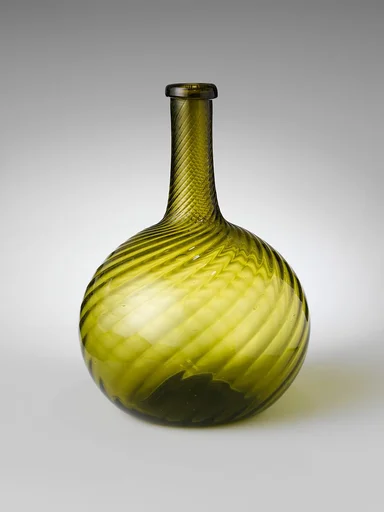
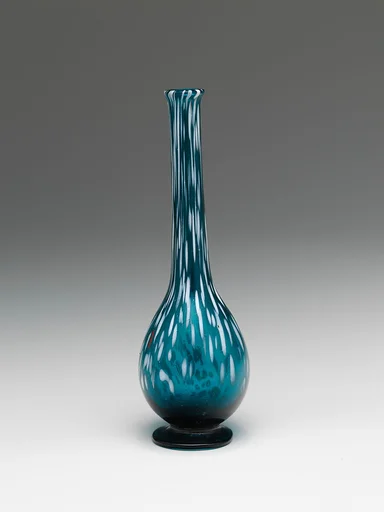
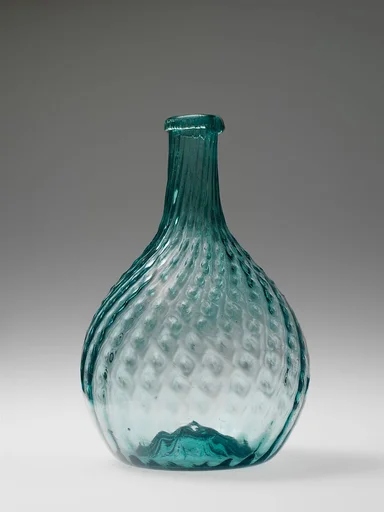
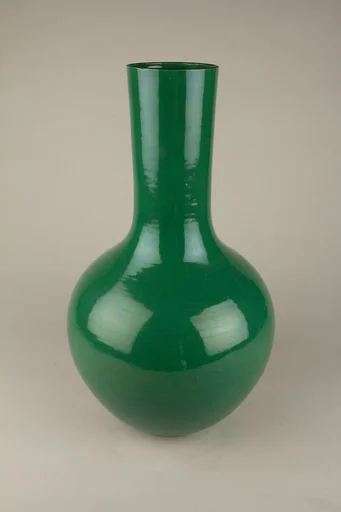
Clutha vase
Liberty & Co.|James Couper and Sons, Glasgow|Christopher Dresser
ca. 1890 · Glass · European Sculpture and Decorative Arts
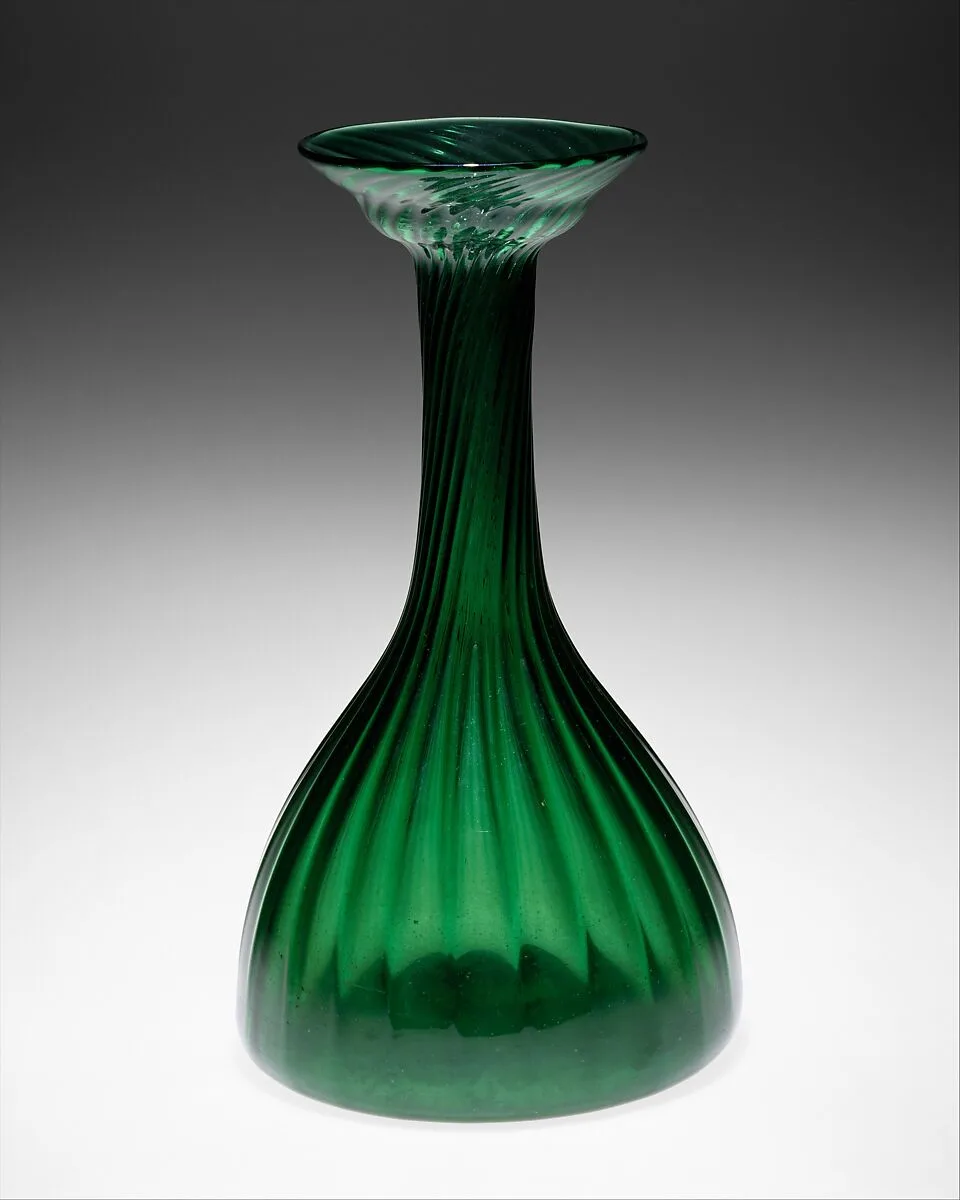
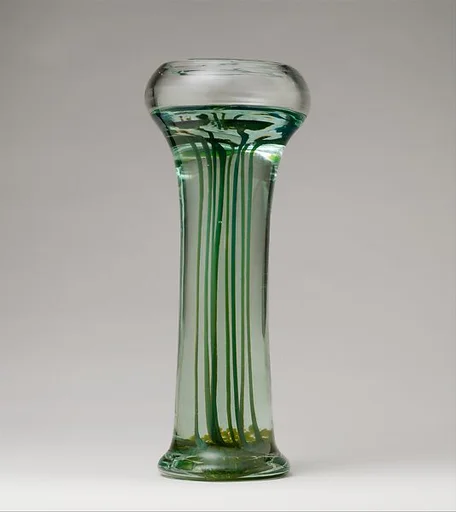
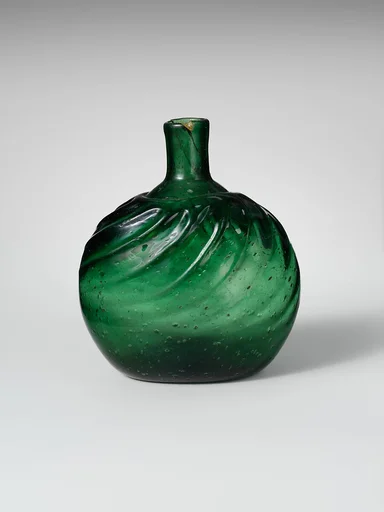
Reacting against the fashion for cut glass, a style that denied the molten nature of the material, John Ruskin, Charles Locke Eastlake, William Morris, and Christopher Dresser called for reform in glass production. The reformers looked to ancient glass from Rome, Egypt, and the Islamic world, as well as Venetian glass from the fourteenth and fifteenth centuries as appropriate ideals for emulation. The movement toward ancient and early Venetian glass quickly gained popularity, since it also appealed to revivalists and antiquarian collectors. The green glass of this vase demonstrates Dresser's appreciation for glass as an artistic medium as well as its fluid qualities. The ornamental aspects of the vase are found in its coloring and ribbed spiraling pattern, elements that are integrated into the material and form. Air bubbles, streaks of colors, and other irregularities were intentional, as they emphasized the organic nature of glass. Dresser began designing "art glass" for industrial manufacture around 1880. Called "Clutha" after the ancient name for the Scottish River Clyde, the range of glassware was trademarked in 1888 by the glass manufacturer James Couper & Sons of Glasgow and retailed through Liberty's in London into the 1890s.
- Artist
- Liberty & Co.|James Couper and Sons, Glasgow|Christopher Dresser
- Date
- ca. 1890
- Medium
- Glass
- Culture
- Scottish, Glasgow
- Department
- European Sculpture and Decorative Arts
- Credit line
- Purchase, Friends of European Sculpture and Decorative Arts Gifts, 1991