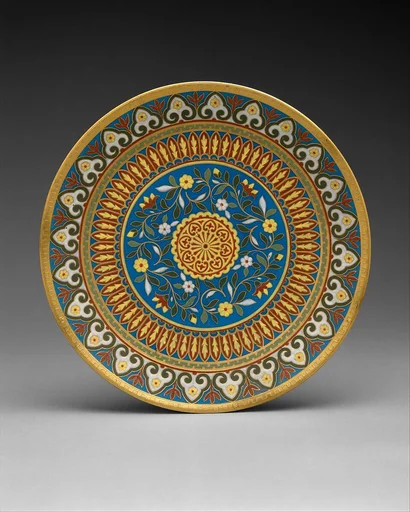
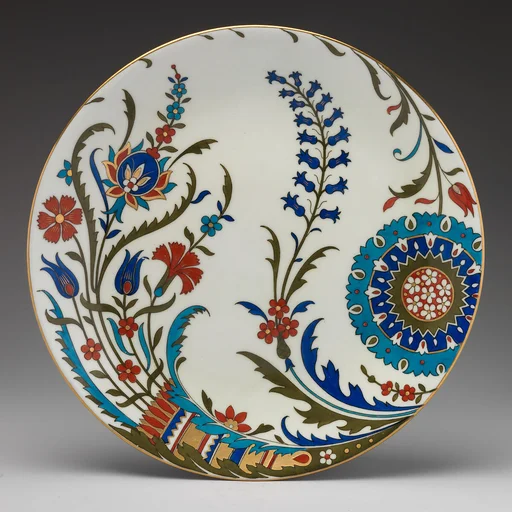
Dish
Joseph-Théodore Deck
ca. 1870 · Earthenware with underglaze and enamel polychrome decoration ("Persian" faience) · European Sculpture and Decorative Arts
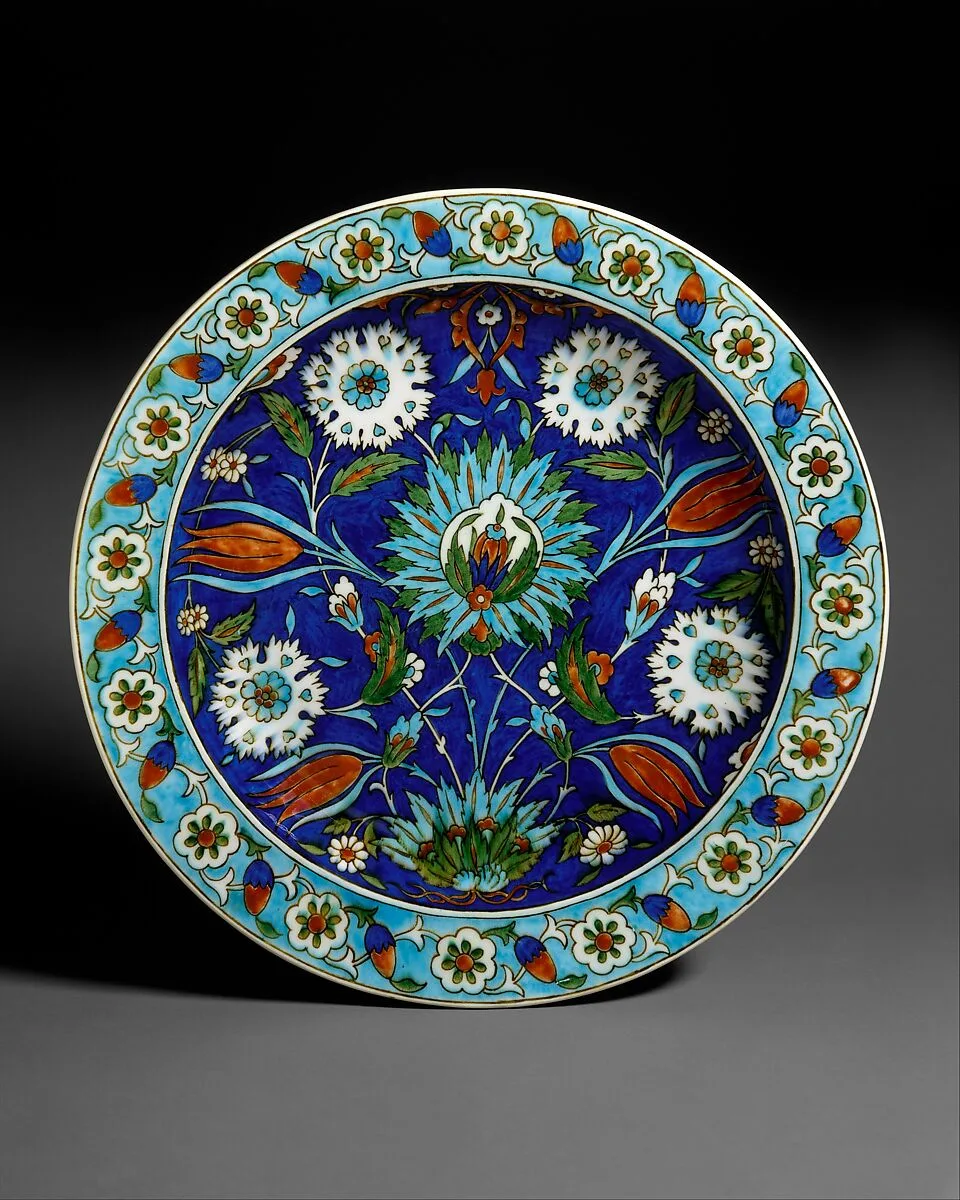
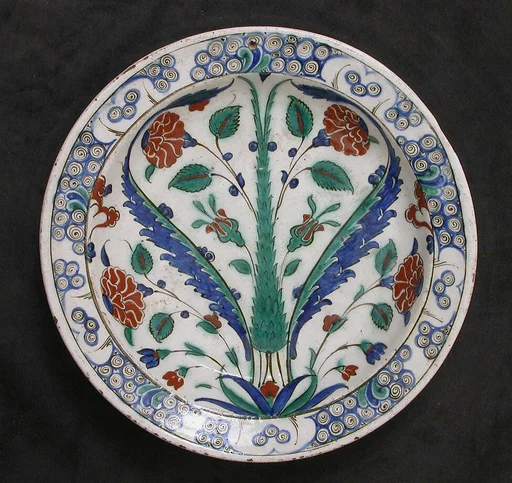
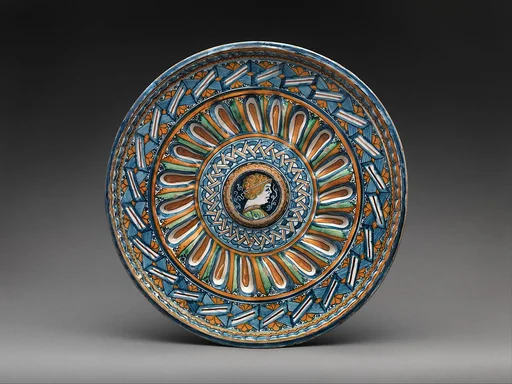
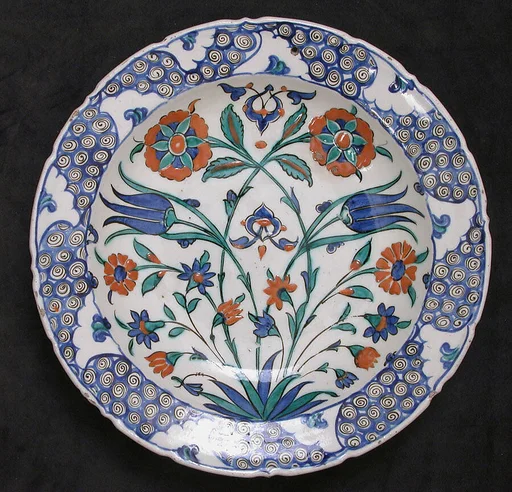
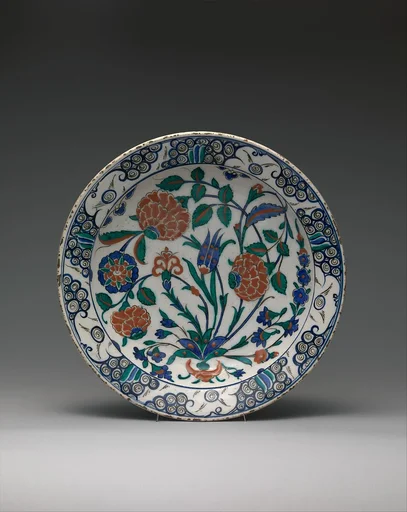
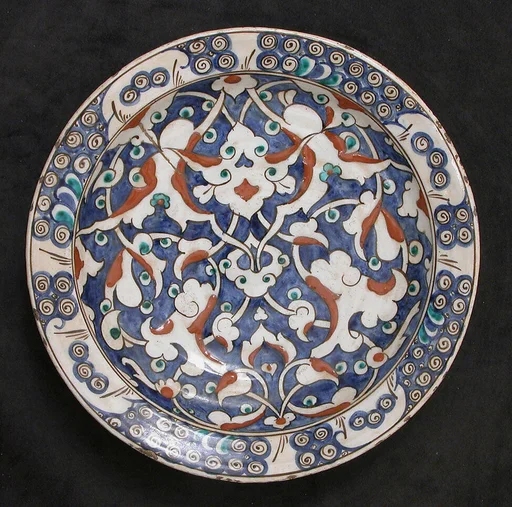
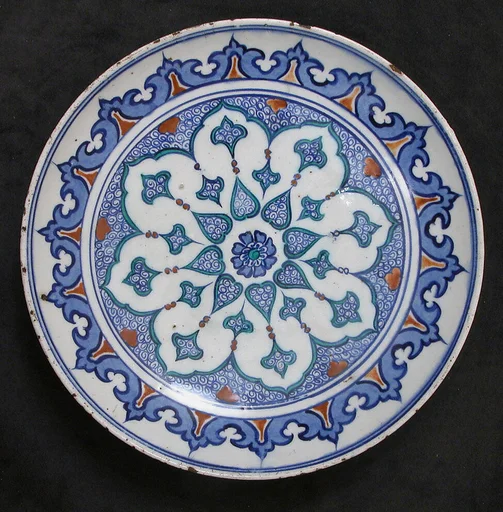
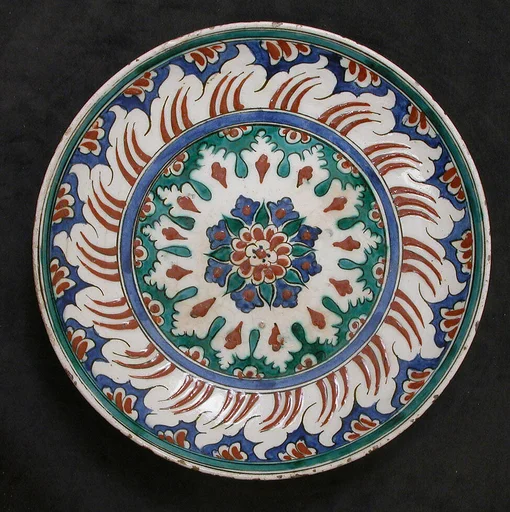
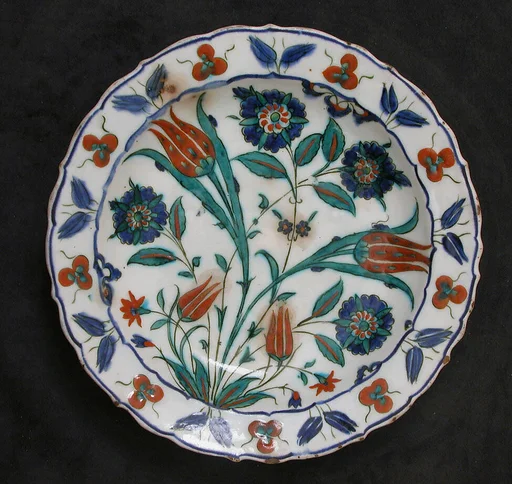
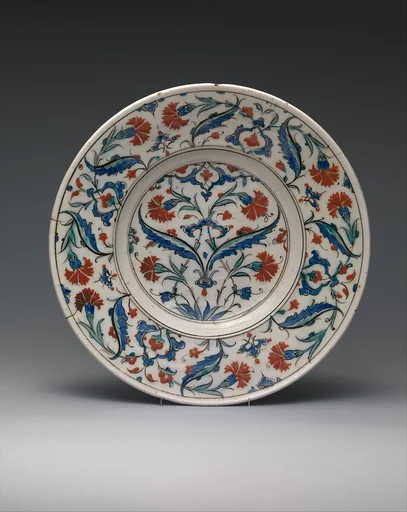
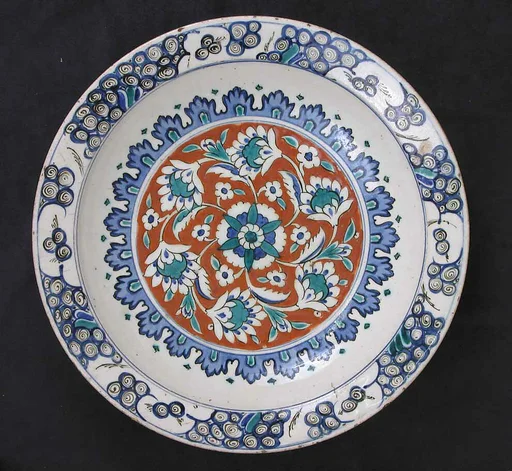
The decoration of this dish is derived from Turkish ceramics made in the town of Iznik between the fifteenth and the seventeenth centuries. Iznik ceramics were an important source of inspiration for Deck, who studied them at the Musée de Cluny in Paris, which opened to the public in 1843. Although Deck borrowed Iznik colors and motifs, he did not make exact replicas of their designs. Instead he loosely adapted motifs, creating designs of his own invention, typically in a more symmetrical pattern than Turkish prototypes.
- Artist
- Joseph-Théodore Deck
- Date
- ca. 1870
- Medium
- Earthenware with underglaze and enamel polychrome decoration ("Persian" faience)
- Culture
- French, Paris
- Department
- European Sculpture and Decorative Arts
- Credit line
- Purchase, Anonymous Gift and funds from various donors, 1985