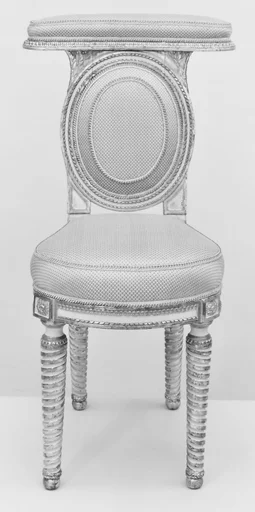
Desk chair (fauteuil de cabinet)
Unknown
ca. 1770 · Gilded walnut, caning, French 18th-century orange velvet · European Sculpture and Decorative Arts
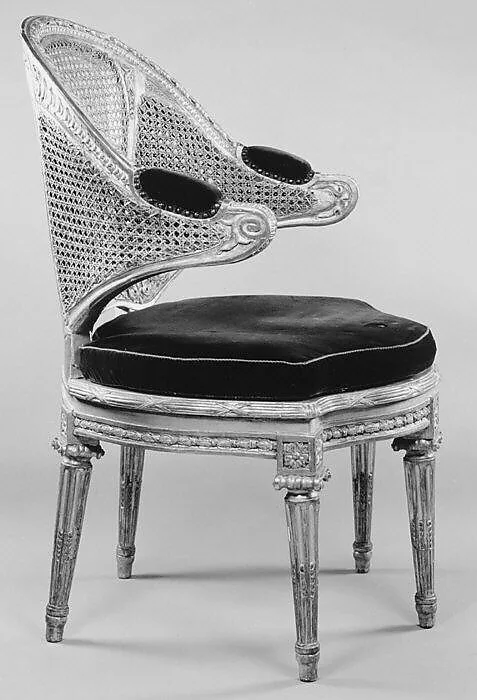
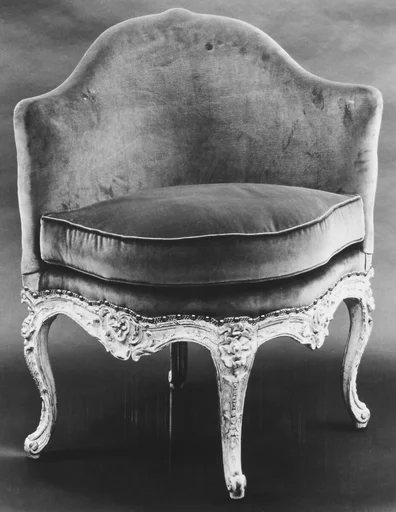
During the mid-eighteenth century, French menuisiers or joiners made both practical and elegant chairs, specifically for use behind a desk. By changing the traditional form of a chair, they created a so-called fauteuil de cabinet or office armchair. For greater stability, one leg was placed in front, or as in this case, an additional fifth leg was introduced so that the user could arrange his legs on either side. Further stability is given by the two back legs slightly raking backwards. With its undulating outline, the rounded back (en gondole) offers support for the upper body. The arm rests are not supported but are part of the back and allowed space to accommodate a sword, often worn at social gatherings, the two tails of a long tail-coat or the skirt of a voluminous dress.
- Artist
- Unknown
- Date
- ca. 1770
- Medium
- Gilded walnut, caning, French 18th-century orange velvet
- Culture
- French
- Department
- European Sculpture and Decorative Arts
- Credit line
- Purchase, Gift of Mr. and Mrs. Charles Wrightsman, by exchange, 1985