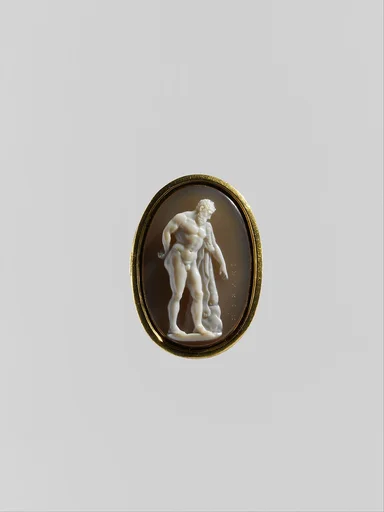
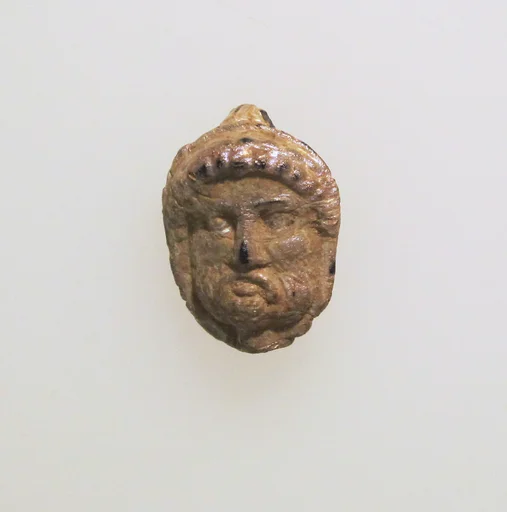
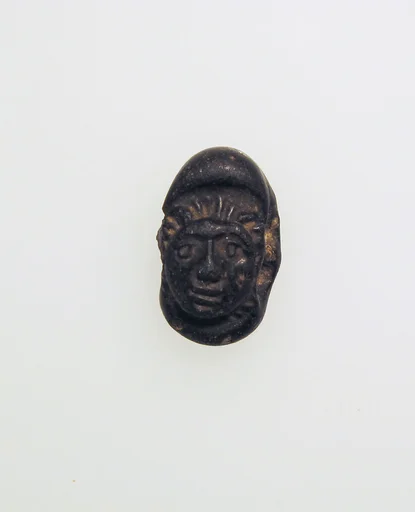
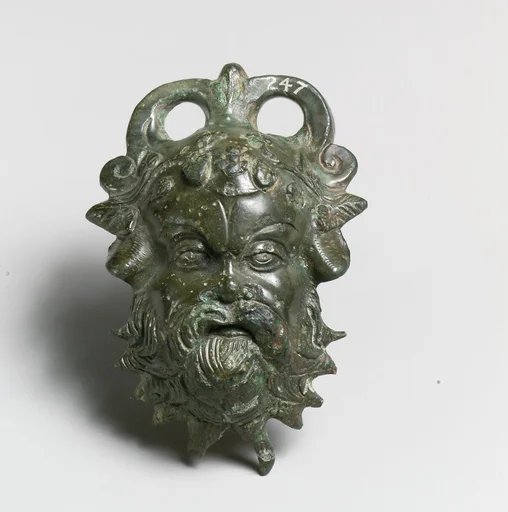
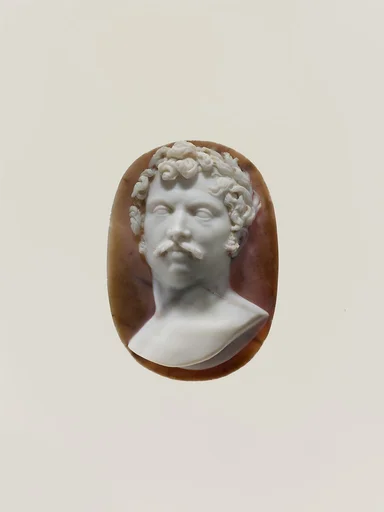
Cameo with the Head of a Satyr
Unknown
late 18th or early 19th century · Sardonyx with gold mount · European Sculpture and Decorative Arts
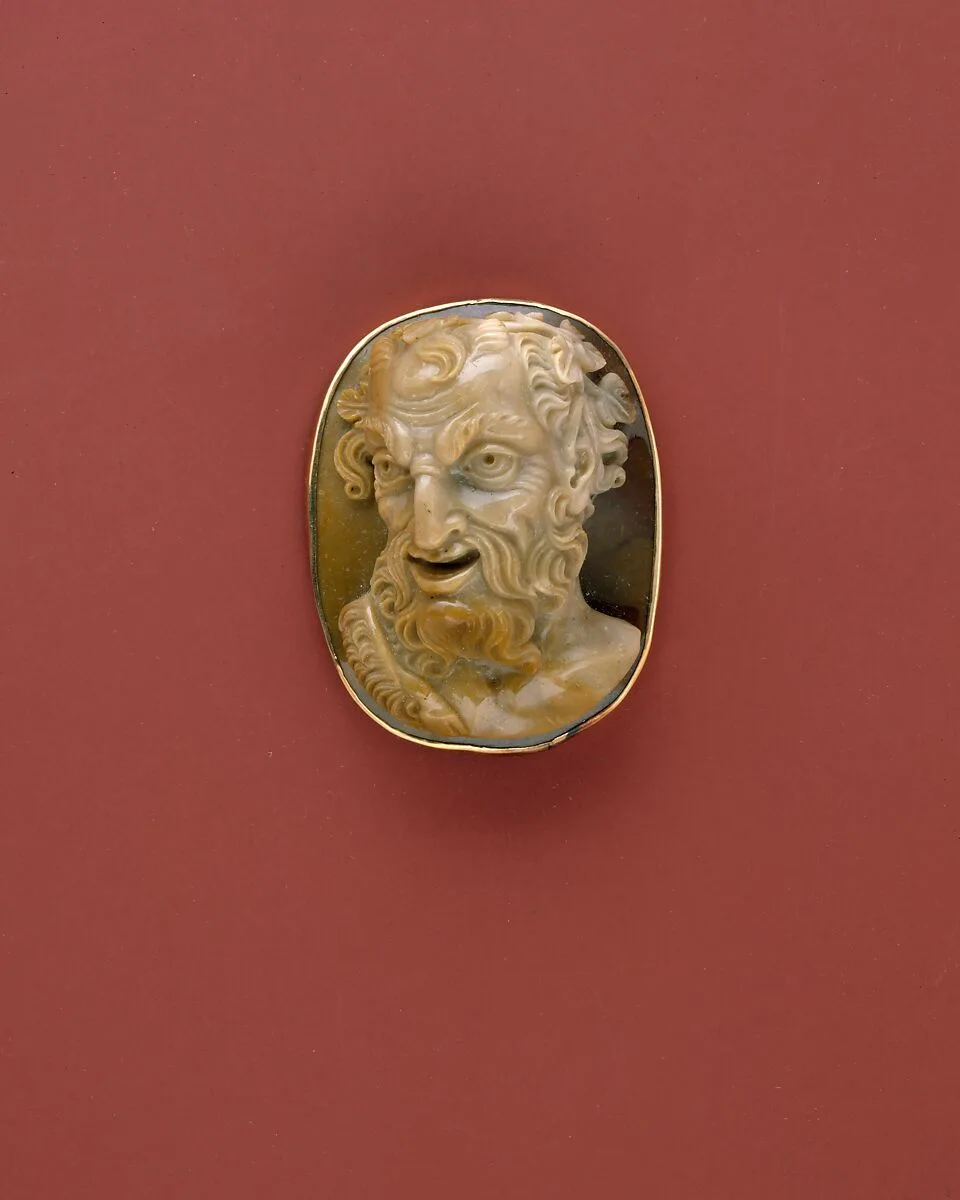
The tradition of representing satyrs on intaglios and cameos is an ancient one, stretching back at least as far as sixth-century Greece. This cameo, with its forced perspective and strong, unidealized image, belongs to a rather late stage in the evolution of the representation of the sylvan deity. It was probably made in Italy, the chief center of cameo production in the late eighteenth and nineteenth century, as it is today. [Clare Vincent, The Jack and Belle Linsky Collection in the Metropolitan Museum of Art, New York, 1984, p. 189, no. 108]
- Artist
- Unknown
- Date
- late 18th or early 19th century
- Medium
- Sardonyx with gold mount
- Culture
- probably Italian
- Department
- European Sculpture and Decorative Arts
- Credit line
- The Jack and Belle Linsky Collection, 1982