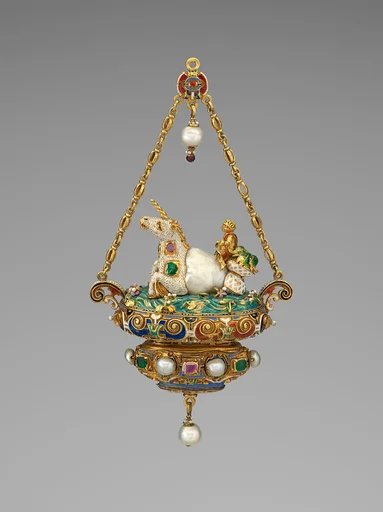
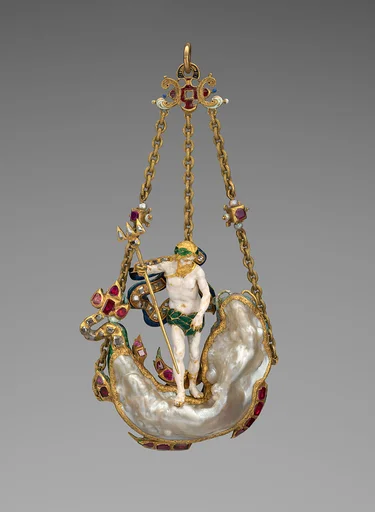
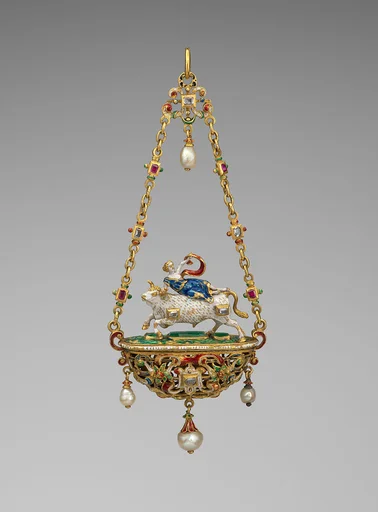
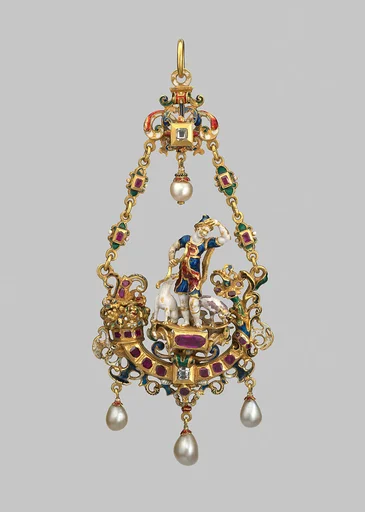
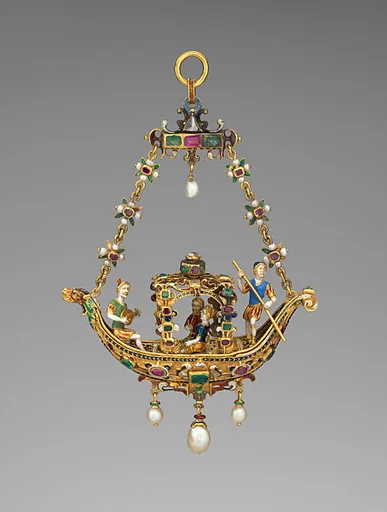
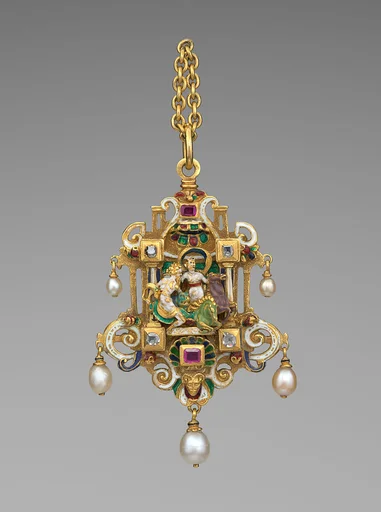
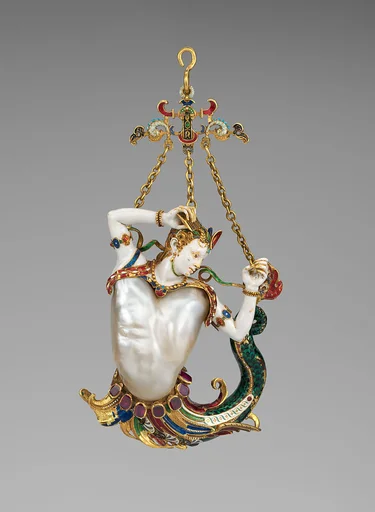
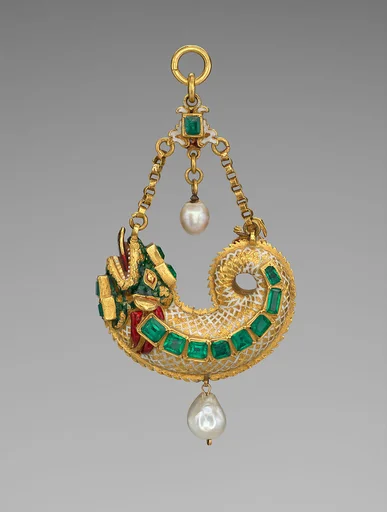
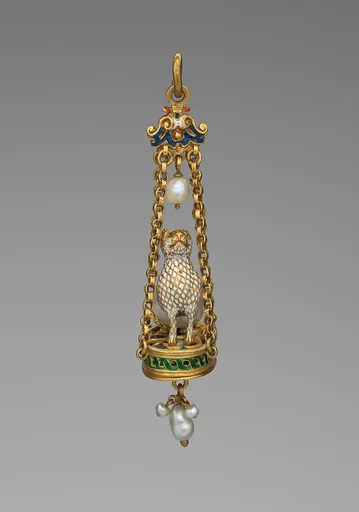
Pendant in the form of a centaur
Unknown
late 16th–early 17th century · Baroque pearl with enameled gold mounts set with sapphires and rubies, and with pendent pearls · European Sculpture and Decorative Arts
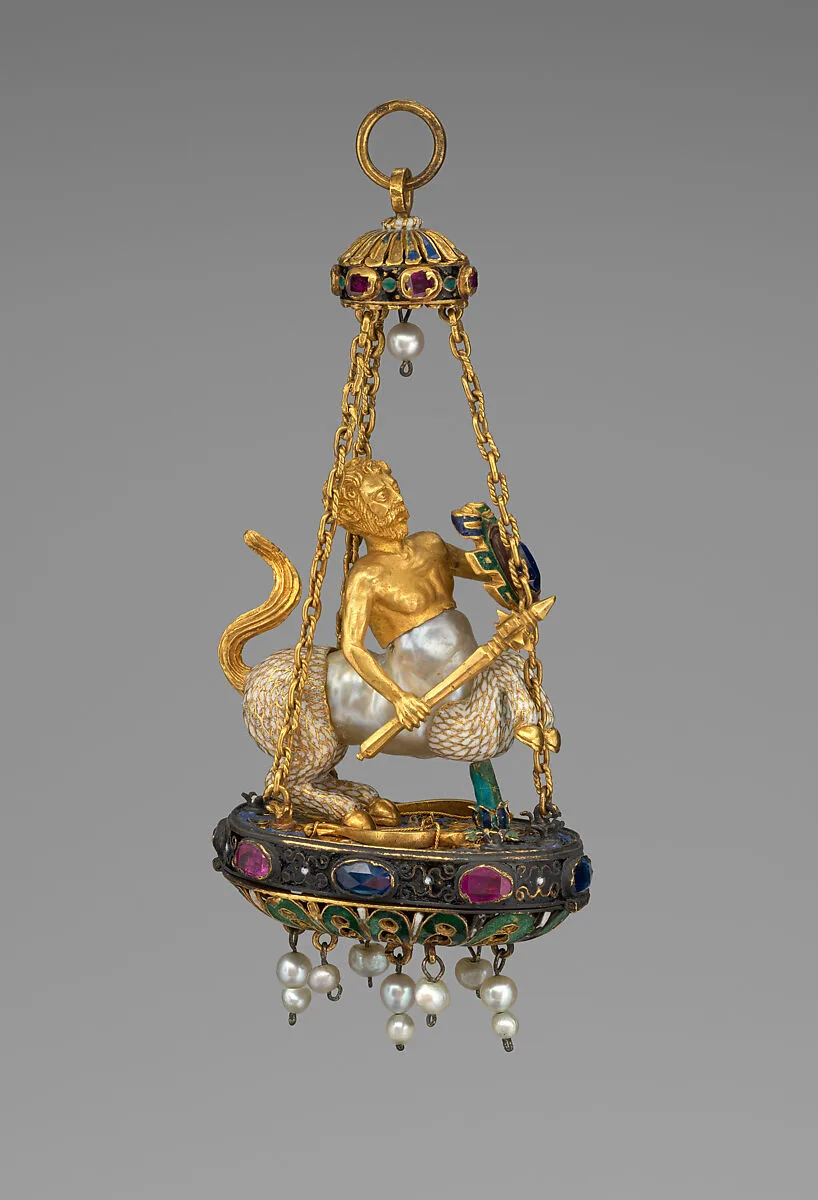
Baroque pearls provided a special challenge to the imagination of the Renaissance goldsmith. The rather difficult shape of this irregular pearl has been used in an ingenious way to suggest the hybrid form of the centaur, the half-human, half-equine creature of classical myth. The base of the jewel incorporates an earlier piece of gold filigree work in a lobed pattern associated with Hispano-Moresque design. In addition, although reenameled, it displays traces of the dull enameled colors used by Hispano-Moresque goldsmiths. The jewel-decorated band on the side of the base, the chains, and the canopy from which the chains are suspended are later additions.
- Artist
- Unknown
- Date
- late 16th–early 17th century
- Medium
- Baroque pearl with enameled gold mounts set with sapphires and rubies, and with pendent pearls
- Culture
- possibly Spanish
- Department
- European Sculpture and Decorative Arts
- Credit line
- The Jack and Belle Linsky Collection, 1982