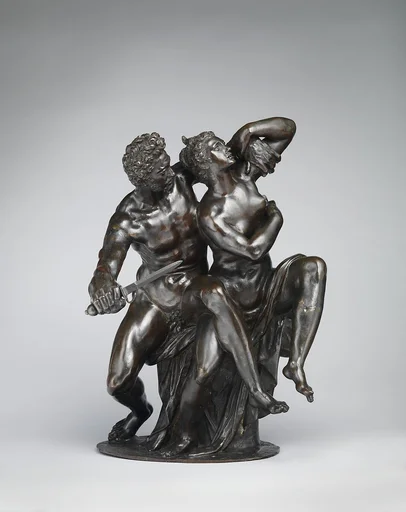
Tarquin and Lucretia
Hubert Gerhard
late 17th century · Bronze, with red-brown lacquer patina · European Sculpture and Decorative Arts
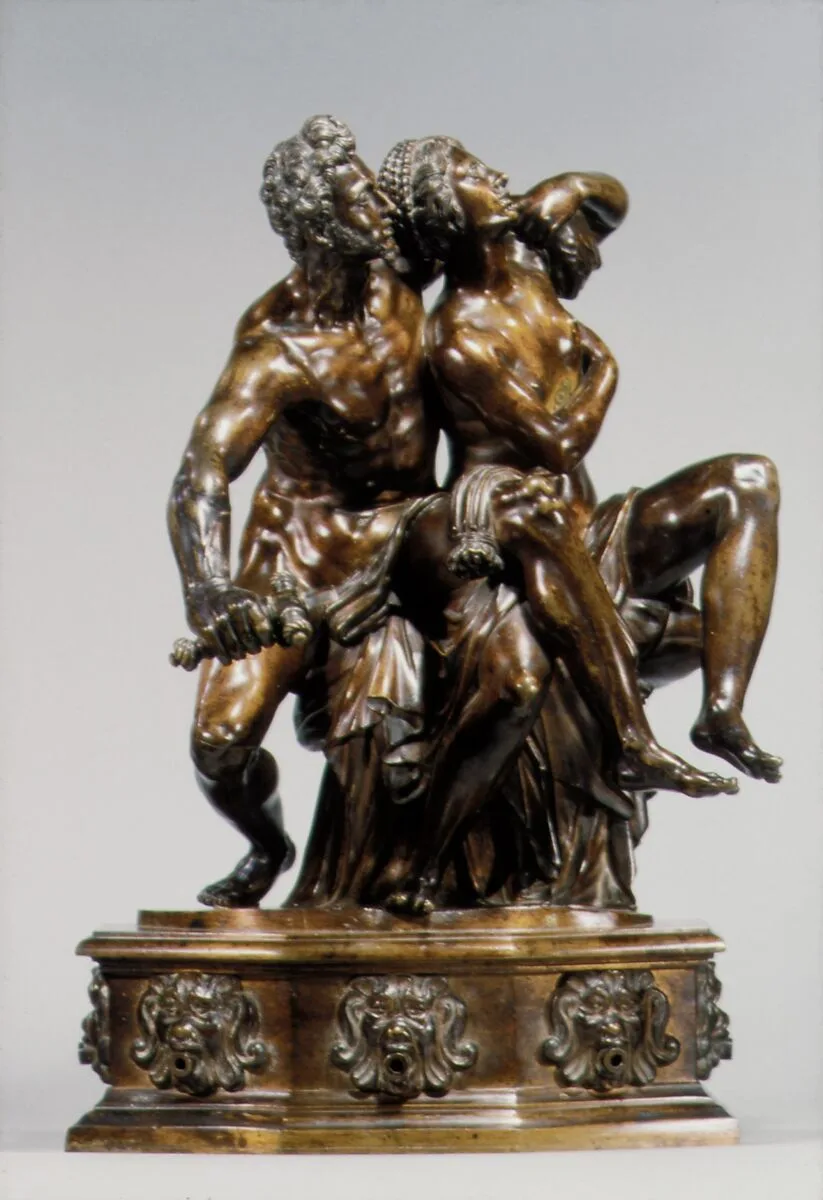
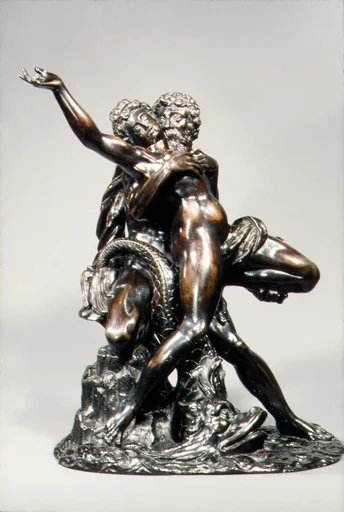
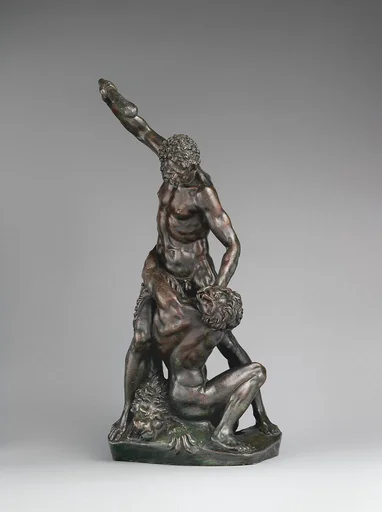
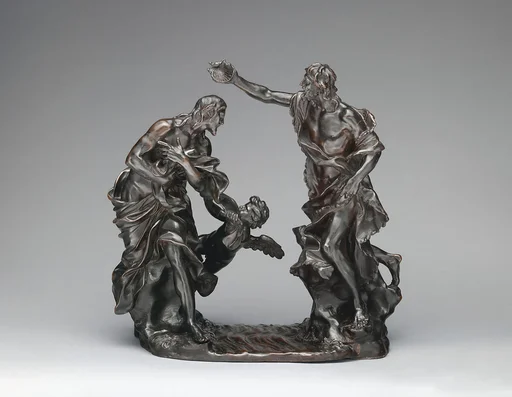
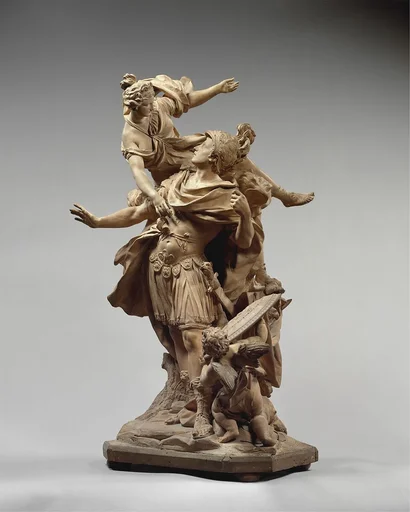
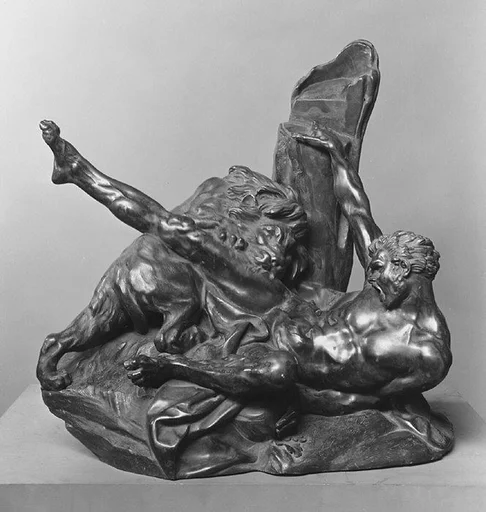
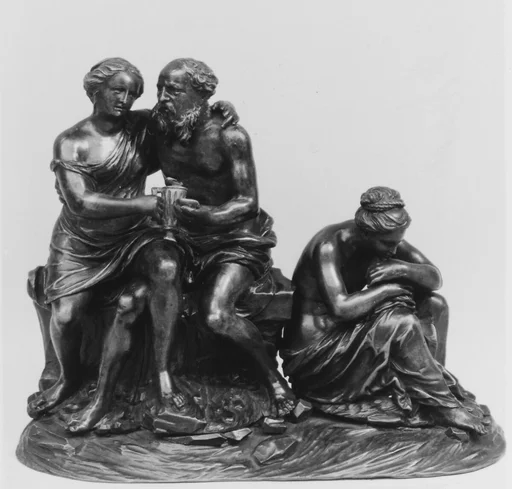
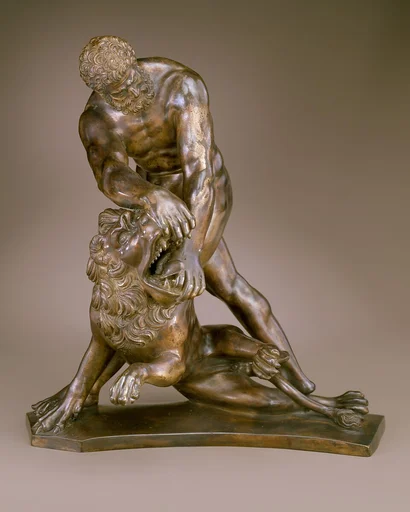
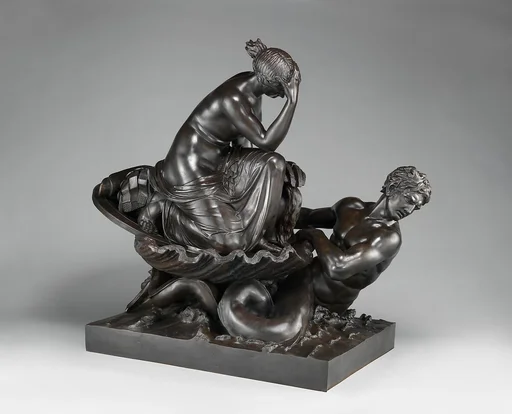
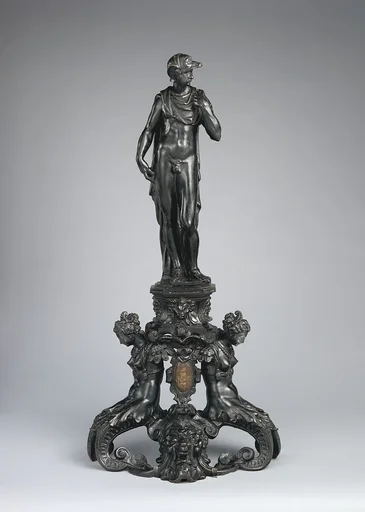
The design is a compositional outgrowth of Hubert Gerhard’s Mars, Venus, and Cupid. His large bronze group with that subject, cast in 1584–85 as the centerpiece for a fountain at the Fugger castle, Kirchheim, is now in the Bayerisches Nationalmuseum, Munich, and a fine reduction, with modifications, is in the Kunsthistorisches Museum, Vienna. The Tarquin and Lucretia is a further variant in which the movements of both figures are directed more violently to the right. Several examples exist—in museums in Amsterdam, Baden-Baden, Baltimore, and Cleveland, among others. The strongest may be the one in the Metropolitan Museum (50.201; from the Thyssen collection, Schloss Rohoncz).[1] It preserves something of Gerhard and his school. The present bronze is sleeker, and of a yellowish metal covered with the ruddy lacquer patina that is typical of bronzes of the Louis XV period. The masks on the self-base are equipped with spouts that suggest a table fountain. The masks also appear on the group with which this bronze was formerly paired: a Rape of Deianira, based on a composition by Giovanni Bologna, which is now in the Statens Museum for Kunst, Copenhagen. That museum’s catalogue notes the earliest owner of both bronzes as Baron Vittinghodd-Riesch. Later they belonged to Gorm Rasmussen of Sølyst. In the Rasmussen auction catalogue the two bronzes are illustrated surmounting commodes. [James D. Draper, 1984] Footnotes: [1] For a list of the several casts, see W. D. Wixom, Renaissance Bronzes From Ohio Collections (exhib. cat.), The Cleveland Museum of Art, 1975, no. 213.
- Artist
- Hubert Gerhard
- Date
- late 17th century
- Medium
- Bronze, with red-brown lacquer patina
- Culture
- possibly French
- Department
- European Sculpture and Decorative Arts
- Credit line
- The Jack and Belle Linsky Collection, 1982