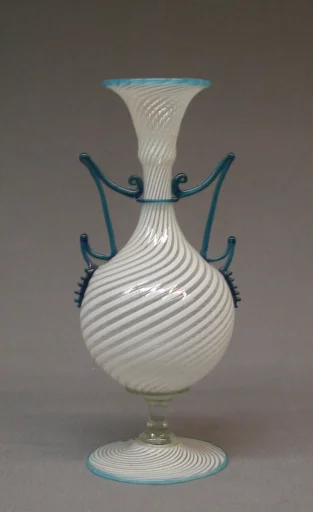
Bottle
Unknown
ca. 1725 · Hard-paste porcelain · European Sculpture and Decorative Arts
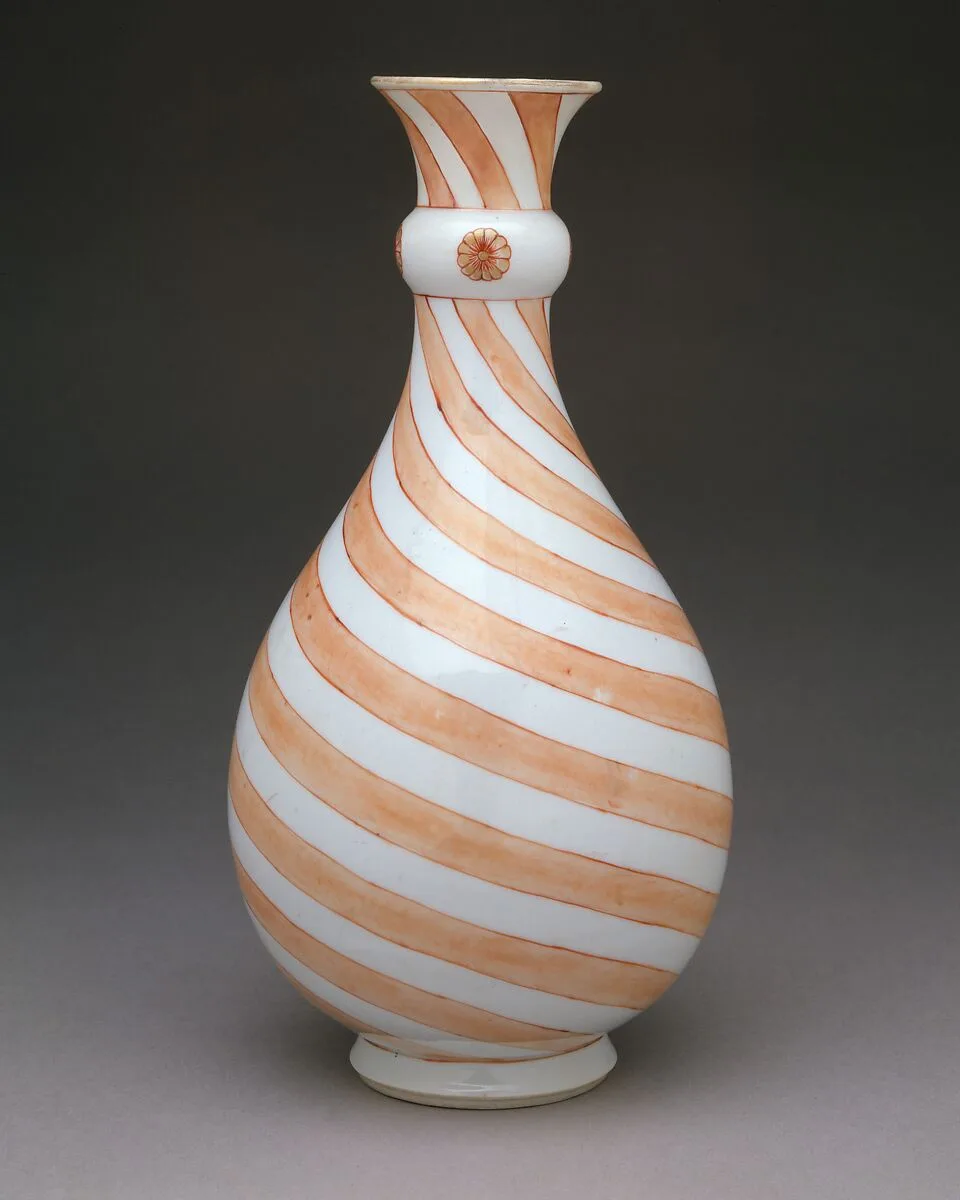
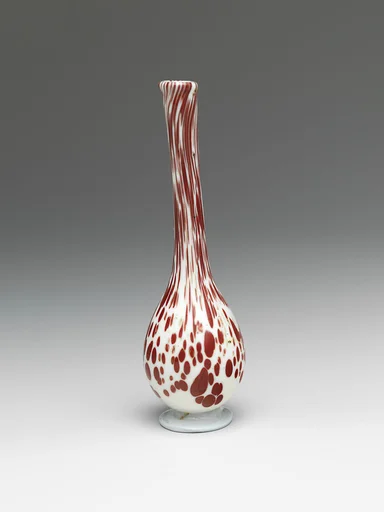
No better evidence of familiarity with European glass in China need be sought beyond Emperor K’ang His’s own statement that during his reign "we learned in a short time to make glassware that is superior to that made in the West." This bottle, Eastern in shape but Venetian in decorative style, must ow itse existence to this familiarity. It is a remarkable translation into the porcelain medium of the sixteenth-century vetro a fili technique: the incorporation into a clear glass matrix of blown rods—usually white, but sometimes colored—to produce a pattern of vertical or spiraling stripes. The bottle is one of only three known models of export porcelain that evoke glass techniques, but it would not have been copied directly from an Italian example since the shape does not occur until later. Venetian glass was widely imitated in northern Europe in the seventeenth century, and the bottle could have been copied from a Dutch glass adaptation of a Venetian model. It could also, however, derive from a version in Delft faïence.
- Artist
- Unknown
- Date
- ca. 1725
- Medium
- Hard-paste porcelain
- Culture
- Chinese, for European market
- Department
- European Sculpture and Decorative Arts
- Credit line
- Helena Woolworth McCann Collection, Purchase, Winfield Foundation Gift, 1982