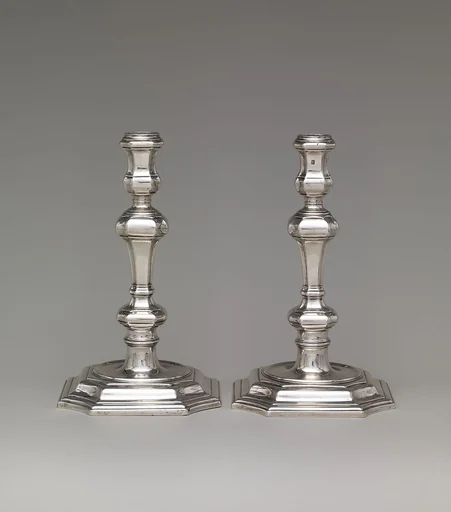
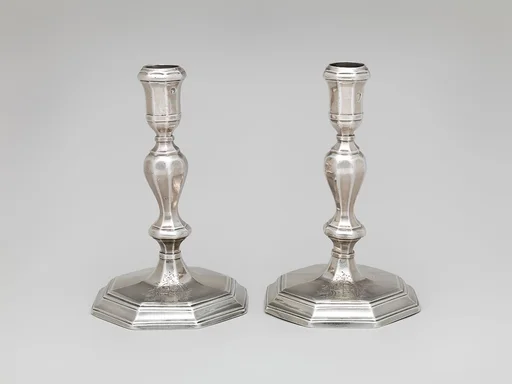
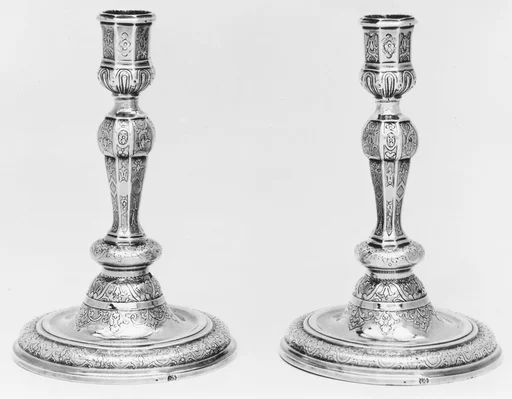
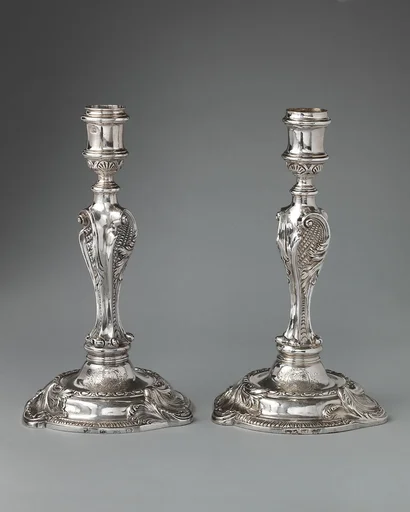
Pair of candlesticks
Claude Roysard
1751–52 · Silver · European Sculpture and Decorative Arts
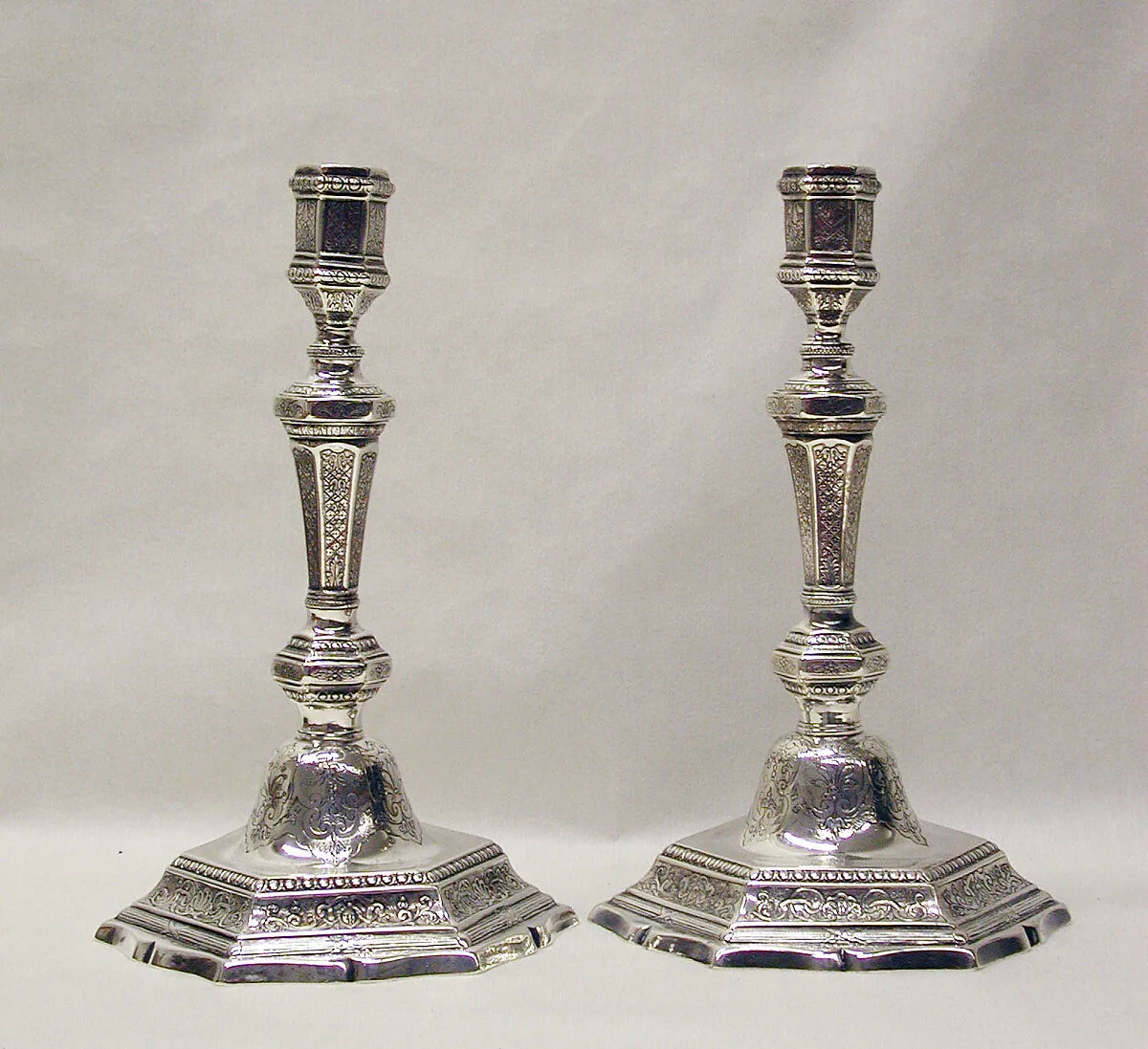
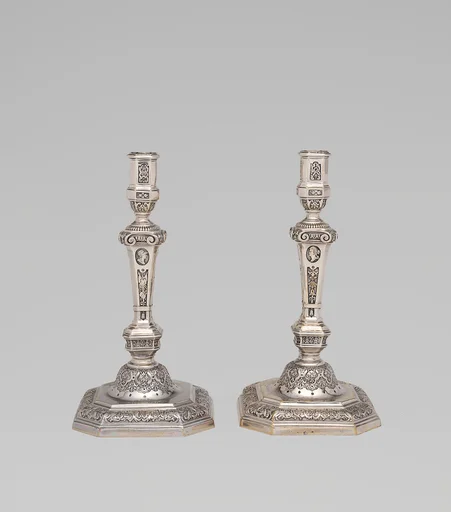
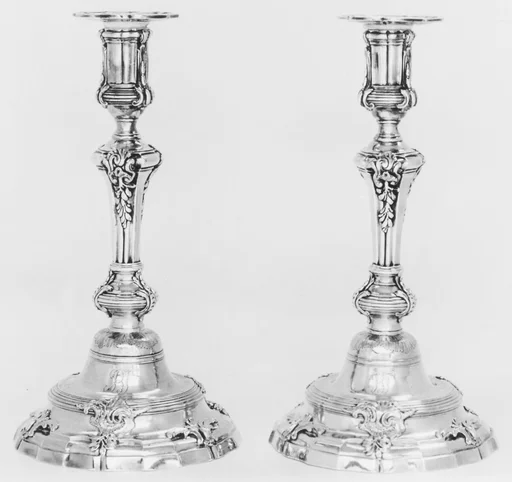
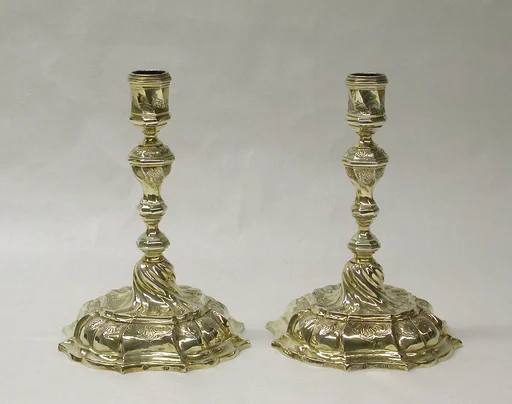
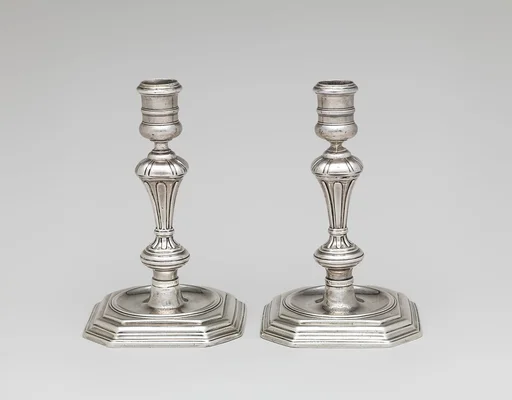
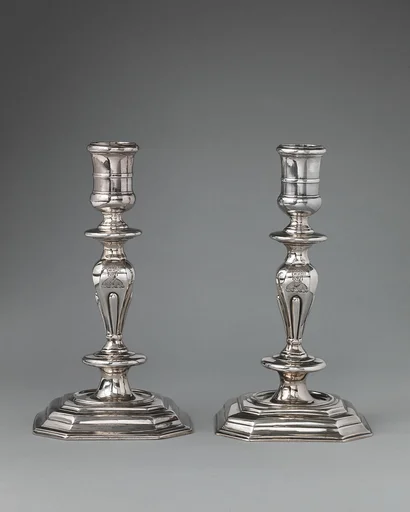
In the era before gas lighting and electricity, candles played a principal role in illuminating the interior of a house. The number of candles lit was an indication of the wealth and status of the owner: beeswax candles burned clean and smelt pleasant and were quite expensive compared to those made of tallow. In late seventeenth-century France, a change in dining habits had a significant effect on the production of silver candlesticks. Entertainment was increasingly orientated towards the evening; the use of domestic space changed and as a result, elegant lighting became an important part of the decoration of interiors. Made in Rennes in 1751–52, this pair of candlesticks has elaborate decoration deriving from widely available design and pattern books which proliferated during the late seventeenth century and well into the eighteenth century. Despite their mid-eighteenth-century date, the prevailing Rococo taste fashionable in Paris at the time is all but ignored here.
- Artist
- Claude Roysard
- Date
- 1751–52
- Medium
- Silver
- Culture
- French, Rennes
- Department
- European Sculpture and Decorative Arts
- Credit line
- Bequest of Theodore Rousseau, 1974