Four-leaf folding screen (Paravent)
Unknown
ca. 1780 · Carved and gilded walnut and poplar; upholstered with 18th-century blue and silver silk lampas · European Sculpture and Decorative Arts
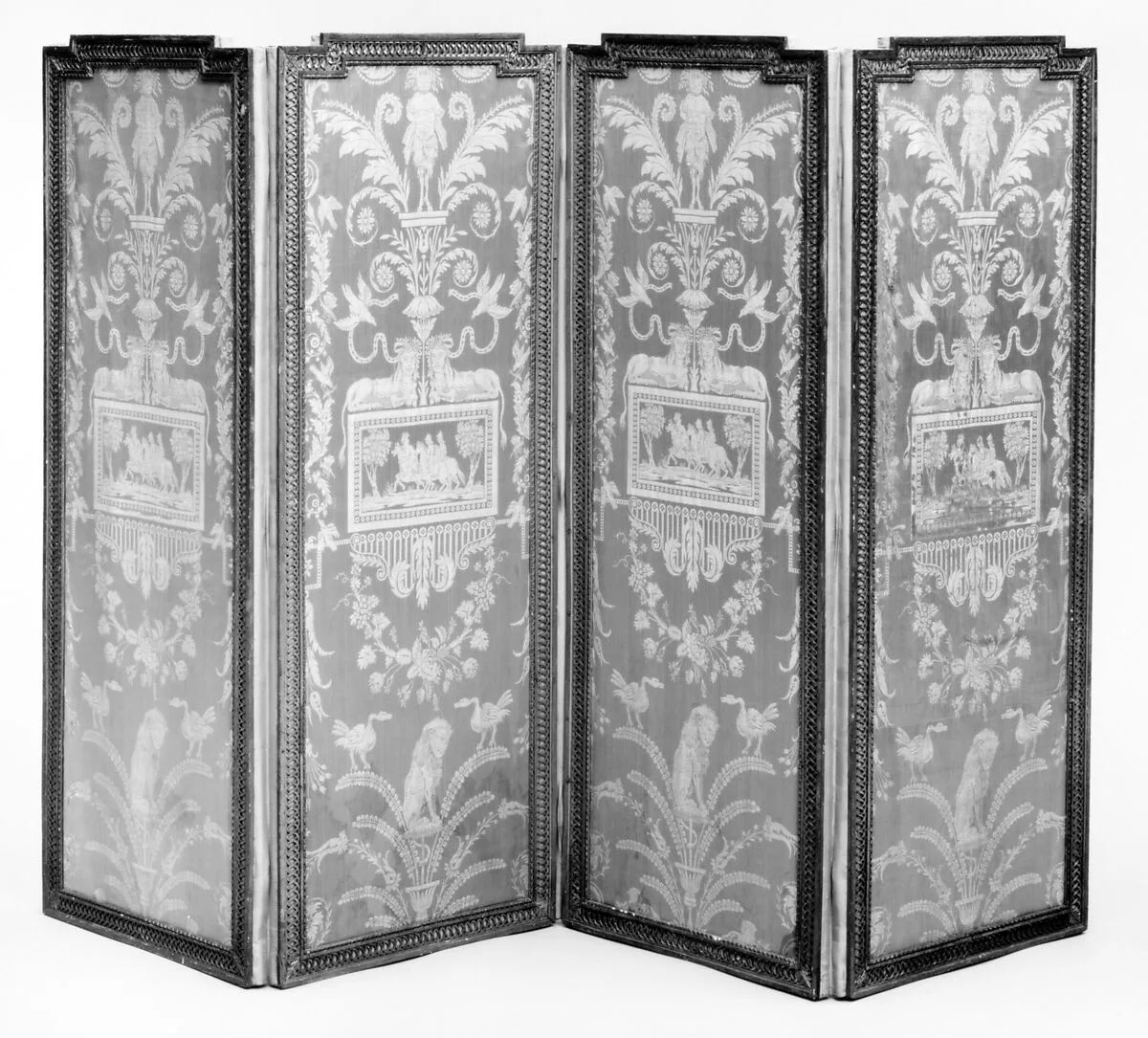
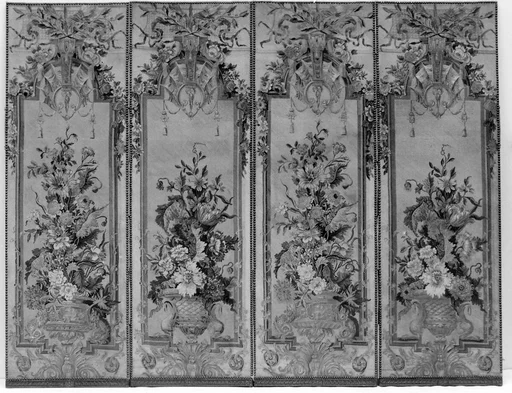
Screens were very fashionable during the eighteenth-century as is illustrated in depictions of contemporary interiors. They were made in different sizes: tall multi-leaf folding screens (paravents) were placed in front of doorways to exclude drafts, and others, shorter ones, stood in front of the mantelpiece to shield from the heat of the fire (the latter were known as an écran de cheminée). The frames of the paravents could be covered with paper, leather, or fabric but could also be exposed, carved, and gilded as is the case with this neoclassical four-leaf screen with its stepped top. Its frame displays two continuous interwoven bands of openwork guilloche motifs between plain moldings as well as a border of ribbon-tied laurel leaves. The four corners of each panel are carved with a leaf motif. Such screens were often ordered as a set with seat furniture and a fire screen and would have been covered with the same fabric.
- Artist
- Unknown
- Date
- ca. 1780
- Medium
- Carved and gilded walnut and poplar; upholstered with 18th-century blue and silver silk lampas
- Culture
- French
- Department
- European Sculpture and Decorative Arts
- Credit line
- Bequest of Mary Hayward Weir, 1968