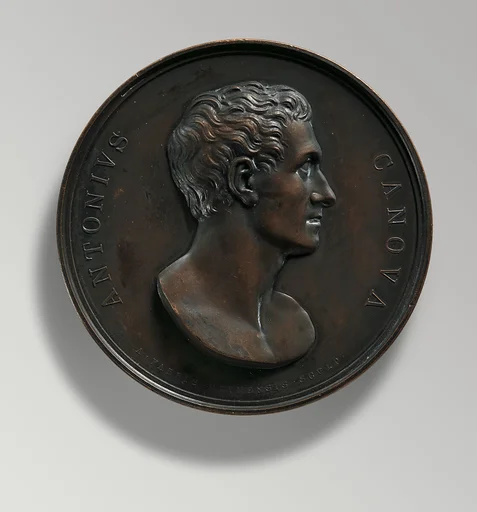
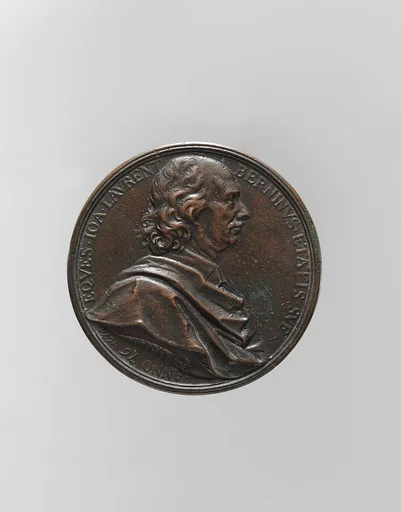
Portrait of Antonio Canova (1757–1822)
Francesco Putinati
ca. 1822 · Bronze · European Sculpture and Decorative Arts
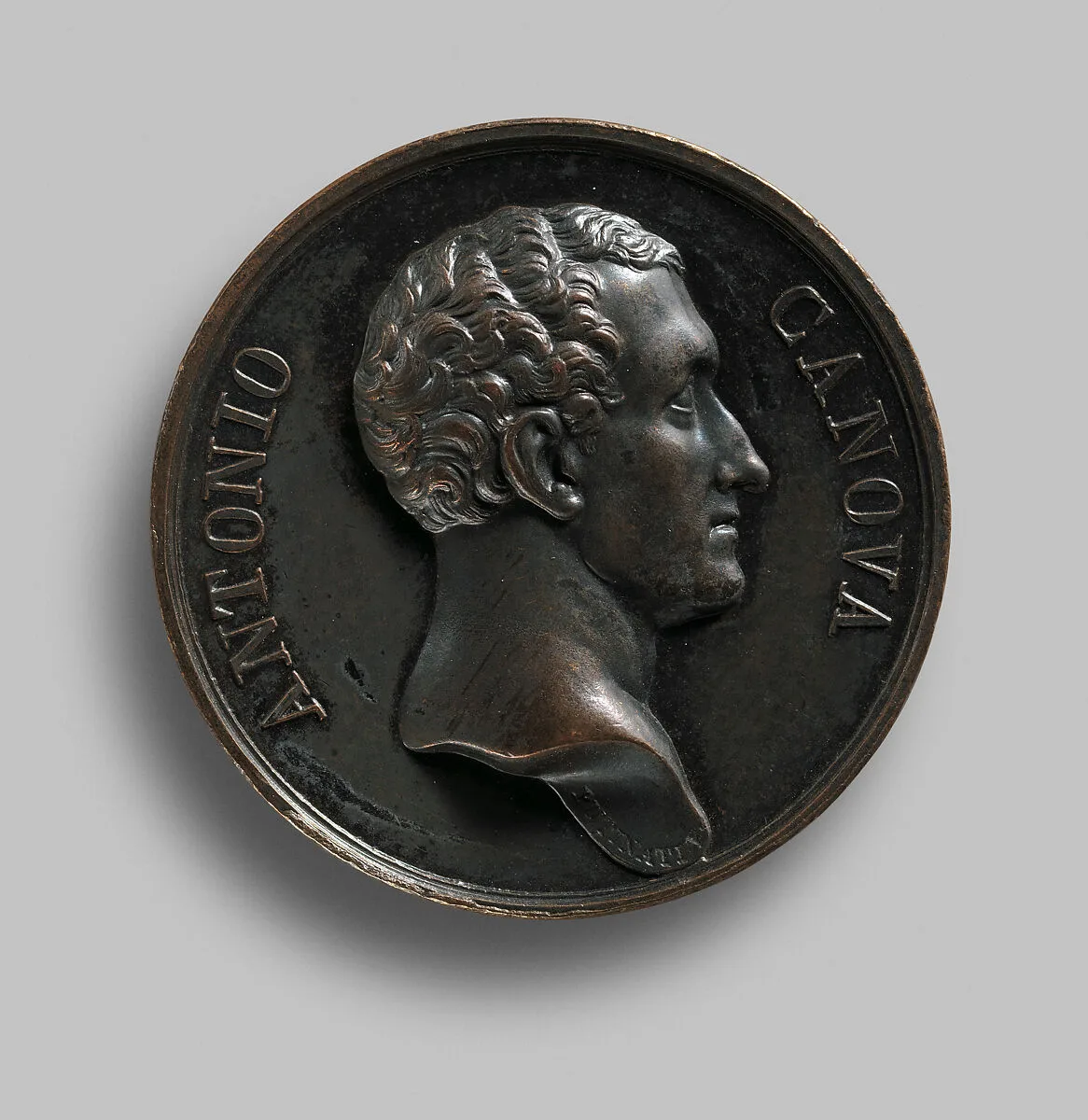
Antonio Canova (1757–1822) is considered the greatest Neoclassical sculptor of the late eighteenth and early nineteenth centuries. Along with the painter Jacques Louis David, he was credited with ushering in a new aesthetic of clear, regularized form and calm repose inspired by classical antiquities. He was also renowned for his carving abilities and the refinement of his marble surfaces, which seemed as supple as real flesh. At his death, commemorations were held in Rome, Venice, and Possagno, and he was widely mourned and honored across Europe. The degree of his fame can be measured by the treatment of his corpse, as if it were a saintly relic. Although his body was entombed in the Tempio in Possagno, his hand was preserved at the Accademia di Belle Arti, Venice, and his heart placed in a tomb built by Neoclassical sculptors based on his own design in Santa Maria Gloriosa dei Frari (see also 67.219.1).
- Artist
- Francesco Putinati
- Date
- ca. 1822
- Medium
- Bronze
- Culture
- Italian, Milan
- Department
- European Sculpture and Decorative Arts
- Credit line
- Gift of Michael Hall, 1967