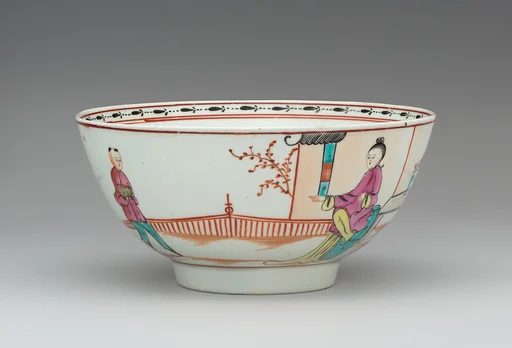
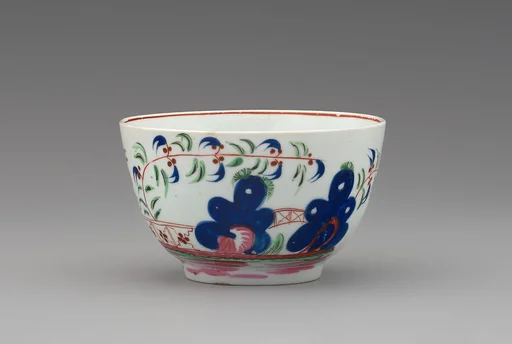
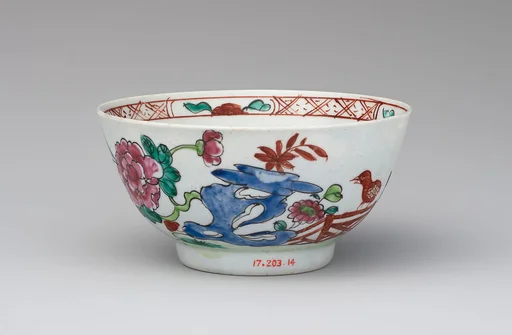
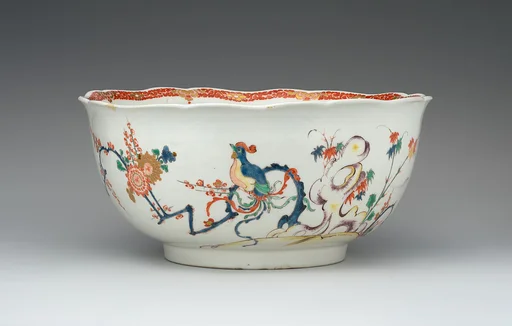
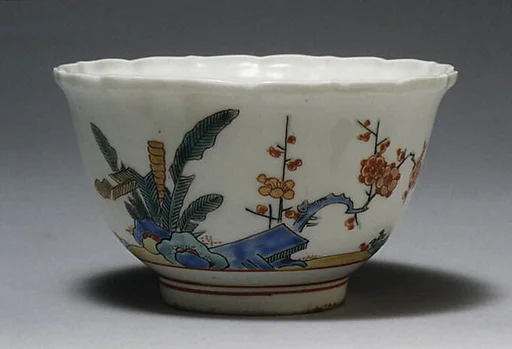
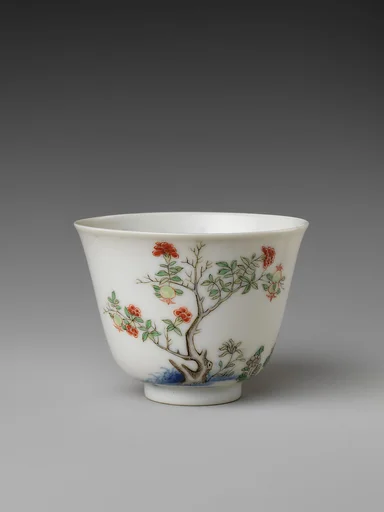
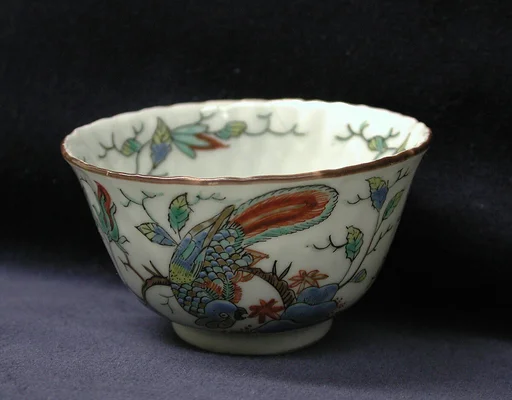
Sugar bowl (?) (part of a service)
Lowestoft
late 18th or early 19th century · Soft-paste porcelain · European Sculpture and Decorative Arts
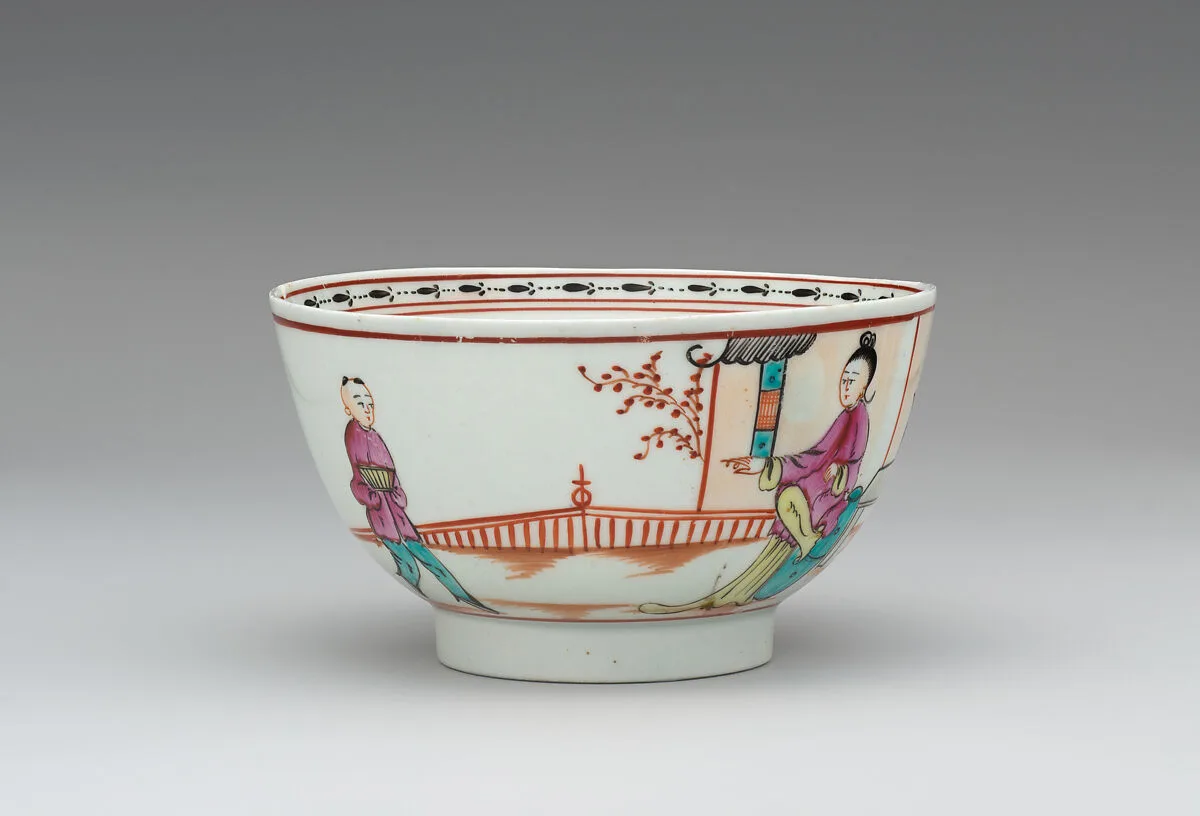
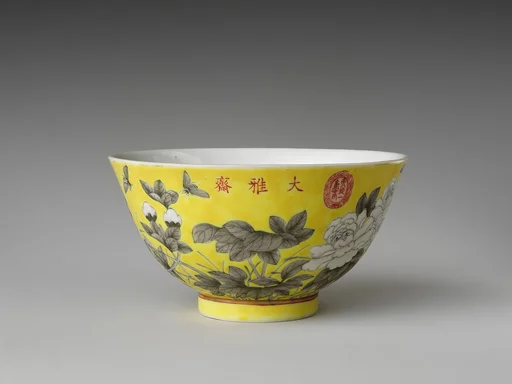
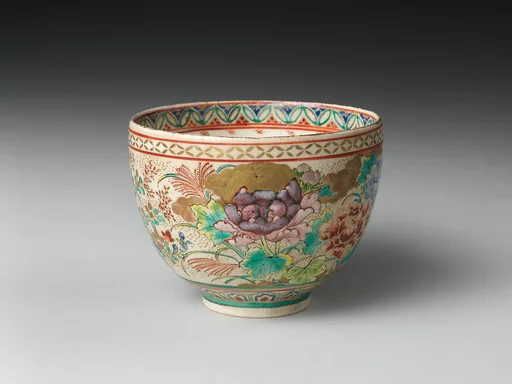
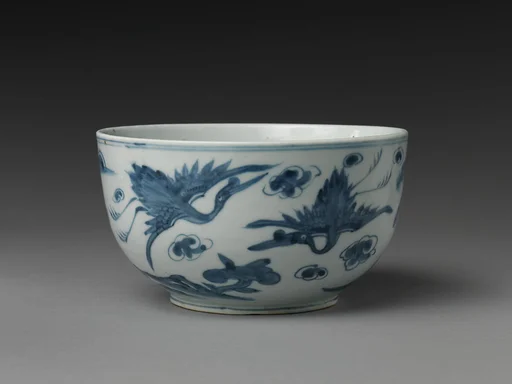
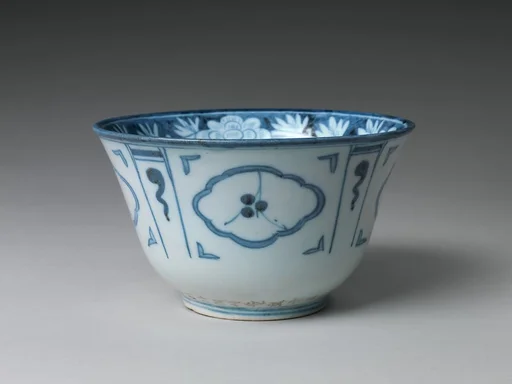
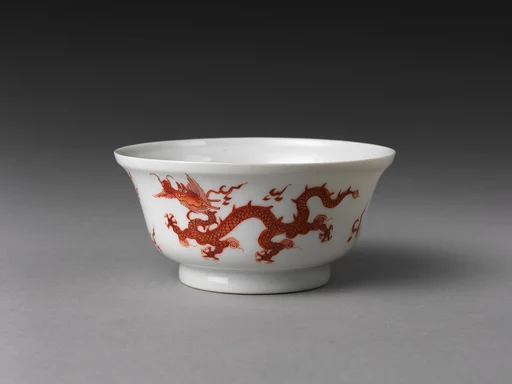
The term "chinoiserie" refers to an 18th-century European style inspired by the art of China, Japan, and other Asian countries. In Britain, porcelain imported from China and Japan was extremely fashioinable and highly coveted. This caused British factories to imitate Asian wares, both by copying Asian originals, but more often by creating their own imaginative "chinoiserie" designs. The chinoiserie style was at its height in Britain in the 1750s and 1760s. It is related to the rococo style, which was also characterized by asymmetry and an element of fantasy. In British porcelain, it is not uncommon to find objects that combine both aspects of chinoiserie and rococo.
- Artist
- Lowestoft
- Date
- late 18th or early 19th century
- Medium
- Soft-paste porcelain
- Culture
- British, Lowestoft
- Department
- European Sculpture and Decorative Arts
- Credit line
- The Charles E. Sampson Memorial Fund, 1967