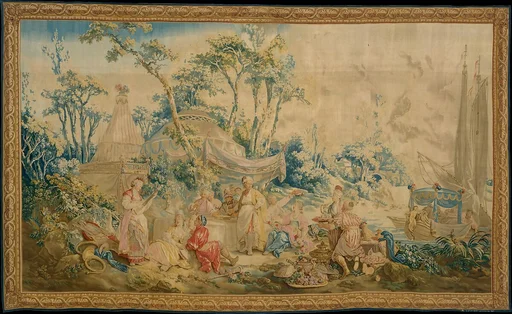
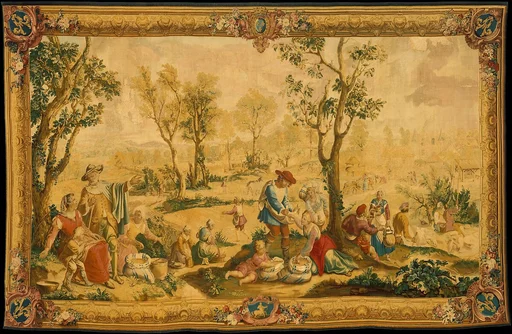
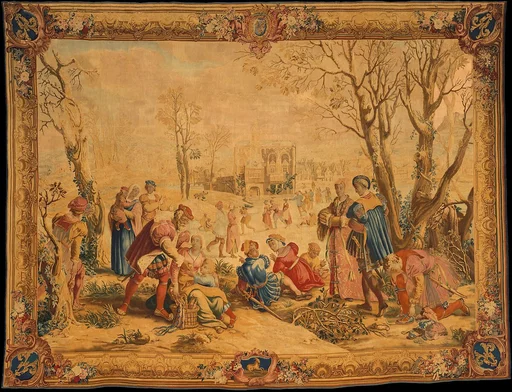
The Collation from a set of the Italian Village Scenes
François Boucher|André Charlemagne Charron|Beauvais|Boulard de Gatellier
designed 1734–36, woven 1762 · Wool, silk (21-23 warps per inch, 8-9 per cm.) · European Sculpture and Decorative Arts
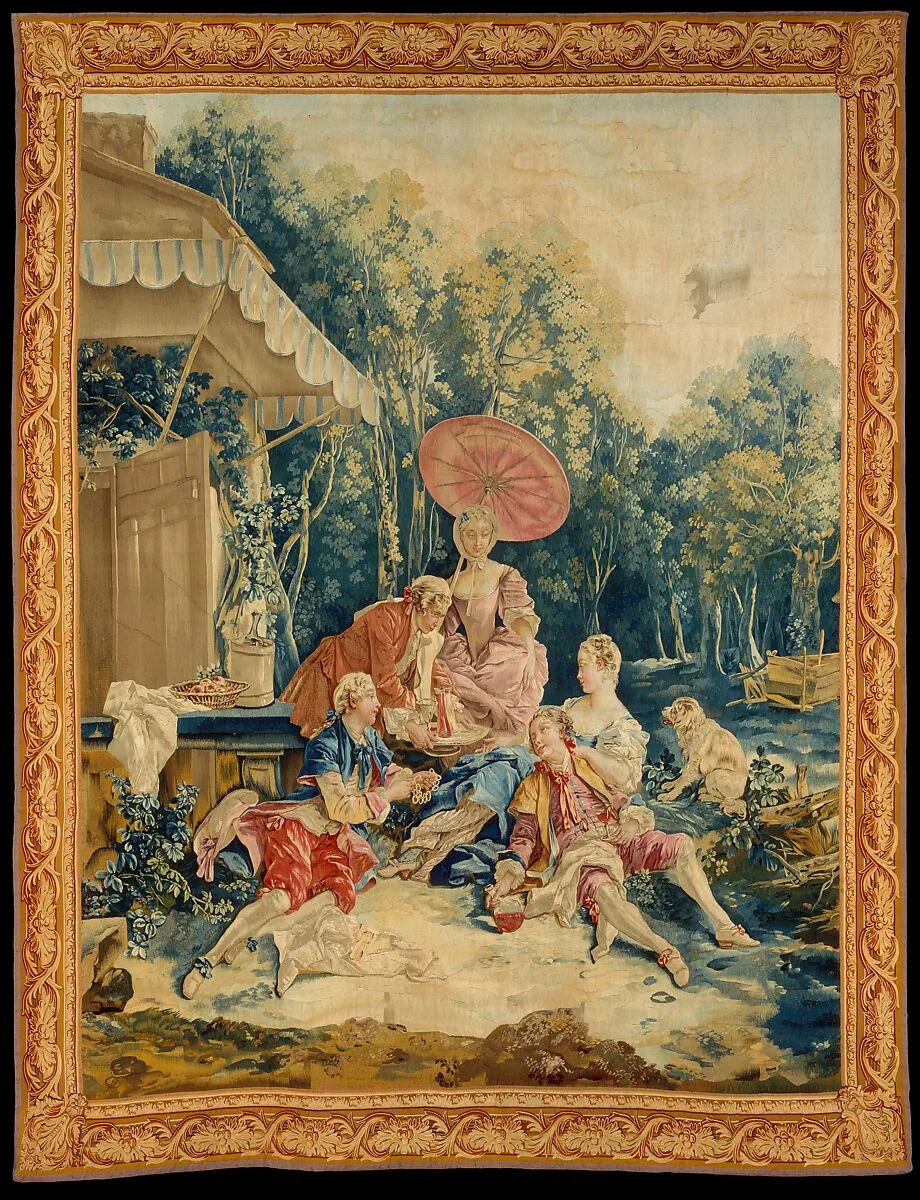
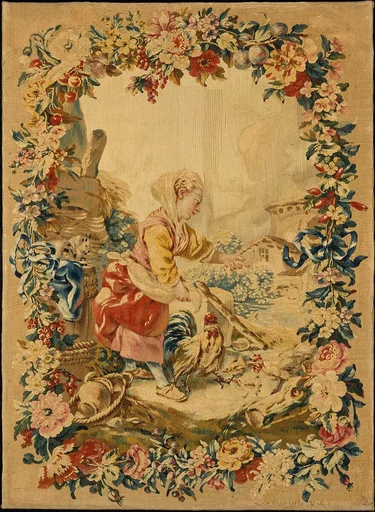
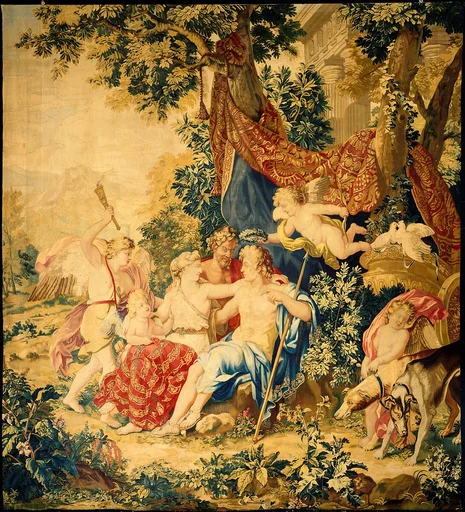
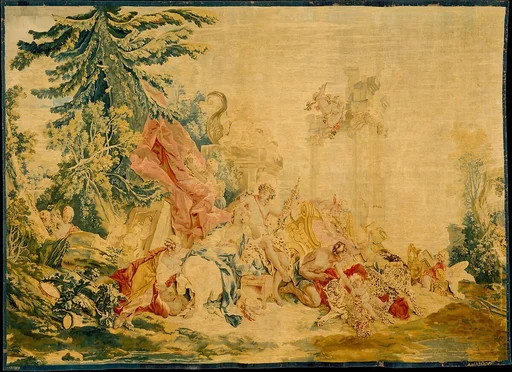
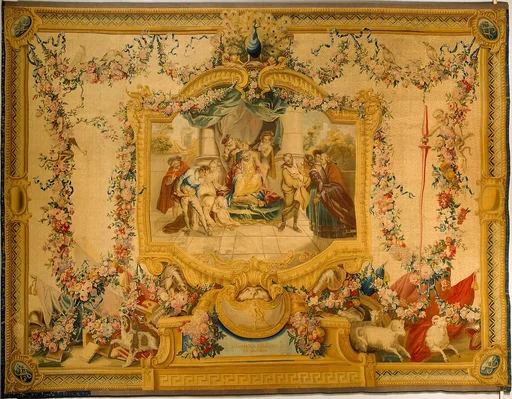
Images of gardens were popular in the tapestry medium from the medieval era, where the so-called mille-fleurs (thousand flowers) (see also MMA 2013.506) provided a decorative, and sometimes symbolic, setting for scenes of romance and play. Park and garden tapestries continued to enjoy popularity throughout the sixteenth and seventeenth centuries, particularly for the decoration of more intimate chambers, where they provided a pleasant contrast with the grander subject matter of tapestries used in more formal settings. The theme enjoyed new popularity with the advent of the Rococo style during the eighteenth century, and a number of highly decorative landscape and garden series were produced in French and Netherlandish workshops during the second third of the eighteenth century. Among the most notable was the series of romantic pastorals that Boucher designed for the Beauvais workshops between 1734 and 1736 (MMA 64.165.1–.8). Known as the Fetes Italiennes, and loosely inspired by the idyllic park scenes of Antoine Watteau, this series depicted handsome gentlefolk and peasants in idealized exterior settings.
- Artist
- François Boucher|André Charlemagne Charron|Beauvais|Boulard de Gatellier
- Date
- designed 1734–36, woven 1762
- Medium
- Wool, silk (21-23 warps per inch, 8-9 per cm.)
- Culture
- French, Beauvais
- Department
- European Sculpture and Decorative Arts
- Credit line
- Gift of Ann Payne Robertson, 1964